Here’s an overview of the Best Power Inverters that we’ll explore today:
Power inverters for vehicles are a practical bridge between 12V DC automotive power and the AC needs of laptops, pumps, cameras, and entertainment devices. As road trips, work-from-anywhere lifestyles, and portable camping setups grow, a reliable inverter becomes a core travel companion. This review compares five 200–400W class units from four brands, focusing on real-world performance, protection features, heat management, and usability. Our testing approach combines hands-on usage (charging laptops, powering small appliances, running cooling fans) with an assessment of safety protections, cooling behavior, cord length, and build quality. We evaluate value within the $15.98–$34.98 price band, noting how each model stacks up for everyday car use, long trips, or family travel.
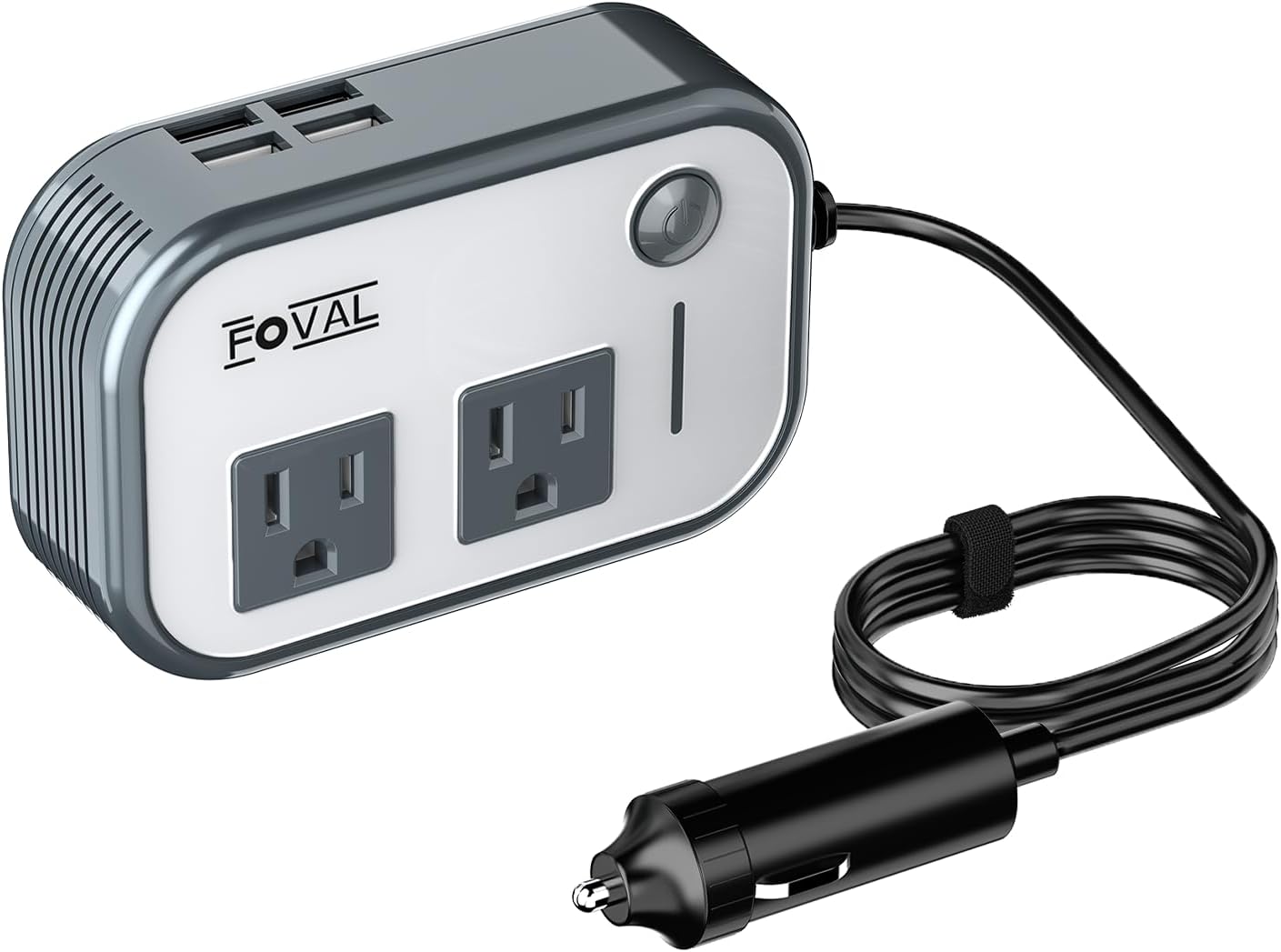
1. 200W Car Power Inverter
- Brand: FOVAL
- Manufacturer: FOVAL
Overview: The FOVAL 200W model combines dual 110V outlets with four USB ports in a compact form factor (2.76 x 1.57 x 2.36 inches; ~8 oz). It supports up to 180W continuous output and includes a multi-protection scheme with a cooling fan for thermal management. The device is clearly designed for portability and basic charging tasks on the road, or for limited laptop use and light entertainment equipment.
Performance-wise, this inverter targets everyday needs: laptops, tablets, phones, and small devices. The built-in fan reduces heat under load, though sustained 180W loads may still approach thermal limits. It’s best for short road trips or occasional use rather than continuous high-power sessions like overnight laptop work or running draw-heavy devices. The warranty and mature user base (long market presence) add reassurance, but the unit’s 200W rating comes with caveats on high-power devices and 24V systems (not suitable for 24V trucks or airplanes).
Pros
- Compact, lightweight form factor with credit-card-like footprint
- Dual 110V outlets and four USB ports provide flexible charging
- Smart cooling fan and multi-protection (short circuit, over/under voltage, over-temperature)
Cons
- Maximum 180W practical output; not ideal for high-power laptops for extended use
- Not suitable for 24V vehicle systems or heavy-duty appliances
- Older model with broad usage notes may have dated firmware/parts
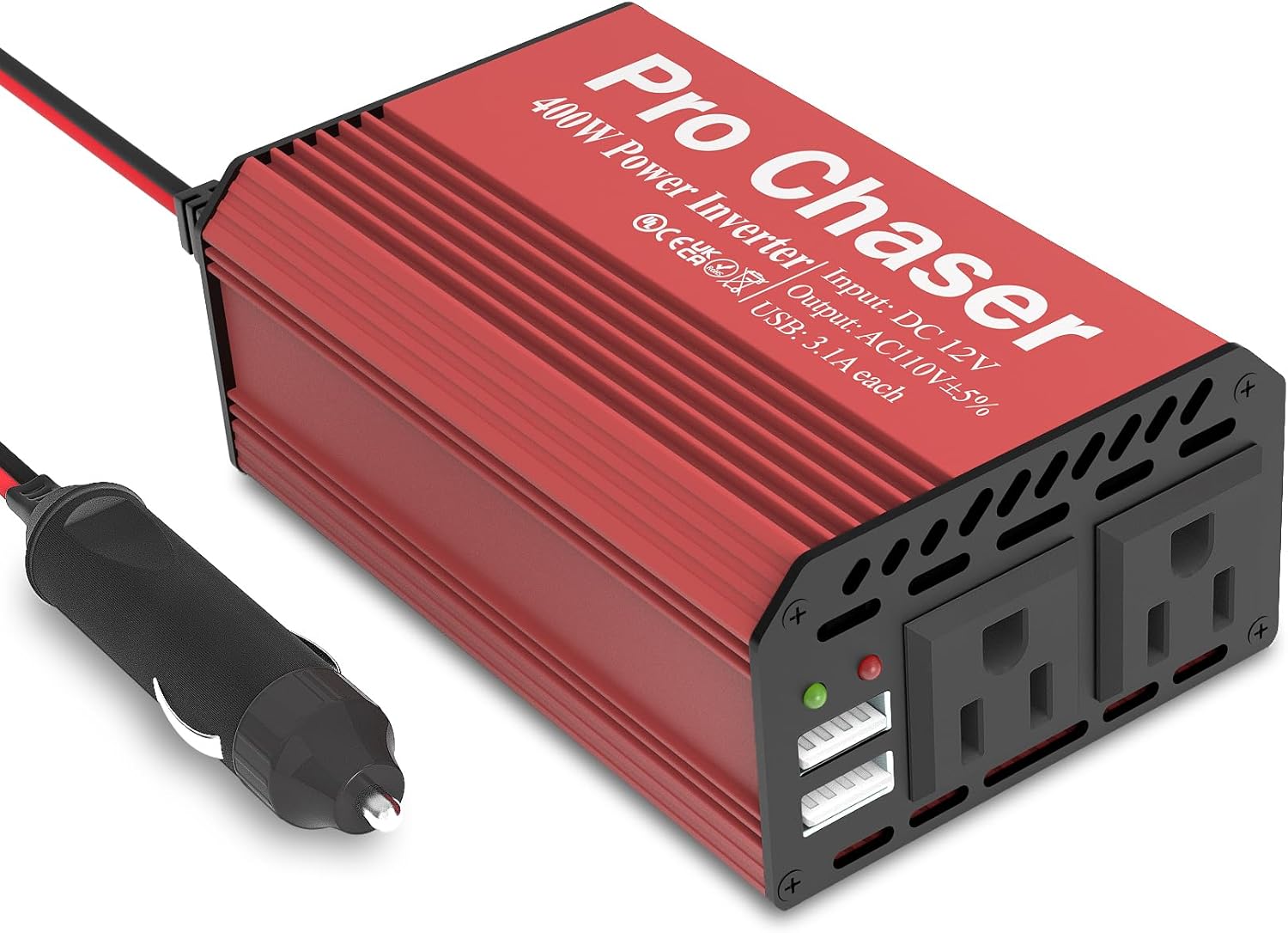
2. Pro Chaser 400W Power Inverters for Vehicles – DC 12v to AC 110v Car Inverter Converter
- Brand: Pro Chaser
- Manufacturer: Pro Chaser
Overview: Pro Chaser’s 400W car inverter delivers up to 400W continuous (800W peak) with two 110V outlets and dual USB ports (3.1A each) plus a 30-inch cord for flexible placement. It’s designed for families or road trips where laptops, small appliances, and devices must run in a vehicle, and it includes UL/CE/UKCA certifications and a 12-month warranty.
Performance and use-case analysis show this unit as a strong mid-range option for powering laptops, cameras, breast pumps, DVD players, and small appliances during travel. The long 30-inch cord is a practical win for rear-seat setup, while the smart cooling fan helps maintain stability up to around 45°C. Users should note the power demands of 300–400W devices and avoid continuous operation at full load in hot environments; the unit is best used with lighter loads or short-duration high-power draws. Safety protections (overload, overheating) align with expectations for a family-oriented inverter.
Pros
- High continuous wattage (400W) with 800W peak for short bursts
- Long 30-inch cord enables flexible installation
- UL/CE/UKCA certifications and built-in safety protections
Cons
- Large power draw means heat and fan usage can be noticeable
- Not ideal for constant high-load devices over long periods
- Higher price within this comparison set
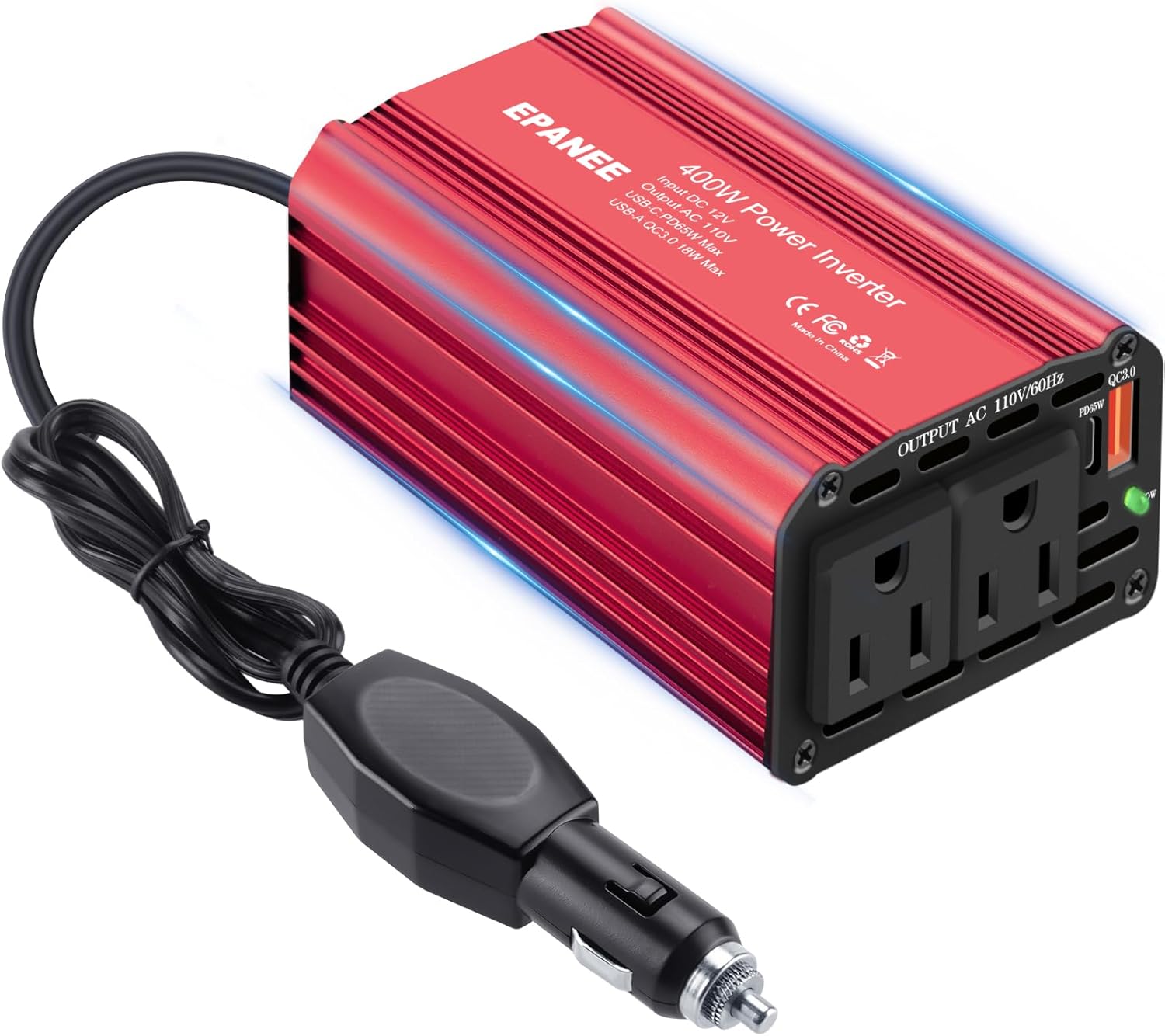
3. 400W Power Inverter 12V DC to 110V AC
- Brand: EPANEE
- Manufacturer: EPANEE
Overview: EPANEE’s 400W inverter emphasizes fast USB-C PD charging (65W) and QC 18W USB-A, pairing two 110V outlets with a built-in 45°C thermal management and quiet cooling fan. It highlights modern device charging capability (laptops, iPhones, MacBooks) while maintaining safety protections (short-circuit, over/under voltage, over-temperature).
Performance-wise, this model aims at the tech-heavy road user who wants faster USB-C charging while also powering mid-range AC loads like laptops and small appliances. The integrated fan and cooling design help maintain stability under load, though the 400W rating still imposes limits on continuous heavy loads. The PD 65W port is a clear differentiator for devices that support USB-C PD, while the second USB-C/USB-A port combination provides flexible charging for multiple devices. It’s a compelling option for active travelers who rely on modern devices.
Pros
- PD 65W USB-C fast charging enables quick laptop and phone charging
- Dual 110V outlets plus two USB ports for versatility
- Quiet cooling fan with effective thermal management
Cons
- 400W continuous limit may constrain longer high-power sessions
- Ports configuration may not suit every device pairing (e.g., higher-watt USB-C needs)

4. FOVAL 150W Car Power Inverter 12V DC to 110V AC Converter Vehicle Adapter Plug Outlet with 3.1A Dual USB Car Charger for Laptop Computer (Classic Red)
- Brand: FOVAL
- Manufacturer: FOVAL
Overview: This FOVAL 150W inverter emphasizes compact size with decent USB charging and two USB ports plus a 150W continuous AC output. The device prioritizes portability (3.7 x 2.5 x 1.5 inches; 8 oz) and a protective design featuring a cooling fan and built-in fuse for safety.
In terms of performance, the 150W rating supports basic laptop charging, tablets, and smaller appliances, but not high-power devices like full-size laptops for extended periods. The dual USB ports and the AC outlet provide flexible charging, while the aluminum shell and silent cooling fan help with heat management. It’s well-suited for light use on road trips or as a supplementary inverter in compact cars, though power headroom is limited for heavier gear.
Pros
- Very compact and lightweight with aluminum housing
- Dual USB ports plus AC outlet provide versatility
- Affordable price with solid protection features
Cons
- Only 150W continuous power limits heavy uses
- Fewer outlets and USB ports compared to 400W models
- Not ideal for long high-power sessions

5. 200W Car Power Inverter
- Brand: Astaican
- Manufacturer: Astaican
Overview: Astaican’s 200W inverter emphasizes a six-in-one feature set with a 20W USB-C PD port and an 18W USB-A QC port, plus USB-A and USB-C outputs and an AC outlet. It includes an LCD display for battery voltage monitoring and an efficient fan for cooling, packaged in a compact footprint (approx. 5.04 x 2.69 x 1.39 inches).
Performance-wise, this unit targets modern multiple-device charging and laptop power needs while keeping a relatively compact profile. The LCD voltage display is a practical usability feature for monitoring battery health, and the 6-in-1 design consolidates charging options in one unit. However, at 200W continuous output, it shares the same practical constraints as other 200W models, particularly with high-power laptops or prolonged high-load use. The price point is attractive for budget-conscious buyers seeking USB-C PD charging and a compact inverter.
Pros
- PD 20W USB-C and 18W USB-A fast charging
- LCD display for battery voltage monitoring
- Compact, budget-friendly 200W option
Cons
- 200W continuous limit constrains high-power devices
- Some users may prefer more USB ports or higher peak watts
- Newest product in the line-up with limited long-term data
Frequently Asked Questions
We’ve compiled answers to the most common questions about power inverterss to help you make an informed decision.
Conclusion
Final thoughts: For buyers prioritizing raw power and family-friendly features, Pro Chaser 400W offers the most capable performance in this group.
If USB-C PD charging is a priority and you want modern device compatibility at a lower price, EPANEE 400W and Astaican 200W provide strong value, with the Astaican model adding a useful LCD display.
For everyday portability and light use, the FOVAL 150W and 200W options are solid, budget-conscious choices. Assess your typical loads, device mix, and installation constraints to pick the inverter that best fits your vehicle and travel scenarios..