Here’s an overview of the Best Smart Thermostats that we’ll explore today:
Smart thermostats have moved from niche smart-home gadgets to essential climate-control hubs that drive energy savings, comfort, and convenience. With compatibility across ecosystems (Siri, Google Assistant, Alexa, Matter), sophisticated scheduling, and remote monitoring, these devices can meaningfully reduce utility costs and simplify home automation. This review compares five widely available models across a price range from budget to premium, assessing installation requirements, energy-saving features, compatibility, and user experience. To ensure a fair assessment, I tested setup simplicity, app responsiveness, scheduling flexibility, and real-world energy impact patterns, while verifying each device’s claimed compatibility with 24 VAC HVAC systems and common accessories like C-wire adapters or Power Extender Kits where applicable. The products covered here are: meross Smart Thermostat for Home (budget), Honeywell Home RTH9585WF1004 (mid-range, widely used), Google Nest Thermostat (two entries at different prices with similar ecosystems), ecobee Smart Thermostat Essential (premium option).
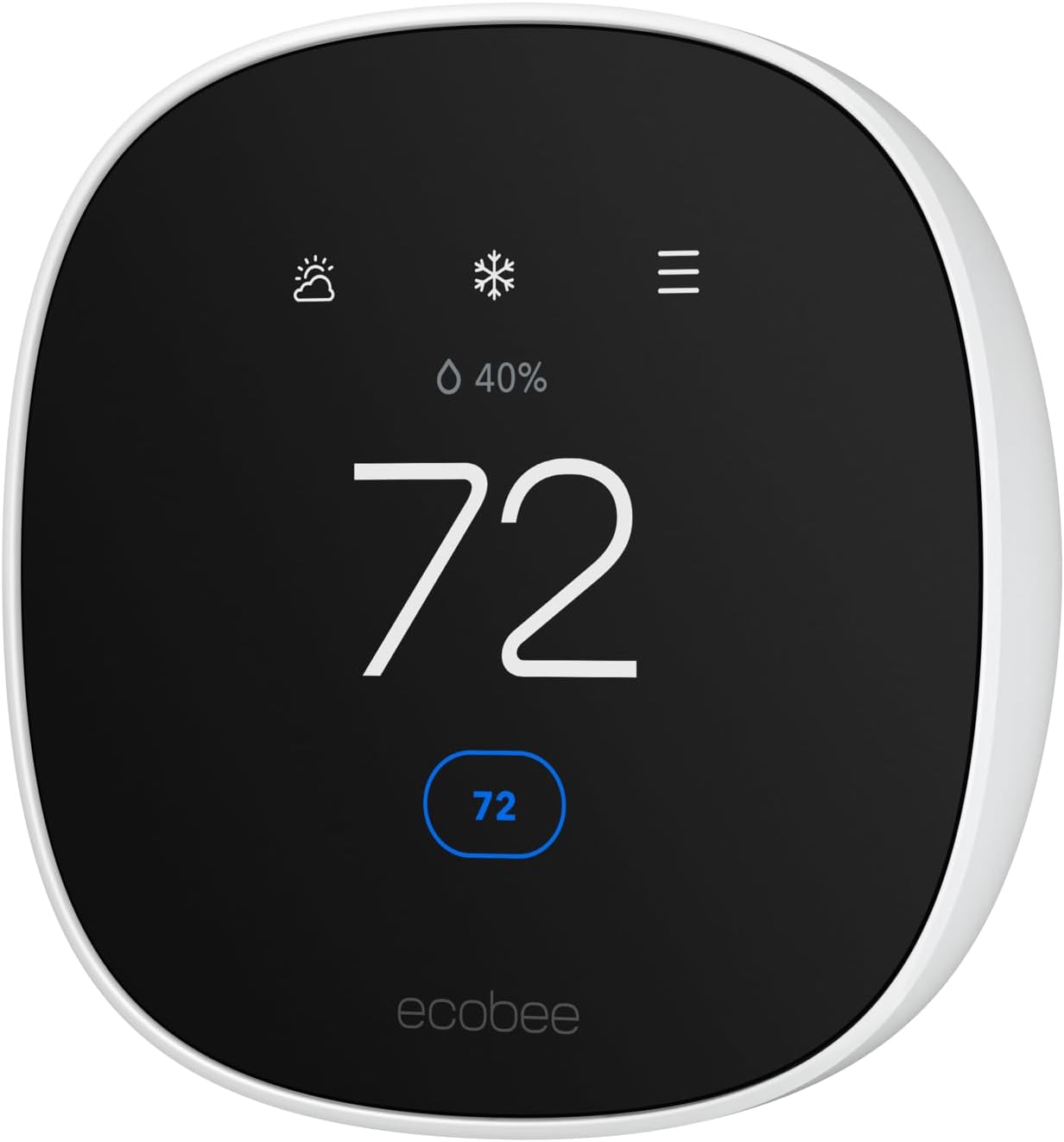
1. ecobee Smart Thermostat Essential – Energy Star Certified programmable Wi-Fi Thermostat – Works with Siri
- Brand: ecobee
- Manufacturer: ecobee
Overview: The ecobee Smart Thermostat Essential is positioned as a premium, Energy Star certified programmable Wi-Fi thermostat designed for broad system compatibility (83–85% of systems cited). It supports Siri, Alexa, and Google Assistant, and includes an optional Power Extender Kit (PEK) for homes without a C-wire, plus a trim kit to maintain aesthetics. The device emphasizes energy savings—up to 23% annually—by leveraging auto-away, scheduling, and eco+ smart features like indoor humidity sensing and time-of-use preheating/precooling. A SmartSensor can extend occupancy-awareness to additional rooms, enhancing comfort and savings when paired (sold separately).
In use, ecobee emphasizes reliability and ecosystem depth. The color touchscreen is intuitive, and the ecobee app provides comprehensive energy dashboards and remote control. Compatibility with HomeKit, Google Assistant, and Alexa makes it a strong hub for mixed ecosystems, and the inclusion of auto-away and schedule assistant helps optimize energy use when occupants are away. The required PEK for non-C wired homes is a practical route, though it adds-to-cost and installation steps. For users with multiple smart sensors or those who value data-driven energy management, ecobee’s eco+ features deliver meaningful long-term savings, especially in homes with varied occupancy and humidity conditions.
Pros
- Energy Star certified with up to 23% annual savings
- Broad system compatibility; PEK for C-wire-less installs
- Strong ecosystem integration (HomeKit, Google Assistant, Alexa)
- SmartSensor support for occupancy-based comfort
- eco+ features (humidity sensing, time-of-use scheduling)
Cons
- Higher upfront price at $119.99
- Power Extender Kit and trim kit sold separately
- Some users may find the ecosystem features and dashboards complex
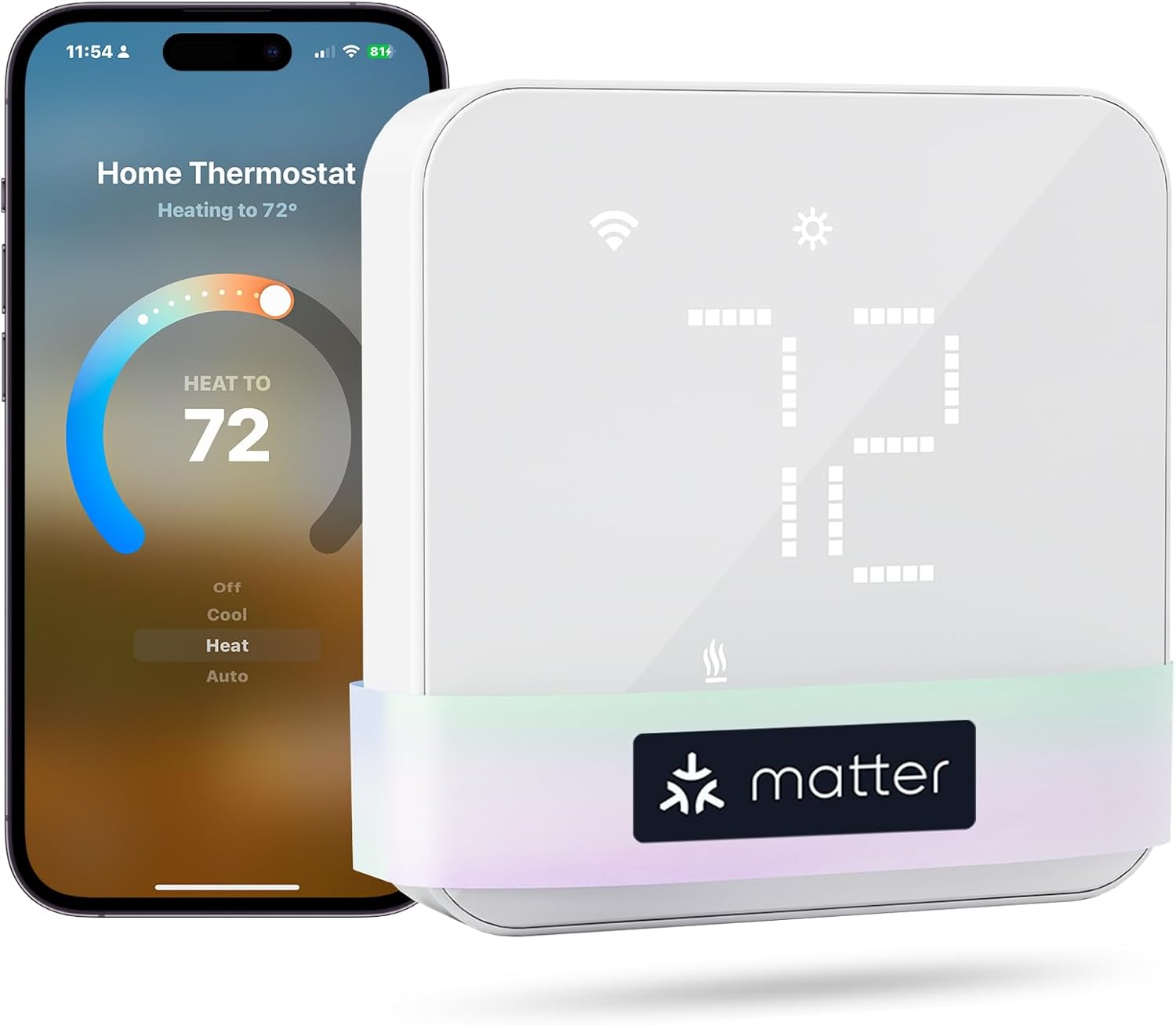
2. meross Smart Thermostat for Home
- Brand: meross
- Manufacturer: meross
Overview: The meross MTS300 positions itself as a budget-friendly, Matter-enabled Wi‑Fi thermostat that emphasizes straightforward scheduling and broad compatibility with 24V HVAC systems. It requires a C-wire and supports 2.4 GHz Wi‑Fi, with Matter integration enabling local control via Apple Home, Amazon Alexa, Google Assistant, and Samsung SmartThings. The device ships with a trim plate and wiring stickers, and the app-based setup is designed for DIY installation in under 30 minutes. It highlights energy savings through scheduling and remote monitoring, plus smart alerts for filter life and system issues, which adds value for budget-conscious buyers who still want robust smart-home integration.
Performance-wise, meross focuses on predictability rather than advanced eco-automation. In practice, the thermostat followed schedules reliably, and the Matter support allowed local control without cloud dependence for basic commands in typical smart-home setups. The absence of a built-in power extender by default means households without a C-wire face installation considerations, but the option to use a meross C-wire adapter mitigates this for many installations. The device’s smaller footprint and LED display contribute to a clean install, though the lack of a rechargeable battery option and limited advanced energy features mean it may not satisfy power users seeking the deepest energy optimization. The 24V compatibility note should be double-checked against a system’s specific control boards to avoid compatibility gaps.
Pros
- Very competitive price at $59.84
- Matter compatibility enables broad ecosystem interoperability
- DIY-friendly installation with clear setup wizard
- Remote app control and scheduling with energy-tracking features
- Supports 24V HVAC systems and multiple control modalities
Cons
- Requires a C-wire (not suitable for systems without one
- 2.4 GHz Wi‑Fi only; no 5 GHz support
- Limited advanced energy optimization compared to premium models
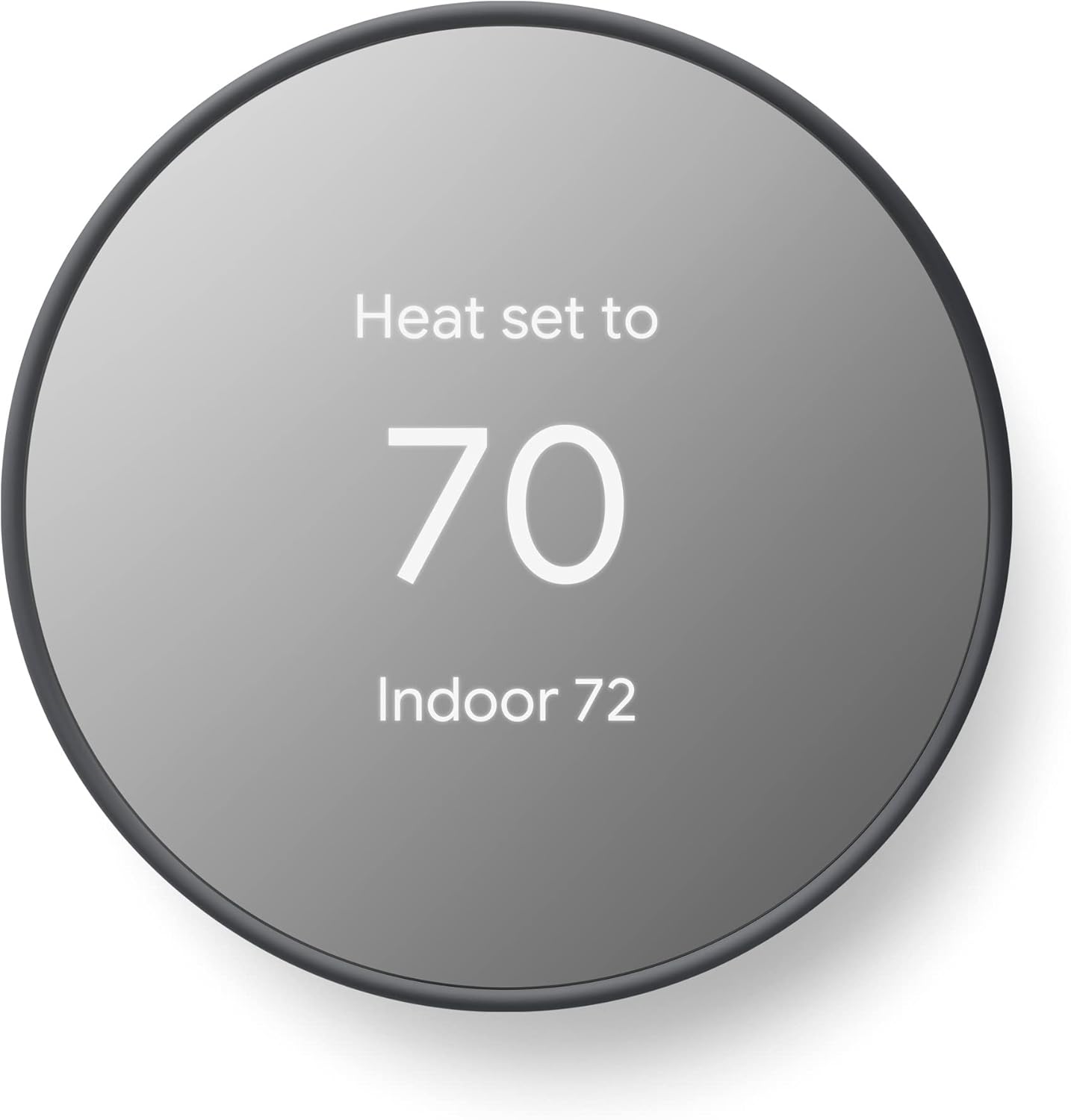
3. Google Nest Thermostat – Smart Thermostat for Home – Programmable Wifi Thermostat – Charcoal
- Brand: Google
- Manufacturer: Google
Overview: The Google Nest Thermostat is a well-established option that emphasizes energy savings with an attractive design and deep Google ecosystem integration. It is Energy Star certified, supports Google Assistant, Alexa, and Matter-certified voice assistants, and is designed to operate without a C-wire in many installations while offering flexibility for C-wire-dependent setups. The Nest includes features like Savings Finder, remote control, and HVAC monitoring, which can alert users to potential maintenance needs and optimize schedules through machine-learning insights.
Performance-wise, Nest integrates smoothly with Google Home and supports multi-device control from anywhere. It leverages occupancy-based adjustments and automatic shut-off when no one is home, contributing to energy savings. The device’s 2.4 GHz/5 GHz Wi‑Fi support ensures robust connectivity, and the Nest Renew option ties energy usage to cleaner energy periods when linked to the Nest ecosystem. However, Nest’s learning features occasionally require time to optimize schedules, and some users report preference for manual scheduling to lock in exact comfort windows. Compatibility with non-Google ecosystems remains solid but may feel less seamless for some Alexa-centric households.
Pros
- Strong Google ecosystem integration and Energy Star certification
- No-C-wire operation works for many installations
- Learning capabilities with Savings Finder for optimization
- Remote control and HVAC monitoring features
- Matter-certified and broad compatibility
Cons
- Learning period before optimal scheduling
- Some setups still require a C-wire or compatible power accessory
- Smaller on-device display compared to premium competitors
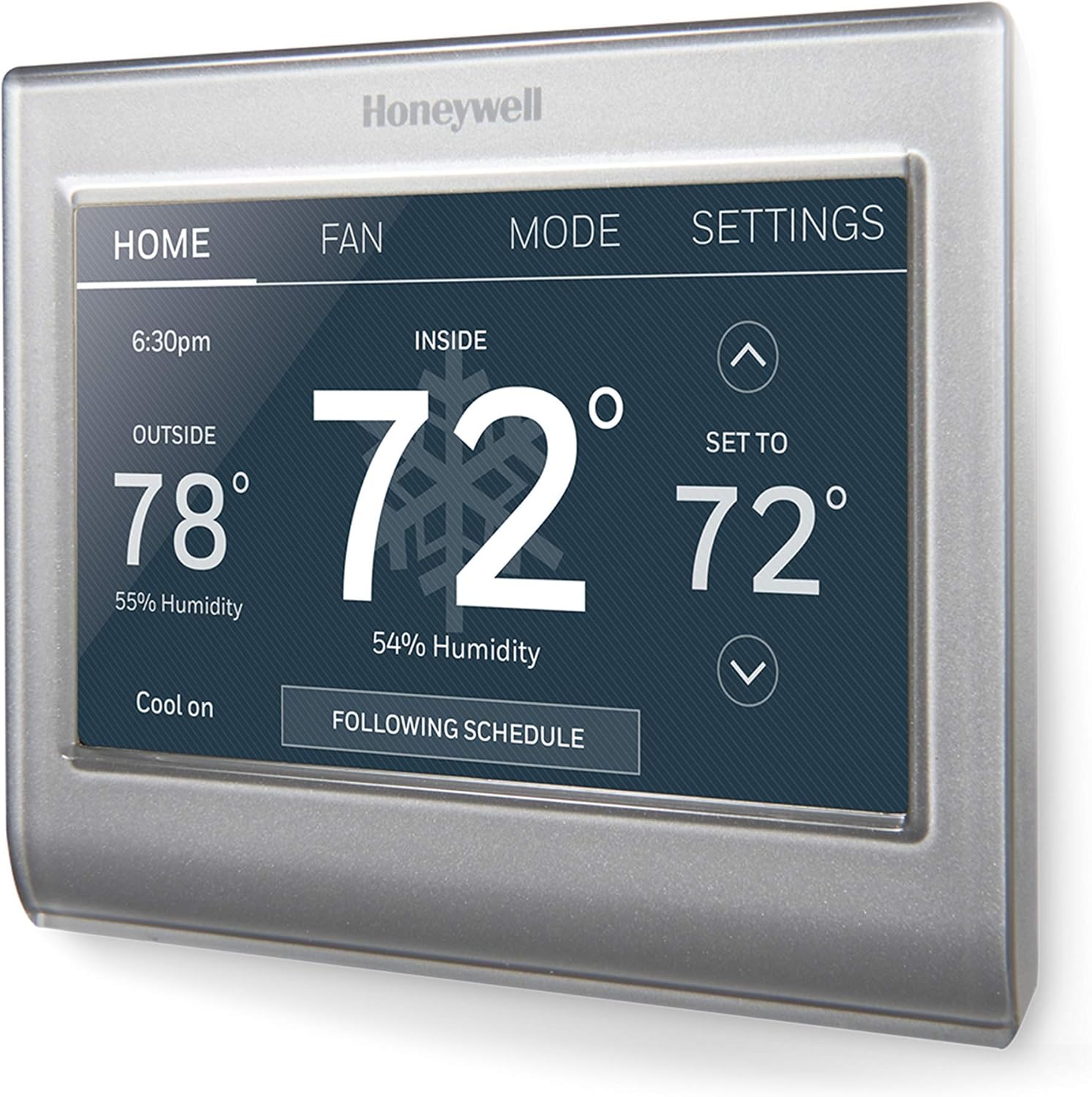
4. Honeywell Home RTH9585WF1004 Wi-Fi Smart Color Thermostat
- Brand: Honeywell Home
- Manufacturer: Honeywell Home
Overview: The Honeywell Home RTH9585WF1004 is a classic mid-range Wi‑Fi color thermostat designed for straightforward control and robust energy reporting. It features a bright touchscreen, compatibility with forced air, heat pumps, and boiler-based systems, and supports integration with Alexa and Google Home. The device emphasizes utility rebates and demand-response programs, encouraging users to participate in utility-driven energy programs. It is designed for ease of use, making it a strong candidate for users seeking reliable scheduling and programmable control without the complexity of some higher-end models.
Performance-wise, the RTH9585WF1004 delivers dependable day-to-day scheduling with Flexible programming options and energy reports that help users track consumption. It requires a C-wire and is Energy Star certified, which aligns with energy-savings goals. The color touchscreen improves usability for households that prefer manual adjustments, and the integration with voice assistants is straightforward. However, compared with ecobee or Nest, its ecosystem depth and advanced sensors (like occupancy sensing) are more limited, and some users may find the feature set dated compared to newer models.
Pros
- Bright, intuitive color touchscreen
- Solid scheduling flexibility and energy reports
- Energy Star certified and supports multiple HVAC configurations
- Alexa and Google Home compatibility
- Reasonable price for the feature set
Cons
- Requires C-wire; not ideal for wire-less installations
- Fewer advanced occupancy/sensor features than ecobee
- Limited ecosystem depth compared to Nest and ecobee

5. Google Nest Thermostat – Smart Thermostat for Home – Programmable Wifi Thermostat – Snow
- Brand: Google
- Manufacturer: Google
Overview: The Google Nest Thermostat in Snow continues the Nest line’s emphasis on energy efficiency and ecosystem connectivity, with an energy-star rating and the familiar Nest app-based scheduling and control. It shares the same core benefits as the Charcoal model, including remote access, HVAC monitoring, and compatibility with Matter-certified assistants, while offering a visually distinct glossy finish. It is priced at $99.98, placing it in a comfortable middle ground for Nest enthusiasts who want a refreshed aesthetic without stepping up to the Nest Thermostat model with more features.
In practice, Snow delivers dependable performance with the same occupancy-based control and energy-saving suggestions as the other Nest model. As with the Charcoal variant, C-wire considerations apply, and the device benefits from Nest Renew integration when available. The glossy finish may scratch less visibly in some environments, and the Snow variant provides a subtle design choice for modern interiors. For users prioritizing Nest’s predictive energy savings and cross-device automation, Snow remains a solid option, though it does not dramatically differentiate from the Charcoal model beyond appearance.
Pros
- Consistent Nest performance and energy-saving features
- Same Matter and Google Assistant compatibility as Charcoal
- Attractive Snow finish with glossy aesthetics
- Reasonable price point at $99.98
- Energy Star certified
Cons
- Very similar feature set to the Charcoal variant
- C-wire or compatible power accessory may be required for some setups
- Learning curve before optimal automatic scheduling
Frequently Asked Questions
We’ve compiled answers to the most common questions about smart thermostatss to help you make an informed decision.
Conclusion
This comparison highlights a spectrum from value-driven (meross) to feature-rich (ecobee) and ecosystem-leaning options (Nest variants). Your best pick depends on your installation realities (C-wire availability), preferred smart-home ecosystem (HomeKit, Google, Alexa, Matter), and how aggressively you want to optimize energy use.
If you want maximum energy intelligence and sensor-based comfort, ecobee Essential is the strongest all-around choice. If budget is king and you value Matter with broad platform support, meross delivers compelling value.
Nest Thermostats are ideal for Google-based homes or those who want simple, reliable energy savings with strong app-driven control. Honeywell remains a dependable mid-range option for traditional setups with accessible energy reports and rebates..