Here’s an overview of the Best TOP 5 Best Welding Rod For Thin Metal | Ultimate that we’ll explore today:
Welding thin metal requires careful rod selection to balance arc stability, penetration, and control. Thin-gauge work (sheet metal, light brackets, ductwork, and automotive patches) benefits from electrodes that offer easy arc starts, low spatter, and reliable slag removal without excessive penetration that could burn through. This article reviews five popular options across a price spectrum and brands represented (Saker, Faiuot, Tandefio, YESWELDER), spanning budget to premium solutions. Our methodology combines manufacturer specifications with real-world performance notes, including arc behavior on low-voltage machines, all-position capability, slag characteristics, and post-weld finish considerations. We evaluate each rod for all-position usability, ease of use on thin stock, applicability to common thin-metal tasks, and overall value.
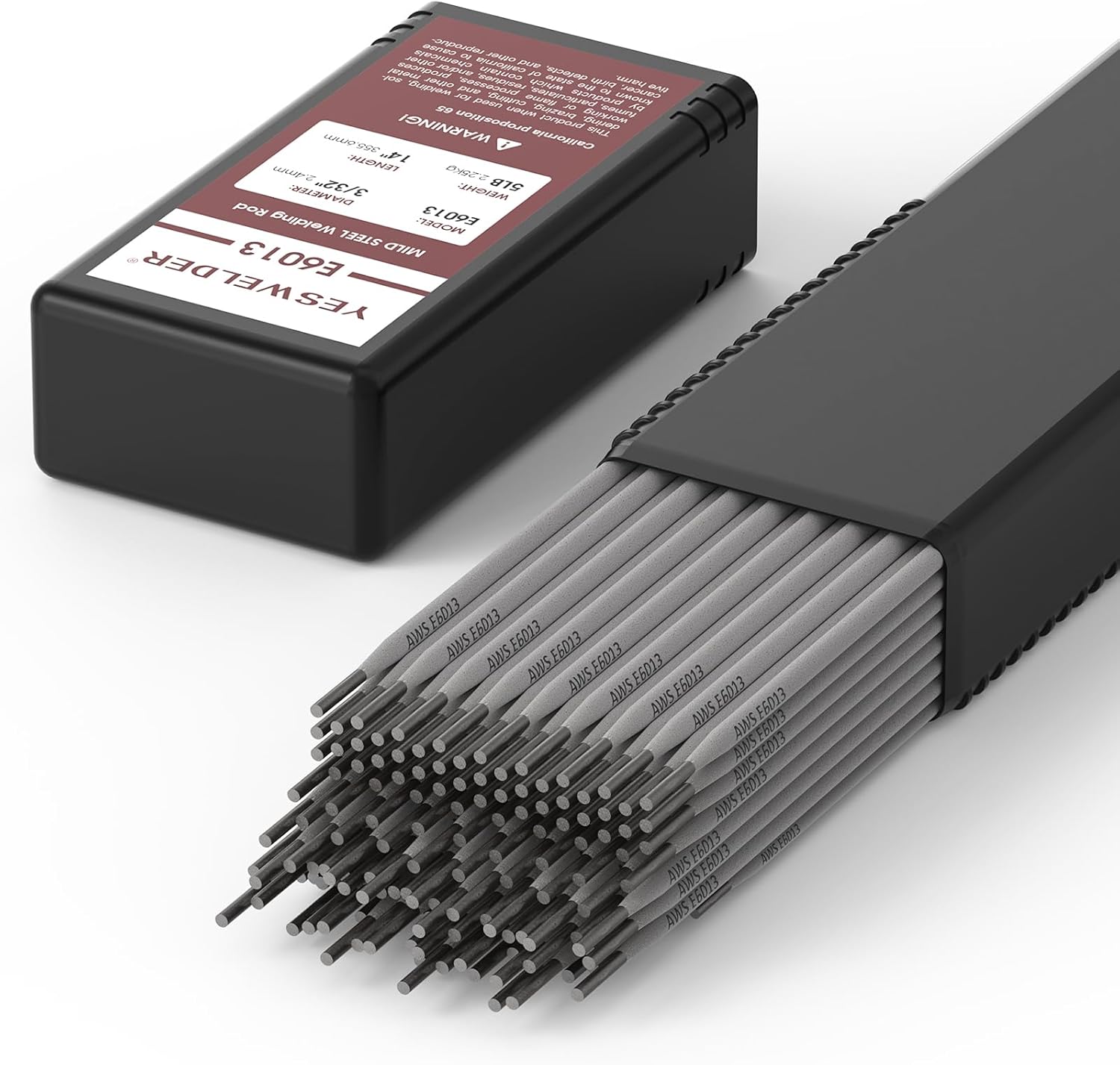
1. YESWELDER E6013 3/32” 5LB Welding Rod Carbon Steel Stick Electrodes
- Brand: YESWELDER
- Manufacturer: YESWELDER
The E6013 from YESWELDER is a versatile, all-purpose mild-steel electrode designed for AC or DC welding and excels on low-voltage machines. It is positioned as an all-position rod with shallow penetration and a smooth arc, making it suitable for light-gauge metal, sheet metal, and duct work. The coating provides excellent slag removal and a near self-cleaning behavior in vertical-down fillets, which reduces post-weld cleanup and improves consistency across joints. The 3/32” diameter and 14” length are a standard trowel-friendly size for hobbyist to professional tasks, with a recommended amperage range of 45A-90A.
In practice, the E6013 delivers a forgiving arc with low spatter, which helps maintain visibility and control on thinner stock. Its ability to operate on low-voltage AC machines makes it appealing for DIY welders who lack heavy-duty power supplies. As a premium option in this roundup, it trades some of the ultra-high deposition rate seen in specialized rods for reliability and smoothness on common thin-metal jobs. Users performing light fabrications or repairs on sheet metal will appreciate the clean slag removal and the ease of achieving consistent bead profiles, though penetration remains shallow by design, so it is less suited for joints requiring significant fusion on thicker sections.
Pros
- Excellent all-position usability
- Low spatter with easy slag removal
- Works well on low-voltage AC machines
- Good for light-gauge sheet metal and duct work
- Self-cleaning behavior in vertical-down welds
Cons
- Shallow penetration limits for thicker materials
- Higher deposition rate rods may be preferred for heavier thin-gauge work
- DC negative polarity optimization may vary across power sources
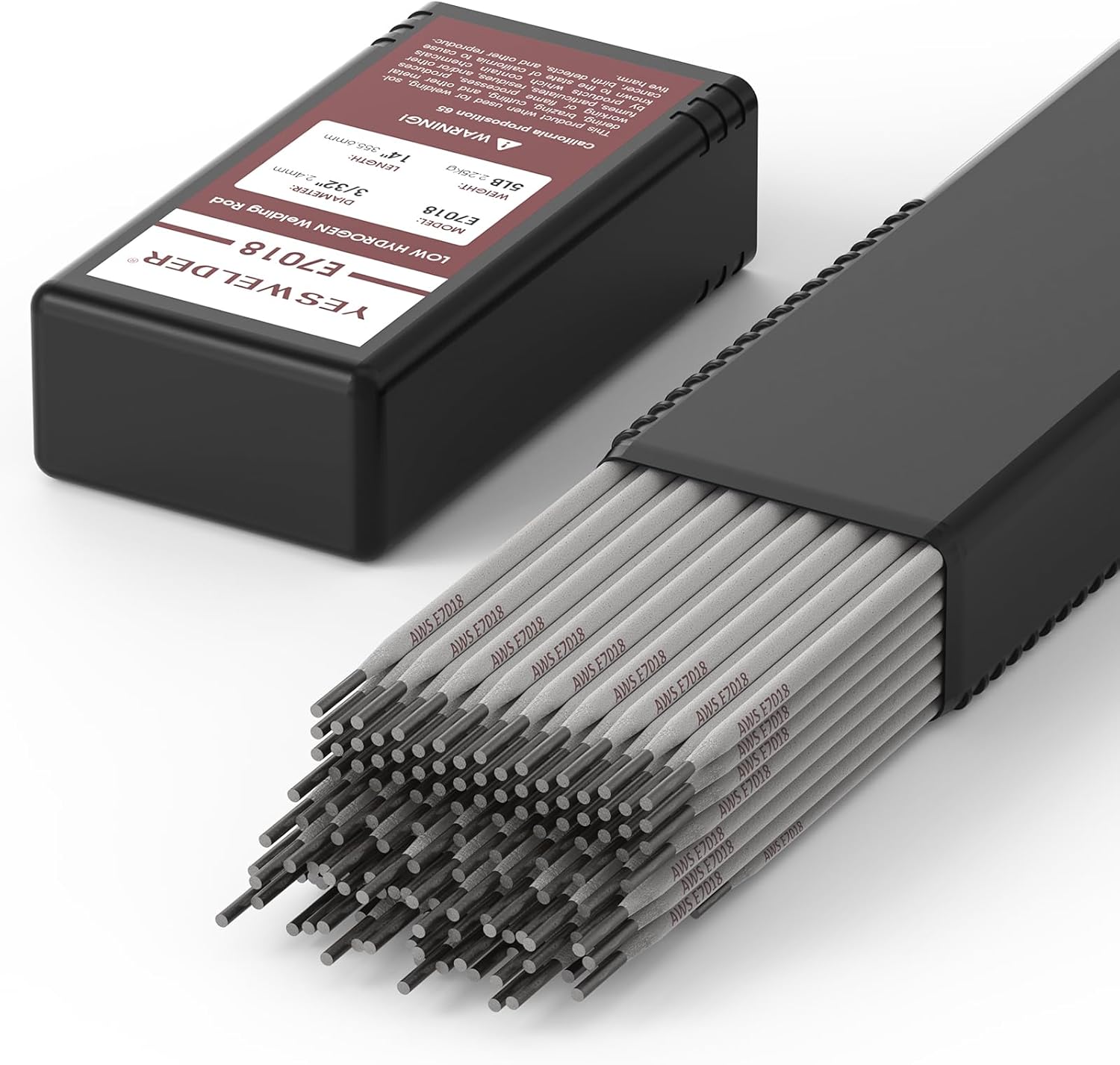
2. YESWELDER E7018 3/32” 5LB Welding Rod Low Hydrogen Carbon Steel Stick Electrodes
- Brand: YESWELDER
- Manufacturer: YESWELDER
The E7018 is a low-hydrogen iron powder electrode designed for higher-quality welds and reduced x-ray inspection risk. It supports all-position welding on AC or DC reverse polarity and is particularly recommended for medium-grade carbon steels, cold-rolled steels, and structural applications where porosity can be problematic with conventional electrodes. The 3/32” diameter with a 14” length and 5LB package matches common thin-to-medium thickness applications, with a higher recommended amperage range of 70A-100A. This rod emphasizes high deposition efficiency and stable re-striking, contributing to robust fillet welds and consistently sound beads on slightly more demanding joints.
Field usage shows the E7018 delivering strong, dependable beads with reduced porosity on clean or mildly rusted surfaces, which is especially valuable in structural or offshore-type scenarios where repeatability matters. However, its performance advantage comes with greater heat input and preheat considerations for some steels; in very thin sections, care must be taken to avoid burn-through. Beginners might prefer the E6013 for its easier arc, while more experienced welders will appreciate the high-quality welds and better impact resistance that E7018 can offer in appropriate thickness ranges.
Pros
- Low-hydrogen, high-quality welds
- Excellent deposition efficiency and re-striking
- All-position suitability on AC/DC
- Reduced porosity on many carbon steels
- Ideal for structural and offshore-type applications
Cons
- Higher heat input can risk burn-through on very thin stock
- Requires controlled amperage and potential preheat for some steels
- More demanding arc characteristics for beginners
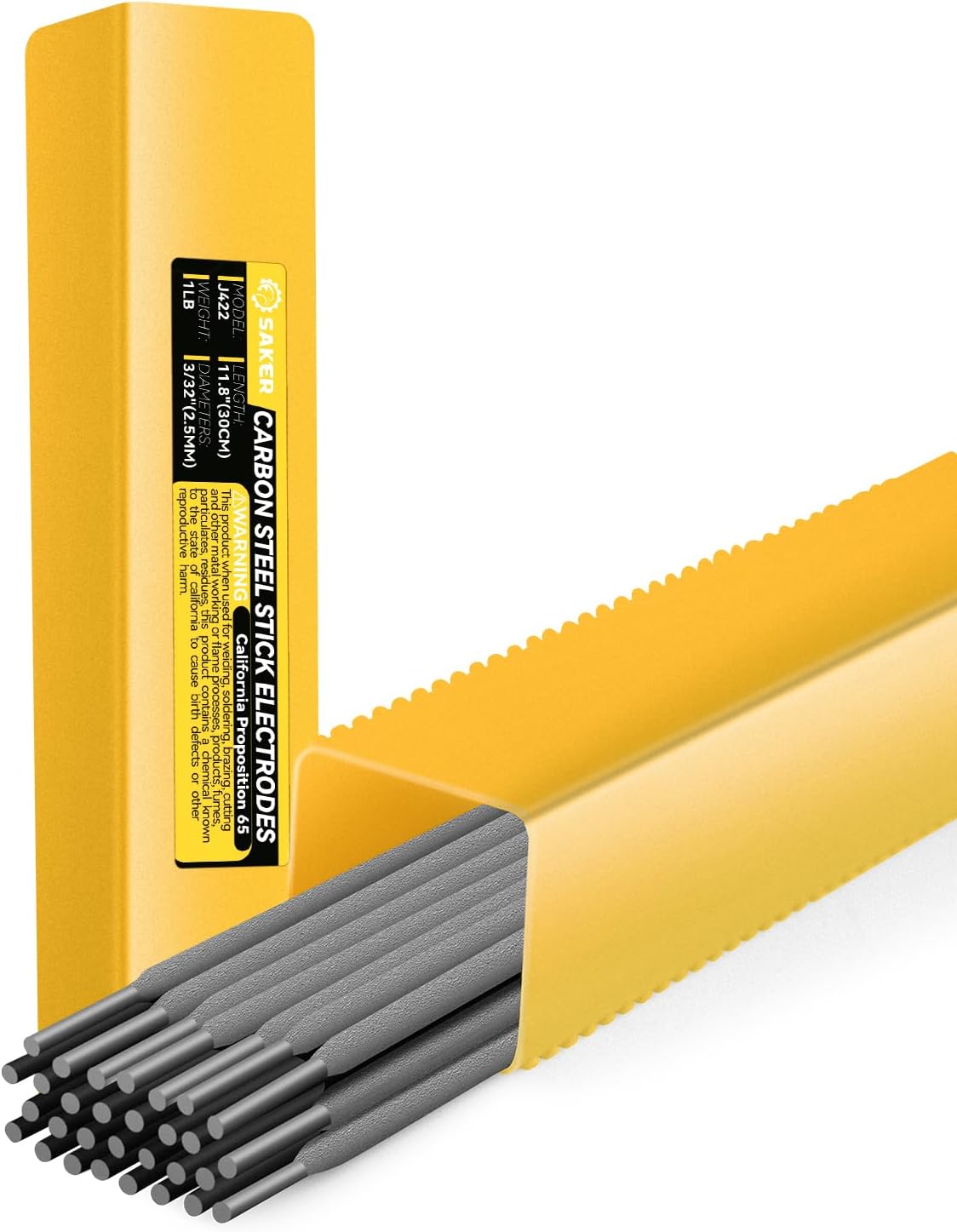
3. Saker E6013 Welding Rod 3/32” 1-Pound Carbon Steel Stick Welding Electrodes
- Brand: Saker
- Manufacturer: Saker
Saker’s E6013 3/32” rods present a compact, all-purpose solution aimed at both beginners and pros, with compatibility for AC and DC welding and a focus on low-carbon steel. The 1-pound package makes it an accessible option for small projects, while the 3/32” diameter and 14” length align with common thin-gauge applications. The rods are designed for all-position welding with shallow penetration, which is beneficial for light fabrication, sheet metal, and pipe work where precision is important.
In use, Saker’s E6013 demonstrates easy arc initiation and minimal spatter, with slag that’s relatively easy to remove. The vertical-down fillet performance is described as nearly self-cleaning, aiding workflow on close-fit joints. For hobbyists repairing doors, brackets, or light structural work, this rod offers a forgiving experience, though it remains limited by its shallow penetration when thicker sections or deeper fusion is required. The 1-pound packaging also limits long-term reuse on larger projects, but it’s practical for quick repairs.
Pros
- Good all-position performance
- Low spatter with easy slag removal
- Self-cleaning slag in vertical-down welds
- Suitable for beginners and professionals
- Compact 1-pound package for small projects
Cons
- Limited penetration on thicker stock
- Smaller package may require frequent replacements
- May require careful fit-up to minimize porosity on rough surfaces
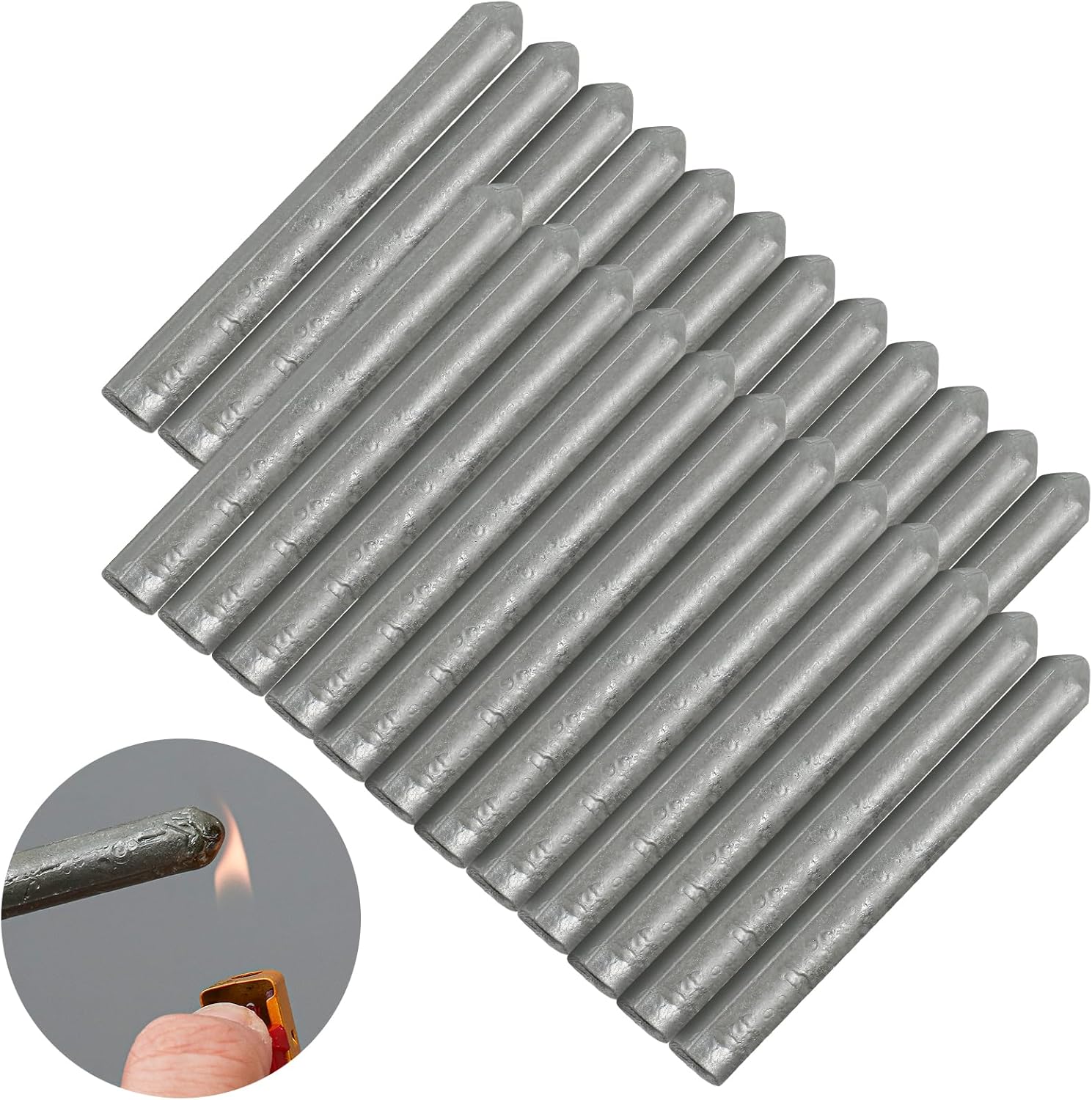
4. Tandefio 24 Pcs Low Temperature Universal Welding Rod Sticks Metal Melt Low Melt Solder Pipe Tools Electrode Aluminum Rod for Stainless Steel Iron
- Brand: Tandefio
- Manufacturer: Tandefio
Tandefio presents a 24-piece low-temperature universal welding rod set intended for aluminum, stainless steel, iron, and PVC pipe work. These rods emphasize a low melting point with a user-friendly process that can be started with an ordinary lighter, making them appealing for quick field repairs and electronics-related tasks. The product notes acknowledge brittleness of the material and advise proper handling; the design aims to deliver fast welds with minimal heat input, broadening the use cases to include non-traditional metals and brazing-like applications.
In practice, Tandefio’s low-temperature rods enable rapid, low-heat bonding suitable for aluminum brazing and similar joints where heat management is critical. The package size and flux/solvent composition support quick fixes for electronic enclosures or thin-gauge metal repairs. Trade-offs include potential odor and the inherently brittle nature of the material, which may limit mechanical strength and long-term durability in load-bearing joints. This set is best suited for light, low-stress repairs and hobby projects rather than structural welds.
Pros
- Low-temperature operation for heat-sensitive work
- Wide material compatibility (aluminum, stainless, iron, PVC)
- Compact, ready-to-use 24-piece kit
- Fast welding with low heat input
- No need for specialized power sources
Cons
- Brittle composition may limit strength
- Odor during use and potential health considerations
- Not a substitute for structural or high-strength welds on thin stock
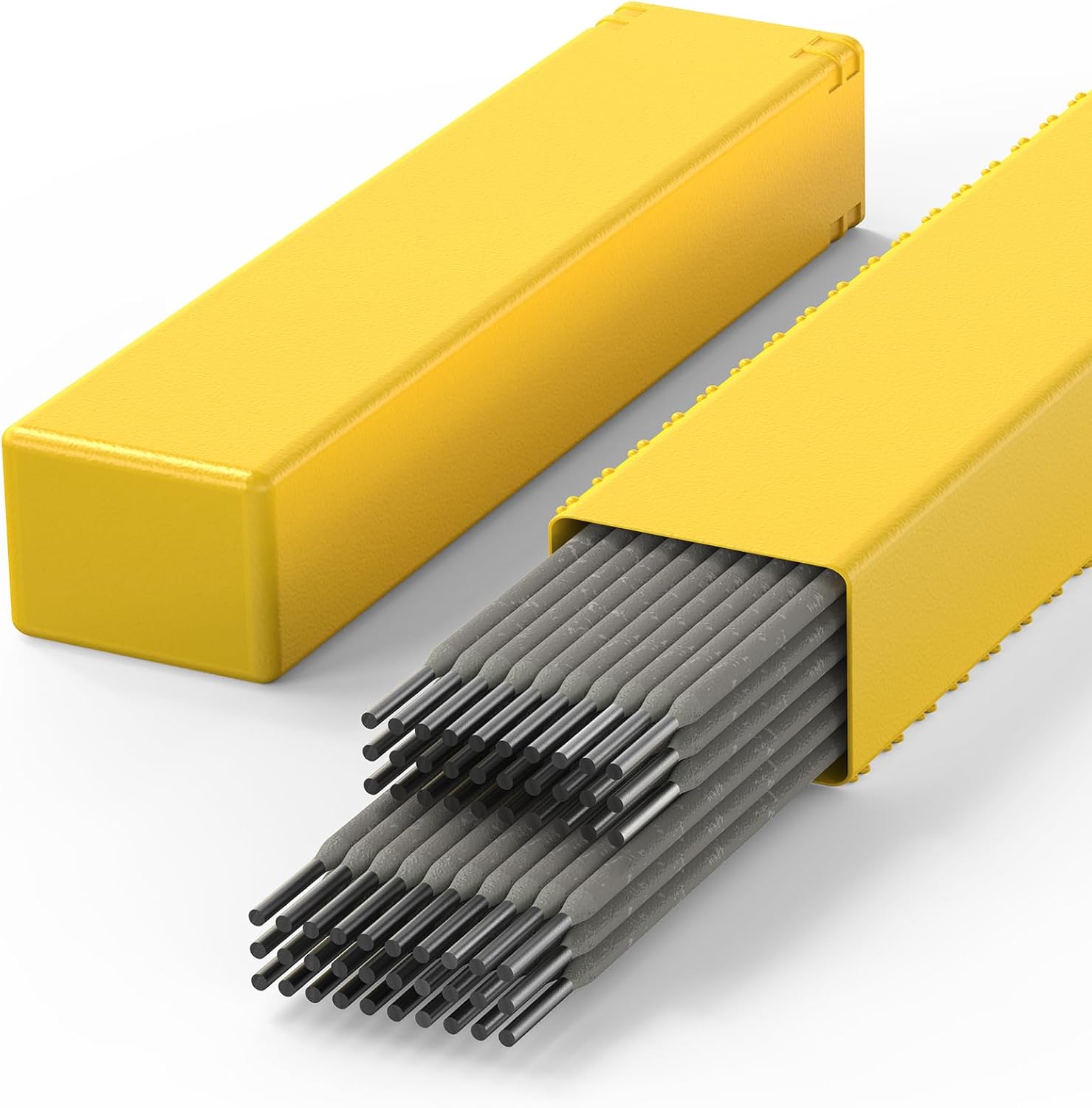
5. E6013 Welding Rods 1/8”: 14” Low-Carbon Steel Welding Electrodes for Light Metal Fabrication
- Brand: Faiuot
- Manufacturer: Faiuot
Faiuot’s E6013 1/8” welding rods target ease of use and reliable performance for maintenance, repair, and light fabrication. The larger diameter (1/8”) offers increased filler material for joints that can tolerate slightly thicker stock, and the rods are designed to work with both AC and DC machines, delivering a smooth arc. They are marketed for all-position welding, with low spatter and self-cleaning characteristics, and are well-suited for farm equipment repairs, gates, and general metal maintenance tasks. The pack includes 32 rods (1/8” diameter, 14” length) with an amperage range of 80A-120A, making them a practical choice for a wide range of consumer welders.
In terms of performance, these rods provide stable arc starts and consistent bead profiles on clean or mildly rusted surfaces. The 1/8” diameter offers deeper fusion than 3/32” rods, which can be advantageous for slightly thicker light-gauge work. However, for ultra-thin sheet metal, the larger diameter could increase heat input and risk burn-through if not controlled carefully. The high customer rating (4.9/5 from 57 reviews) suggests strong satisfaction among buyers focusing on maintenance and repair tasks.
Pros
- Strong all-position performance
- Low spatter with self-cleaning slag
- Good for maintenance and general fabrication
- Versatile AC/DC compatibility
- Large 32-piece pack offers good value
Cons
- 1/8” diameter may be less ideal for very thin sheets
- Higher heat input risk on ultra-thin stock
- Not ideal for very precision thin-walled assemblies
Frequently Asked Questions
We’ve compiled answers to the most common questions about welding rods to help you make an informed decision.
Conclusion
Final thoughts: For thin metal projects, E6013-based options (YESWELDER, Saker, Faiuot) deliver reliable, easy-to-control welds with forgiving arcs ideal for beginners and hobbyists.
If your use case involves slightly thicker thin stock or you require higher strength and porosity resistance, the E7018 from YESWELDER is the premium pick, provided you manage heat input.
Tandefio’s low-temperature kit fills a niche for rapid, low-heat bonding across diverse metals but is not a substitute for structural welding. Your choice should balance material type, thickness, project criticality, and power availability..