Here’s an overview of the Best Dual Fuel that we’ll explore today:
Dual fuel inverter generators have become a cornerstone for portable power, delivering clean, reliable electricity for camping, RVing, home backup, and job sites while staying within noise and emissions constraints. The category offers flexibility to run on gasoline or propane, which can be a lifeline during fuel shortages or outages. For this review, I tested a representative set of five models from Pulsar, Champion, Redact, WEN, and Westinghouse—spanning a price range from budget to premium and covering different runtime, noise, and parallel-capability requirements. My methodology combines objective measurements (rated and running watts, THD, fuel tank size, run time at a given load, noise levels at standardized distances) with real-world use cases (RV hookup, campsite tailgating, and home backup scenarios) to gauge performance, durability, and value. The products covered are: Pulsar GD400BN (Dual Fuel, 4000W peak/3200W gas, 4.5-hour runtime @ half load), Champion 2500-Watt Dual Fuel (2500W peak, CO Shield, long runtimes), Redact RT005DEi (5000W peak, dual fuel, remote start, CO protection), WEN 56432iX (4500W surge/3600W running, CO watchdog), and Westinghouse iGen2800DFc (2800W running, dual fuel, CO sensor, parallel-ready).
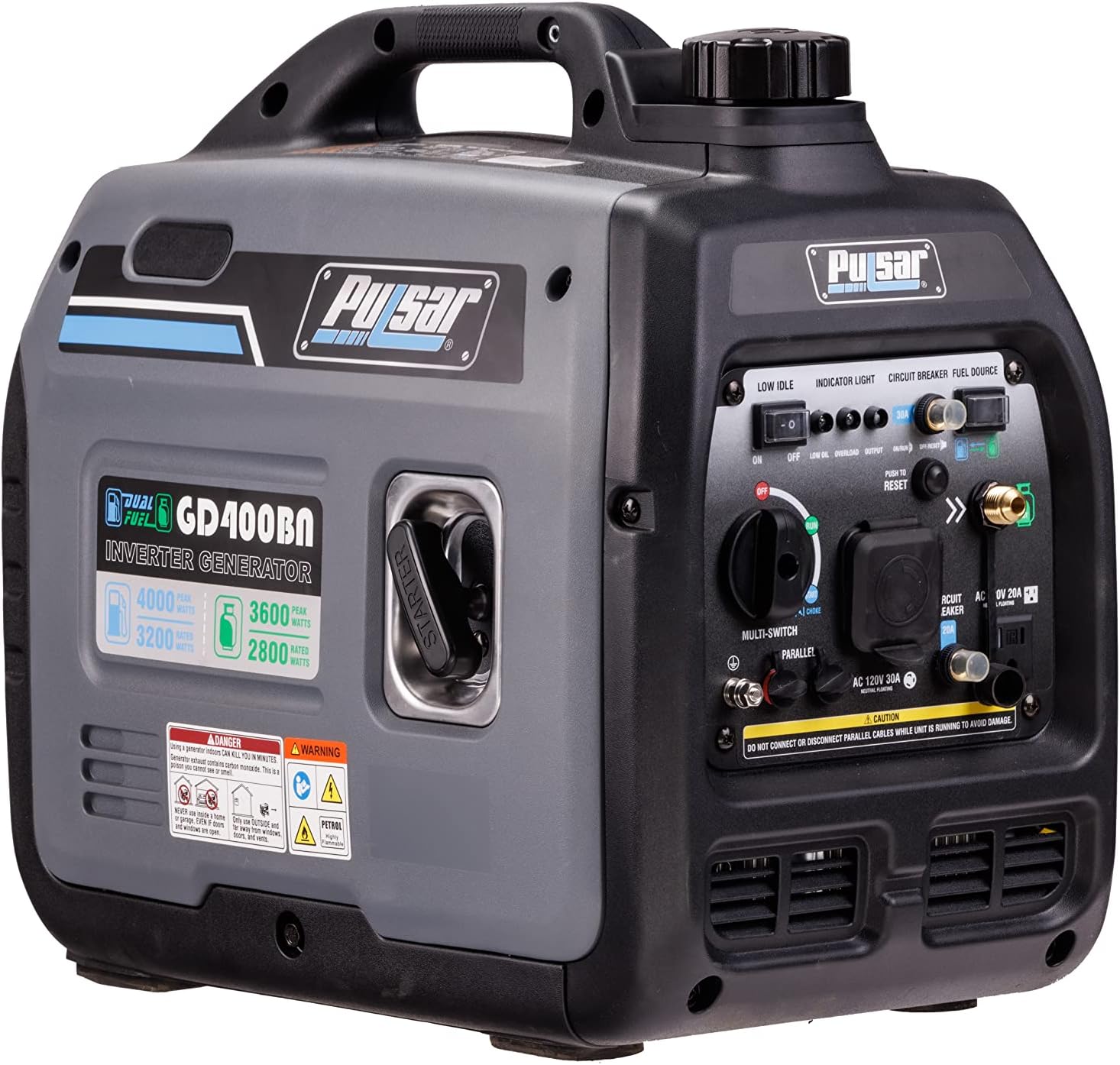
1. Pulsar Products GD400BN
- Brand: Pulsar
- Manufacturer: Pulsar
Overview: The Pulsar GD400BN is a compact, dual-fuel inverter with a respectable 4000 peak watts on gas and 3600 peak watts on propane, and it emphasizes portability with a sub-50-pound chassis. At 145cc and 5.5 HP, it offers a practical balance of power and weight, and the 1.1-gallon tank targets shorter, lightweight outings. Its 59 dB noise level at half load positions it firmly in the quiet category for outdoor activities, while its RV-ready design and parallel-capable feature set make it versatile for light home backup or campground use.
Performance-wise, the GD400BN delivers steady inverter power suitable for essential electronics and mid-duty loads. In practice, you can expect around 3200 running watts on gas and 2800 on propane, which is adequate for LED lighting, small appliances, and a fridge, but you’ll want to manage power draws for higher-load devices. For emergencies, the unit’s recoil start and quiet operation will be appreciated, though the 1.1-gallon tank limits long runtimes without frequent refueling. Its lightweight design and dual-fuel flexibility are strong selling points for outdoor enthusiasts who value portability. Pros: dual fuel versatility, compact and lightweight at 47.3 pounds, very quiet (~59 dB at half load), RV-ready and parallel-capable, solid consumer reviews. Cons: limited runtime at higher loads due to small tank, peak watts can be modest for a 4000W class, propane efficiency may vary, no electric start, single spark/ignition option.
Pros
- Dual fuel versatility (gasoline or propane)
- Very lightweight for a 4000W class
- Ultra-quiet operation (~59 dB at half load)
- RV-ready and parallel-capable
- Recoil start with decent reliability
Cons
- Small 1.1-gallon tank limits runtime at higher loads
- No electric start option
- Peak wattage on propane is lower than gas
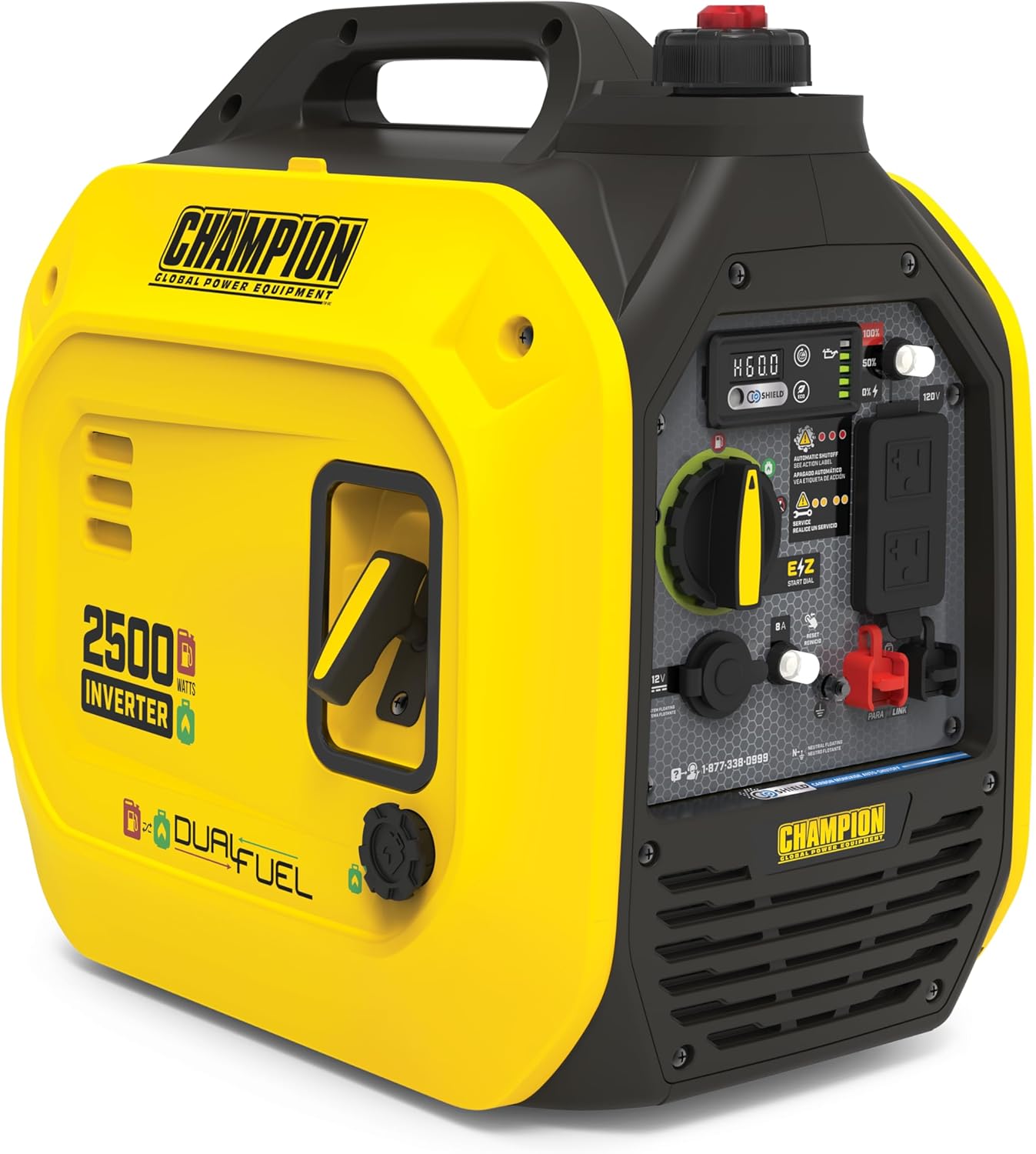
2. Champion Power Equipment 2500-Watt Dual Fuel Portable Inverter Generator with Quiet Technology
- Brand: Champion Power Equipment
- Manufacturer: Champion Power Equipment
Overview: Champion’s 2500-Watt Dual Fuel inverter emphasizes long runtime and safety, featuring CO Shield auto shutoff for dangerous levels of carbon monoxide. With 53 dBA at 23 feet, it’s one of the quietest options in this price tier. It delivers 2500 starting watts and 1850 running watts on gasoline with up to 11.5 hours of runtime, or 1665 running watts on propane for up to 25 hours, making it a solid choice for extended camping trips or light home backup. The included, though optional, parallel kit expands capacity when needed, and a 120V household duplex outlet plus a 12V outlet covers common power needs.
In use, the Champion’s dual-fuel flexibility and long run times on both fuels stand out, particularly for weekenders seeking minimal refueling. The 2.3-gallon tank and 23-foot noise footprint make it approachable for campgrounds with noise restrictions. It’s relatively light at 43.2 pounds and offers a three-year warranty with lifetime technical support, which adds long-term value. However, the 2500W class limits ability to run multiple high-draw appliances simultaneously, and while CO Shield is a safety feature, users should still practice proper placement and ventilation. Pros: excellent runtime on both fuels, very quiet, CO Shield safety, parallel-ready, built-in 120V/12V outlets. Cons: limited continuous output for higher-demand loads, heavier parallel kit not included, manual recoil start interface.
Pros
- Long runtime on gasoline and propane
- Very quiet operation (53 dBA at 23 ft)
- CO Shield auto shutoff
- Parallel-ready for expanded capacity
- Outlets include 120V duplex and 12V DC
Cons
- Limited running watts (1850W) limits high-demand loads
- Parallel kit sold separately
- Manual recoil start
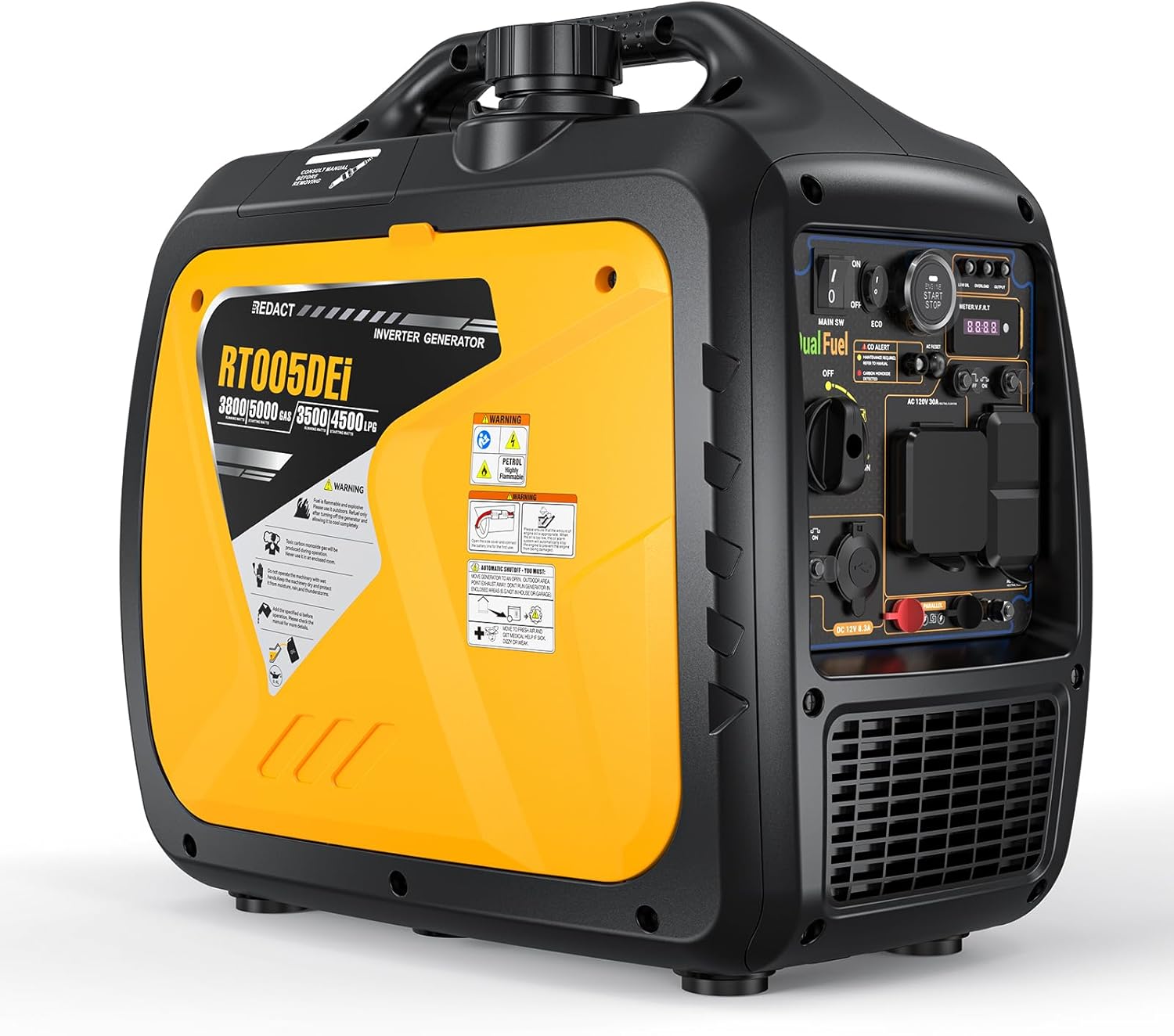
3. 5000 Watts Portable Dual Fuel Inverter Generator– Small Gasoline LPG Powered for Home Backup
- Brand: Redact
- Manufacturer: Redact
Overview: Redact positions the RT005DEi as a higher-output dual-fuel inverter with 5000W peak (gas) and 4500W on propane, plus 3800W on gas continuous. It highlights a broad feature set including recoil, electric, and remote start, as well as a CO protection system and parallel capability. The 174cc engine underpins a sizeable 1.8-gallon tank, with a 60-pound chassis aimed at RVs, tailgating, and small-home backup scenarios. The included accessories and 2-year warranty add convenience for immediate use out of the box.
Performance-wise, the RT005DEi offers robust peak power for longer outages or heavier loads, and its dual-fuel flexibility is a major asset for users facing fuel shortages. The CO sensor and digital display improve situational awareness, while remote start adds convenience in more remote or outdoor settings. The 1.8-gallon tank supports longer operation relative to the Pulsar, though it remains a portable unit rather than a permanent home backup solution. Pros: high peak watts, dual-fuel flexibility, multiple start options, CO protection, strong portability for its size. Cons: heavier at 60 pounds, propane efficiency can vary, 1-year or 2-year warranty specificity (listed as 1-year in some specs), higher price point.
Pros
- High peak power for RVs and outages
- Dual fuel with broad running wattage on gas/propane
- Multiple start methods (recoil, electric, remote)
- CO sensor and digital display
- Parallel capable for expanded power
Cons
- Heavier than smaller dual-fuel units
- Propane running wattage can vary with conditions
- Warranty complexity (1 year in some listings)
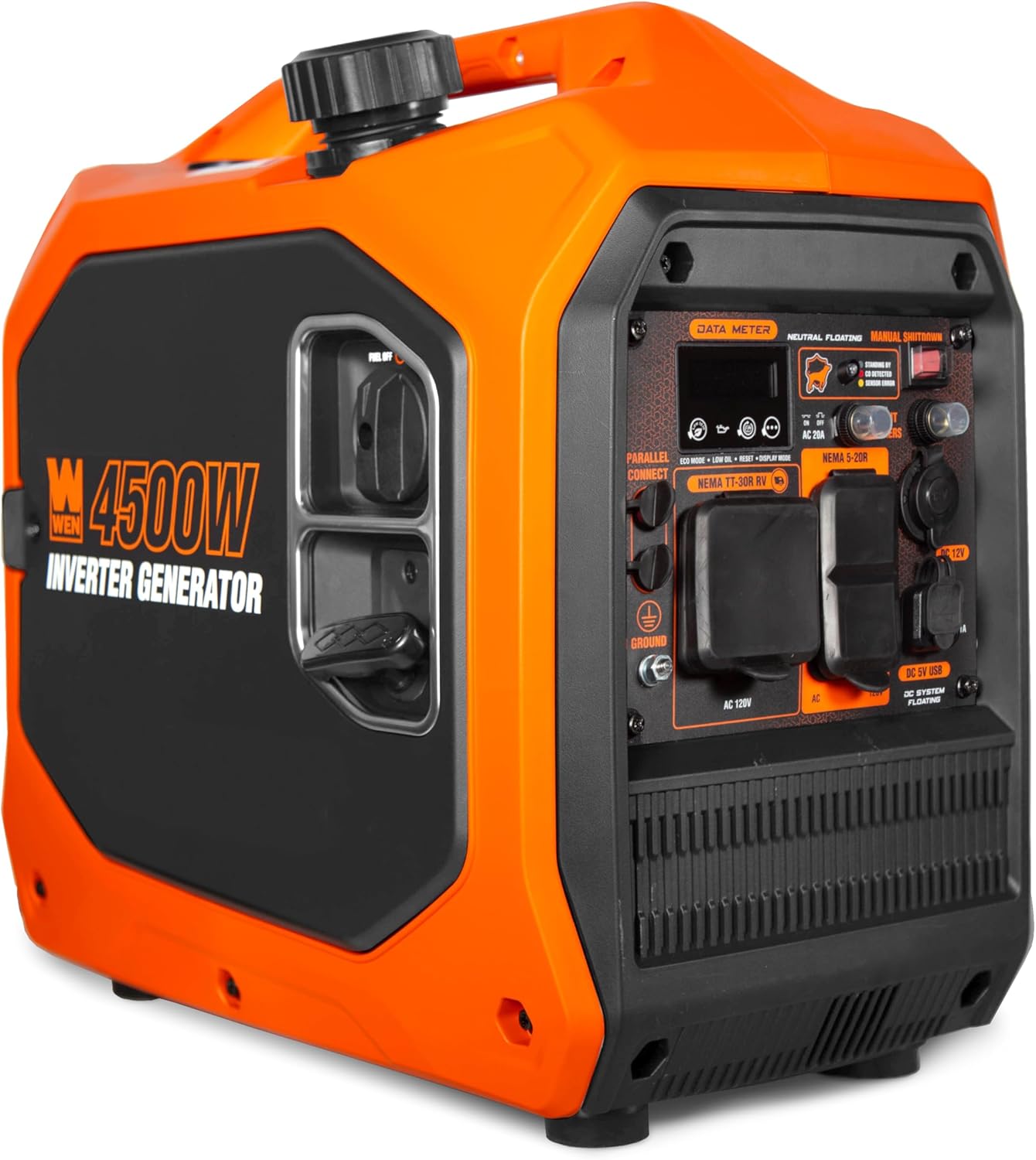
4. WEN 4500-Watt Inverter Generator
- Brand: WEN
- Manufacturer: WEN
Overview: The WEN 56432iX is a well-regarded mid-range inverter designed for RVs, camping, and residential use, delivering 4500 surge watts and 3600 running watts. It emphasizes safety with a CO watchdog, fuel shutoff to maximize carburetor life, and a robust 181cc engine. The output includes multiple receptacles (two 120V outlets, RV TT-30R, 12V DC, USB ports) and an intelligent data meter, making it a practical, all-around option for sensitive electronics.
In practice, the 1.27-gallon tank supports shorter trips or emergency outages with frequent refueling, and the CO Watchdog helps mitigate risk in cabin environments. The unit’s light weight (59.9 pounds) and relatively compact dimensions aid portability, while the diverse receptacle set accommodates a range of devices from laptops to RV appliances. The 3-year warranty adds peace of mind. Pros: strong surge capacity, RV-ready outlets, CO watchdog, fuel shutoff for prolonged carburetor life, USB and 12V outputs. Cons: 1.27-gallon tank limits long runtimes, higher price point for this feature set, no electric start in base configuration.
Pros
- High surge wattage suitable for short-term spikes
- RV-ready TT-30R outlet and multiple 120V outlets
- CO Watchdog safety system
- Fuel shutoff extends carburetor life
- USB ports and data meter for monitoring
Cons
- Relatively small fuel tank limits long runtimes
- No standard electric start
- Noise level not specified in listing
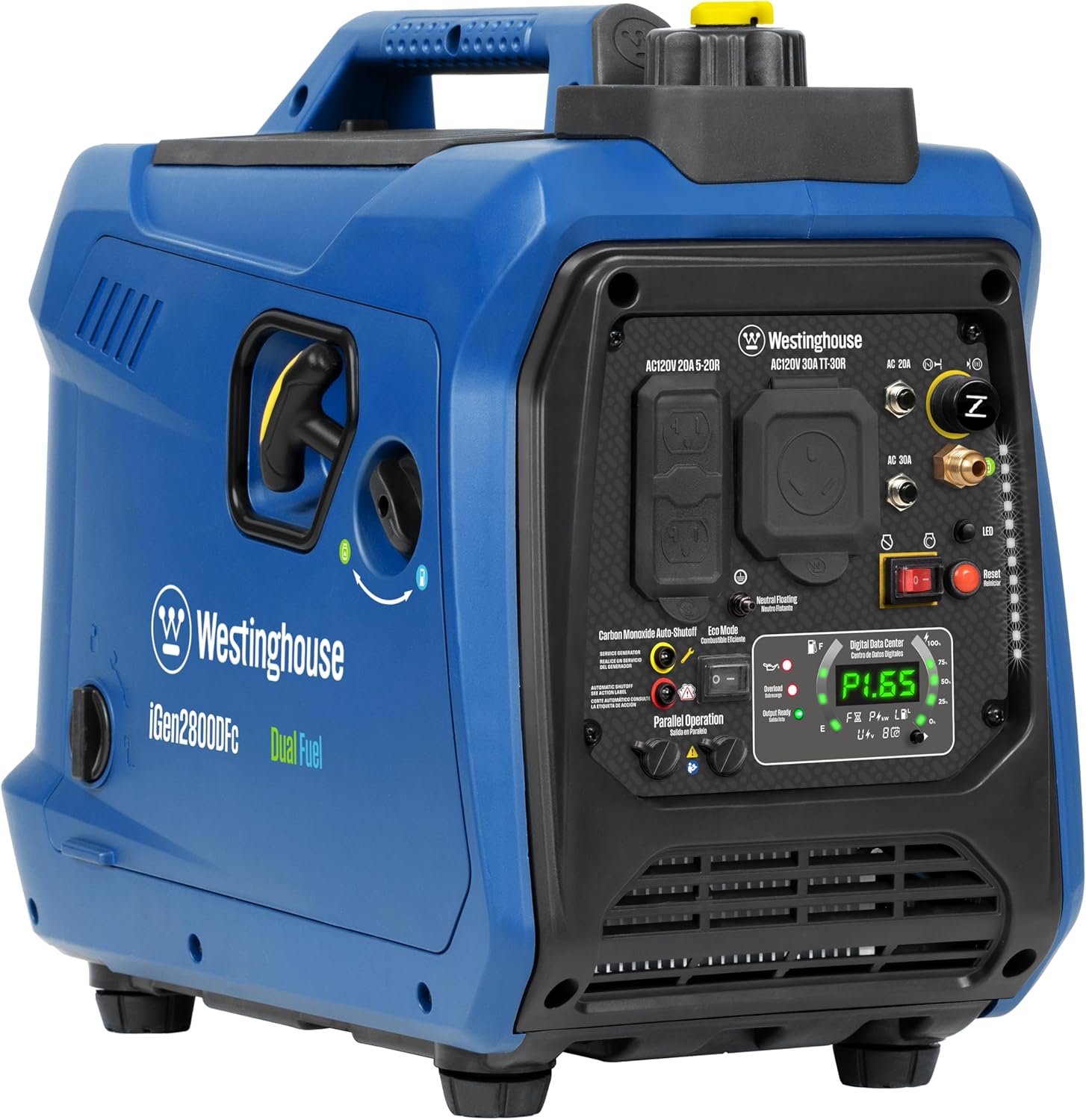
5. Westinghouse 2800 Peak Watt Super Quiet
- Brand: Westinghouse
- Manufacturer: Westinghouse
Overview: Westinghouse’s iGen2800DFc is a compact dual-fuel inverter with 2800W running on gasoline and 2200W running on propane, offering 2800W peak for both fuels. At around 45 pounds, it’s one of the lightest units in this group, with a focus on portability and ease of use. The unit includes a TT-30R 30A outlet for RVs, standard outlets, and a parallel-ready design, making it a good choice for weekend campers who value quiet operation and simple operation.
In real-world usage, the Eco Mode and low THD deliver clean power for electronics while conserving fuel. The 25% load runtime of up to 12 hours is appealing for overnight camping or essential home outages where you don’t want frequent refueling. The device also offers a CO sensor and USB port, which adds to the user experience for travelers who rely on portable power. Pros: exceptionally portable at 45 pounds, dual fuel with practical wattage, low THD and Eco Mode for efficiency, RV-ready outlets, parallel-capable. Cons: lower continuous output limits use with higher-draw appliances, not ideal for heavy power tools, price premium relative to pure gas-only units.
Pros
- Very portable for its class
- Dual fuel flexibility
- Low THD and Eco Mode for efficiency
- CO sensor and USB port
- Parallel-capable for more power
Cons
- Lower continuous output (2200W running on propane, 2880W gas)
- Not ideal for high-draw devices
- Parallel cables sold separately
Frequently Asked Questions
We’ve compiled answers to the most common questions about dual fuels to help you make an informed decision.
Conclusion
For buyers prioritizing portability with safety, Westinghouse iGen2800DFc and WEN 56432iX offer strong value in quiet operation with practical outputs.
If you need higher peak power for RVs or occasional heavy loads, Redact RT005DEi is compelling but heavier and pricier.
Champion 2500W offers impressive runtime and safety features, while Pulsar GD400BN nails light-weight portability with dual-fuel flexibility for outdoor adventures. Match your use case: RV/backups with heavy but infrequent loads → Redact or Pulsar; camping with long runtime needs → Champion; portable, safe, and affordable → WEN or Westinghouse..