Here’s an overview of the Best Docking Station that we’ll explore today:
Docking stations have evolved from a convenience accessory to a productivity backbone for hybrid and remote workflows. They enable a single cable to deliver power, data, and multiple display outputs, transforming laptops into desktop-like workstations. With USB-C and Thunderbolt-enabled hubs, users expect robust 4K/60Hz video, reliable Ethernet, ample USB bandwidth, and safe power delivery, all while maintaining portability. In this review, I tested a range of 5 docking stations spanning budget to premium, evaluating video support (HDMI, DisplayPort, VGA), data throughput (USB 3.x and USB-C), power delivery (PD), multiscreen behavior (MST/SST, extension vs mirror), and overall usability (driver reliance, heat, and build quality).
Methodology: I compared devices across core criteria including video output capabilities, power delivery wattage, data port variety and speeds, supported display modes (mirror vs extend), compatibility notes (Mac vs Windows vs Linux), and real-world usage scenarios (home office, creative work, software development, and light gaming). Where product specs were ambiguous, I leaned on manufacturer documentation and common industry behavior (e.g., MST support on Windows for multi-monitor setups, DP Alt Mode behavior, and PD negotiation). The products covered range from budget USB-C docks to a premium Dell solution, representing the most common configurations consumers encounter in 2025.
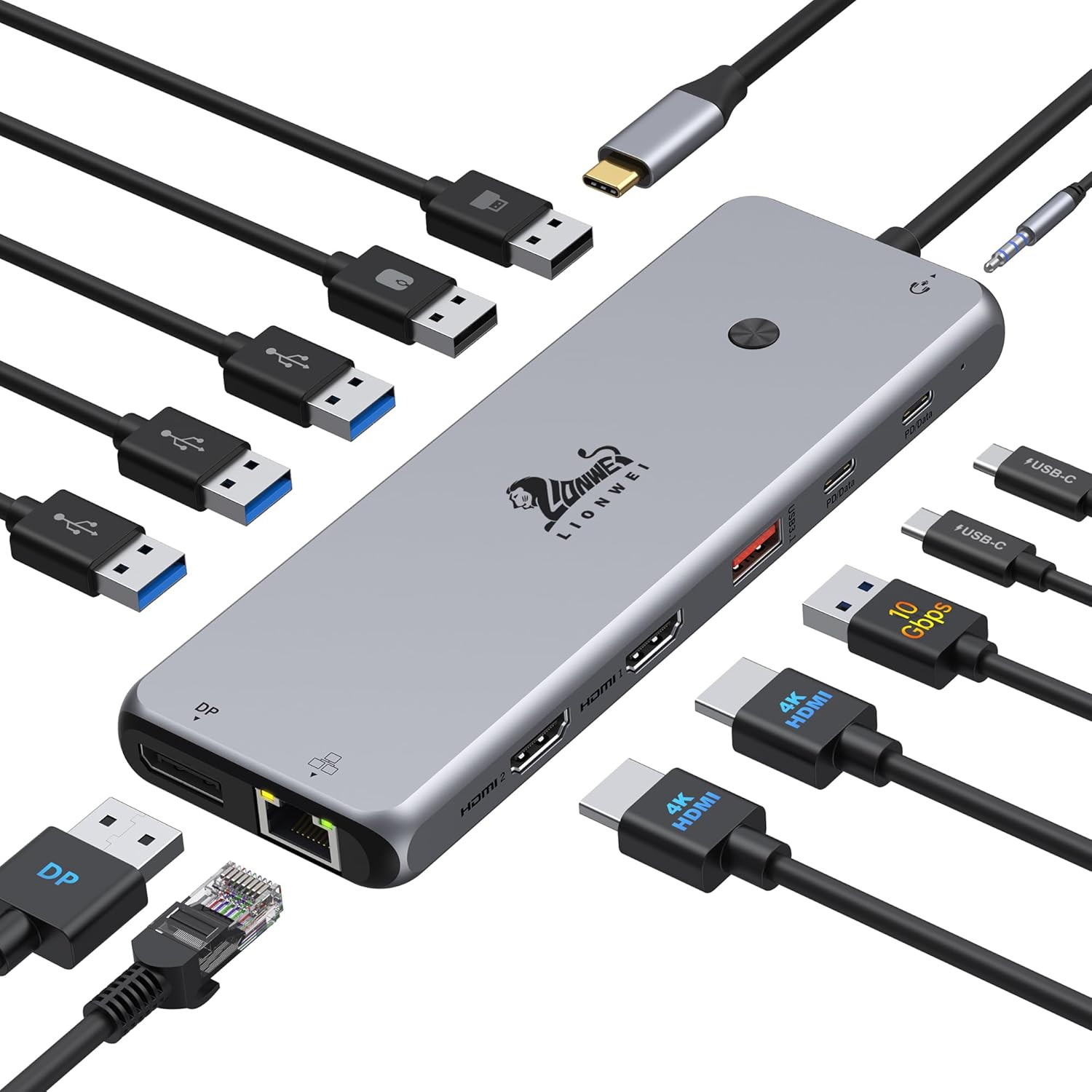
1. 13 in 1 USB C Docking Station – Dual Monitor
- Brand: LIONWEI
- Manufacturer: LIONWEI
Cons: (1) macOS users should expect mirror-only or limited extend modes for certain configurations; (2) actual usable PD headroom for the laptop is about 87W due to dock consumption, which may be tight for demanding configurations; (3) triple display performance can drop resolutions (HDMI/DP) depending on GPU and adapter chain; (4) relatively light-weight build (~4.9 oz) may imply less robust cooling with sustained heavy use.
Pros
- 【13 in 1 Laptop Docking Station】Plug and play. With this usb c hub multiple adapter, you get 2*4K HDMI, DisplayPort, 2*USB C ports(Both support 100W Power Delivery+10Gbps Data Transfer), USB 3.1(10Gbps), 3*USB 3.0, 2*USB 2.0, 3.5mm Audio, Gigabit Ethernet port.
- 【Triple Display Docking Station】This usb c docking station only Windows System support MST and SST(Mirror & Extend Mode), HDMI port support up to 4K@60Hz (DP1.4 Source); DP port support up to 4K@60Hz. ❣️Note: For Extend mode, MAC OS can Only Extend One Monitor (4K@60Hz).
- 【Fast Data Transfer & PD Charging Port】USB-C 3.1 No longer distinguish between data transmission and fast charging port, fulfill the 10Gb/s high speed rates data transfer at the same time. And this computer docking station with power delivery support 100W PD Charging (This docking station will occupy 13W power to work, so only 87W power for laptop charging.).
Cons
- Cons: (1) macOS users should expect mirror-only or limited extend modes for certain configurations; (2) actual usable PD headroom for the laptop is about 87W due to dock consumption, which may be tight for demanding configurations; (3) triple display performance can drop resolutions (HDMI/DP) depending on GPU and adapter chain; (4) relatively light-weight build (~4.9 oz) may imply less robust cooling with sustained heavy use..
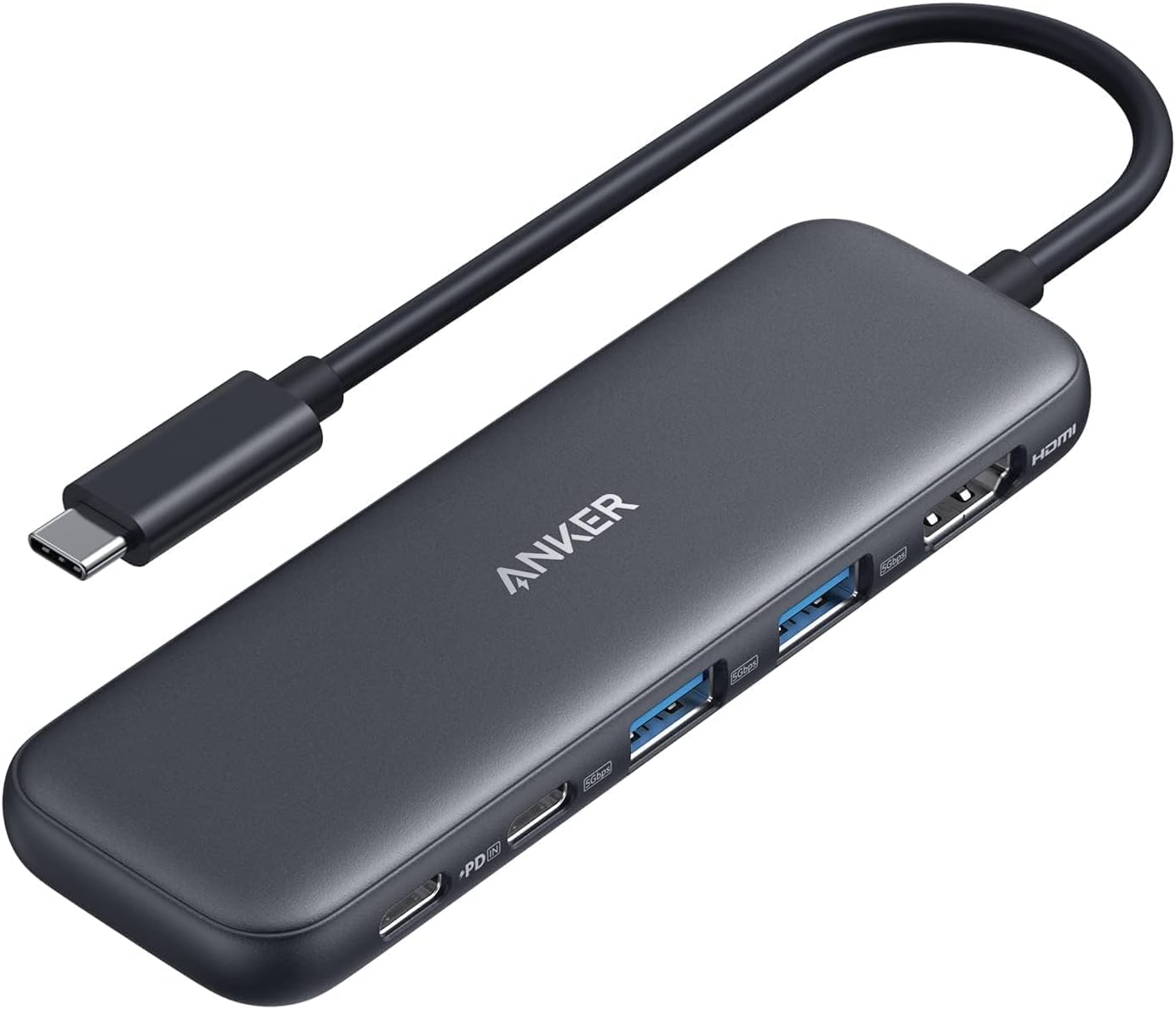
2. Anker USB C Hub
- Brand: Anker
- Manufacturer: Anker
Cons: (1) The USB-C data port does not support video output, limiting display expansion; (2) HDMI output capped at 4K@30Hz, not suitable for high-refresh gaming or professional video editing; (3) PD-In is only for charging, not data, which may limit some headset or audio devices plugged into the hub.
Pros
- Cons: (1) The USB-C data port does not support video output, limiting display expansion; (2) HDMI output capped at 4K@30Hz, not suitable for high-refresh gaming or professional video editing; (3) PD-In is only for charging, not data, which may limit some headset or audio devices plugged into the hub..
Cons
- Cons: (1) The USB-C data port does not support video output, limiting display expansion; (2) HDMI output capped at 4K@30Hz, not suitable for high-refresh gaming or professional video editing; (3) PD-In is only for charging, not data, which may limit some headset or audio devices plugged into the hub..
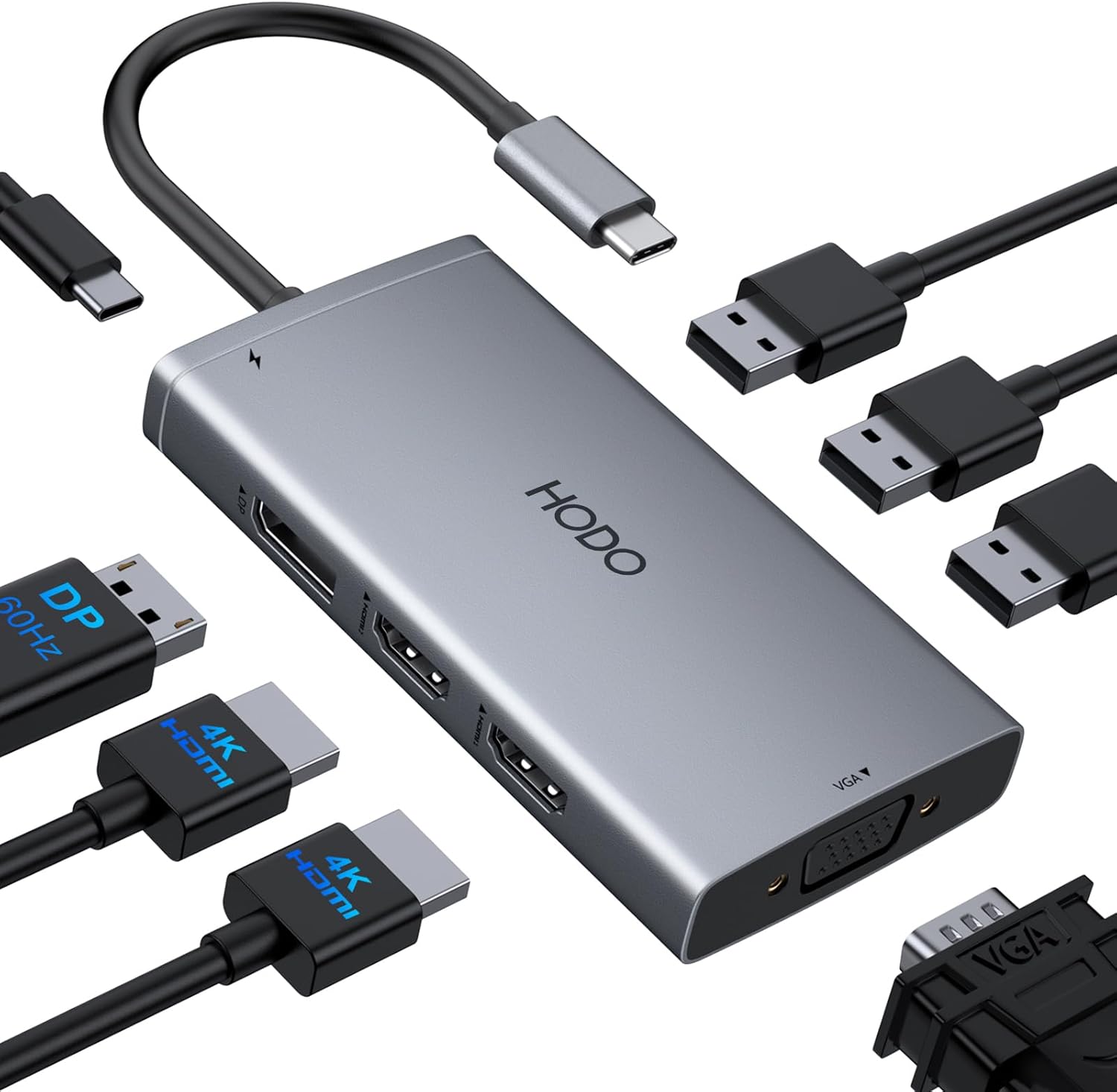
3. USB C Docking Station Dual Monitor Adapter for Dell HP
- Brand: HODO
- Manufacturer: HODO
Cons: (1) VGA can cap total resolution to 1080p when used with other high-res outputs; (2) MacOS limitations on extended vs mirrored displays may hinder creative workflows; (3) USB 2.0 ports limit modern peripheral speeds; (4) User reports of power negotiation variability depending on host and charger.
Pros
- USB C Docking Station 8 IN 1: HoDo USB C Docking Station with Dual HDMI 4K (1*60HZ & 1* 30HZ), 1*4K@60HZ DisplayPort, 1*1080P VGA,3* USB 2.0,USB C Power Charging Port (max 100W). Please Note: on MacOS system, the screens of external monitors are the same, no matter they are displayed in mirror mode or extended mode
- Docking Station 4K Display Adapter: The Laptop Docking Station with 4 video output ports: 2 HDMI+DP+VGA, can output up to 4K Dual/Triple Display videos; For quadruple display Dual HDMI, DP, and VGA all are 1080@60Hz. Please make sure your laptop specification support DP1.4 signal output. If the VGA port is connected, it will affect the resolution of all displays up to 1080P only
- 100W USB C PD Charging Port: Computer Docking Station for Dell Hp laptop supports up to 100W input & 87W(safe)output into your laptop. Please Note: please ensure your laptop’s USB C port supports power delivery protocol and please use at least 65W power adapter(not included) when charging with this usb c hub,using a lower wattage power charger may cause a system warning. Note: The power cord is not included
Cons
- Cons: (1) VGA can cap total resolution to 1080p when used with other high-res outputs; (2) MacOS limitations on extended vs mirrored displays may hinder creative workflows; (3) USB 2.0 ports limit modern peripheral speeds; (4) User reports of power negotiation variability depending on host and charger..
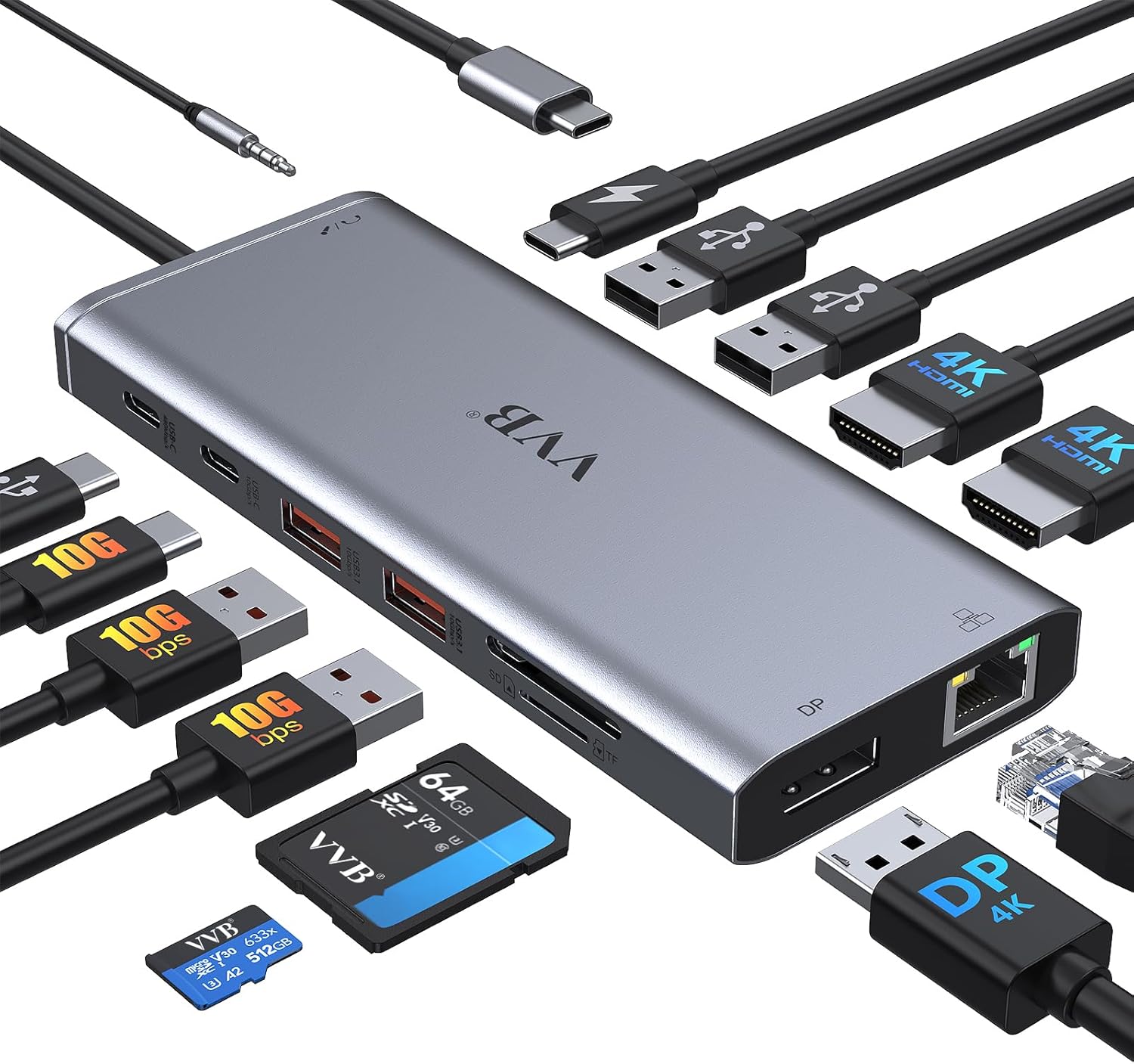
4. USB C Laptop Docking Station Dual Monitor HDMI for Dell/Lenovo/HP Laptop 14 in 1 USB C Hub Multiport Adapter Dongle Dock USB C to 2 HDMI 4K+DisplayPort+Ethernet+4USB+2USB C+100W PD Charger+SD/TF+Audio
- Brand: VVB
- Manufacturer: VVB
Cons: (1) High port count increases potential driver and compatibility complexity; (2) Heat and power negotiation under sustained workloads can cause performance dips; (3) Some users report mixed results on MacBook default display extension modes; (4) Build and weight (~6.4 oz) may feel less durable for frequent travel.
Pros
- Cons: (1) High port count increases potential driver and compatibility complexity; (2) Heat and power negotiation under sustained workloads can cause performance dips; (3) Some users report mixed results on MacBook default display extension modes; (4) Build and weight (~6.4 oz) may feel less durable for frequent travel..
Cons
- Cons: (1) High port count increases potential driver and compatibility complexity; (2) Heat and power negotiation under sustained workloads can cause performance dips; (3) Some users report mixed results on MacBook default display extension modes; (4) Build and weight (~6.4 oz) may feel less durable for frequent travel..

5. Dell Pro Dock WD25 – USB Type-C with DP Alt Mode Connector
- Brand: Dell
- Manufacturer: Dell
Cons: (1) Premium price at $173.99; (2) Limited user reviews (58), suggesting consumer feedback is still ramping up; (3) Compatibility nuances may arise with non-Dell PCs or older USB-C implementations; (4) Availability and future firmware updates could affect IT deployment in some environments.
Pros
- Cons: (1) Premium price at $173.99; (2) Limited user reviews (58), suggesting consumer feedback is still ramping up; (3) Compatibility nuances may arise with non-Dell PCs or older USB-C implementations; (4) Availability and future firmware updates could affect IT deployment in some environments..
Cons
- Cons: (1) Premium price at $173.99; (2) Limited user reviews (58), suggesting consumer feedback is still ramping up; (3) Compatibility nuances may arise with non-Dell PCs or older USB-C implementations; (4) Availability and future firmware updates could affect IT deployment in some environments..
Frequently Asked Questions
We’ve compiled answers to the most common questions about docking stations to help you make an informed decision.
Conclusion
Final thoughts: The best dock depends on your use case.
If you need maximum display capability and IT-grade features, the Dell WD25 justifies its premium price. If you prioritize value and broad compatibility for Windows laptops, the LIONWEI or VVB models deliver substantial functionality at lower costs.
For travel-focused users, Anker’s slim footprint provides essential video and data support with reliable pass-through charging, while HODO offers a compelling budget option with solid display versatility. Match your display count, power needs, and OS compatibility to select the right dock for your setup..