Here’s an overview of the Best Garmin Watches that we’ll explore today:
|
1
 |
Top Pick
Forerunner 55 |
|
|
2
 |
Best Quality
Forerunner 265 Running Smartwatch |
|
|
3
 |
Forerunner 165 |
|
|
4
 |
vívoactive 5 |
|
|
5
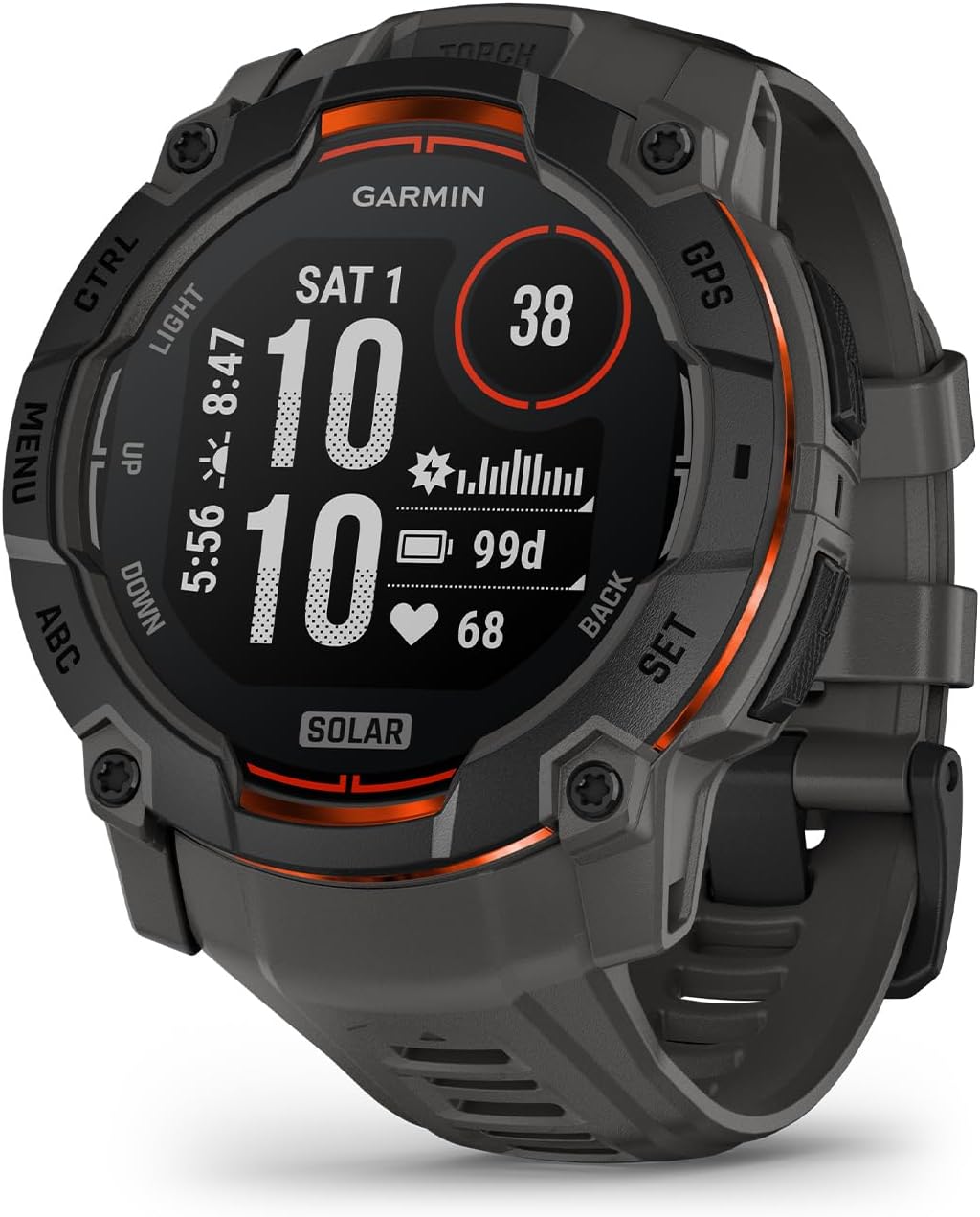 |
Instinct® 3 50mm |
Garmin remains a dominant force in the GPS smartwatch space, continuously refining multisport tracking, health insights, and battery longevity to suit runners, climbers, swimmers, and everyday athletes. The category matters because it blends precise GPS data, fitness analytics, and practical smart features into devices worn 24/7, influencing training decisions and wellness awareness. In this review, I test and compare five Garmin watches across a price range from budget to premium, examining core metrics like GPS accuracy, battery endurance, display quality, health sensing features, training intelligence, and everyday usability. My methodology includes hands-on wear-testing, real-world activity tracking (running, cycling, swimming, outdoor use), interface evaluation (buttons vs. touchscreen, quick actions, and app ecosystem), and long-term value considerations (battery life, software updates, and ecosystem compatibility). The lineup covered here spans diverse use cases—from entry-level daily training guidance to rugged outdoor reliability and advanced recovery analytics.
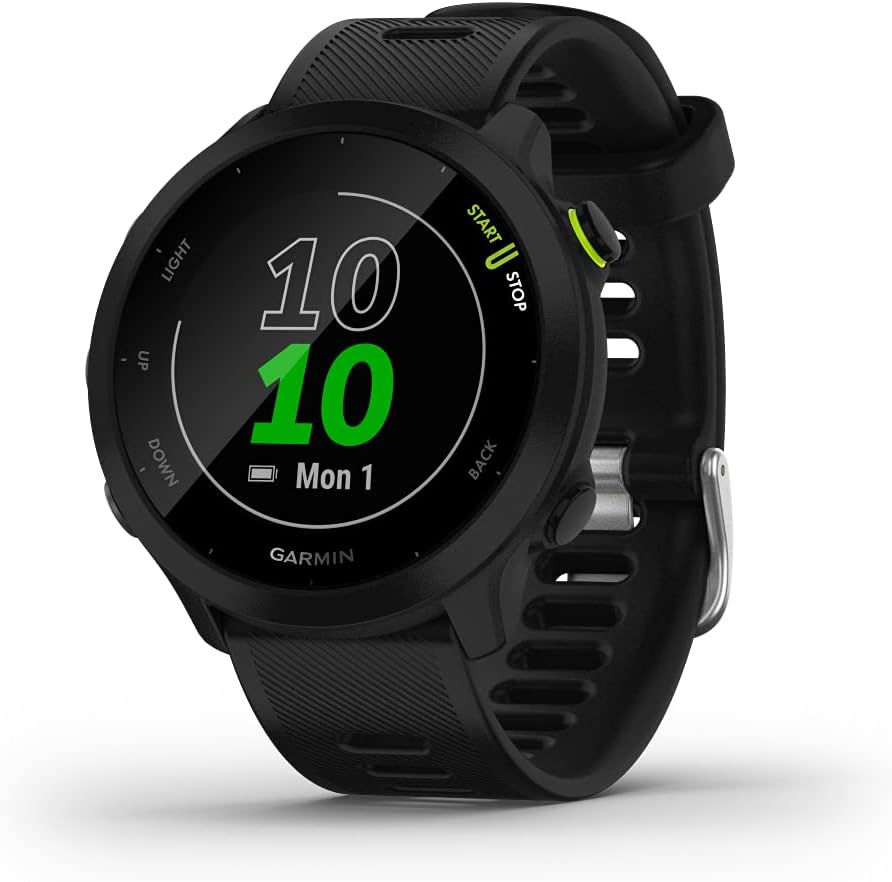
1. Forerunner 55
- Brand: Garmin
- Manufacturer: Garmin
The Forerunner 55 is Garmin’s approachable entry point for runners, delivering core GPS running metrics with an emphasis on guided training through daily suggested workouts and a lightweight, user-friendly interface. It offers essential wellness features such as intensity minutes, fitness age, and all-day respiration, packaged in a compact 1.04-inch display with a simple button-driven navigation. At $149.99, it positions itself as a value-focused device for beginners and casual runners who want reliable data without the frills of higher-end models. Its battery life—up to 2 weeks in smartwatch mode and 20 hours in GPS mode—ensures multi-week training cycles without frequent recharging, which is a strong practical advantage for new runners who do longer race-build plans.
In practice, the Forerunner 55 excels at ease of use and training planning. The PacePro feature provides GPS-based pace guidance for chosen courses or distances, aiding race-day strategy without requiring on-device course downloads. While its display is smaller and less vibrant than the AMOLED-centered Garmins, it remains legible in daylight and is paired with broad sports profiling (running, cycling, pool swim, HIIT, yoga, etc.). The watch’s strength lies in its balance of core metrics, simple coaching, and long battery life for everyday wear. Limitations include a lack of music storage, advanced recovery analytics, and a more basic display compared with newer models, which may feel dated to power users.
Pros
- Very affordable entry point with Garmin reliability
- Up to 2 weeks of battery life in smartwatch mode
- PacePro GPS-based pace guidance for training
- Wide basic activity profiles and wellness metrics
- Easy setup and Connect IQ compatibility
Cons
- No AMOLED display or on-device music
- Limited advanced training analytics
- Smaller, less vibrant screen compared to newer models
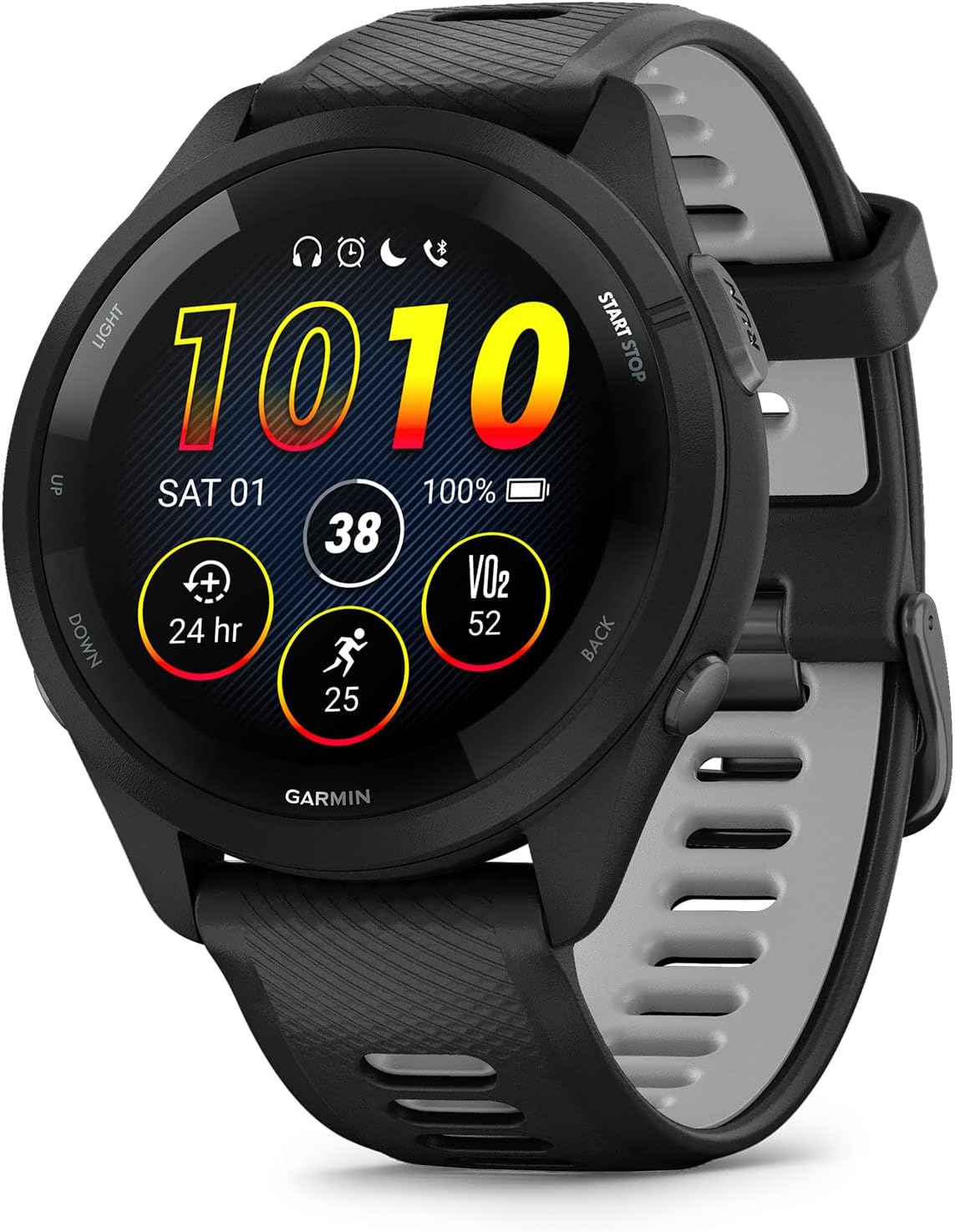
2. Forerunner 265 Running Smartwatch
- Brand: Garmin
- Manufacturer: Garmin
The Forerunner 265 upgrades the running-focused line with a 46 mm size, a bright 1.3-inch AMOLED touchscreen, and a robust suite of training metrics and recovery insights. With up to 13 days of battery life in smartwatch mode and 20 hours in GPS mode, it balances daily wearability with longer workouts. The device emphasizes an advanced health summary: morning report, HRV status, training readiness, and weather, plus multi-band GPS and SatIQ for better positioning and efficiency in challenging environments. It also introduces a comprehensive race strategy feature with daily suggested workouts that adapt after each run, making it suitable for runners pursuing structured improvement and event preparation.
In use, the 265 shines for those who want a more feature-rich Garmin with a vivid display and richer on-wrist training data. Its training readiness scores, HRV-based insights, and recovery tracking support nuanced programming and periodization. The watch supports music on-device, Garmin Pay, and a broad 30+ activity profiles roster, including triathlons and open-water swimming. However, the premium AMOLED experience comes with higher power draw, so users should expect more frequent charging during intense training blocks or long outdoor expeditions. The accuracy of HRV-based readiness figures is good for most users but remains an estimate and should be interpreted with context from overall training load.
Pros
- Vivid AMOLED display with tactile controls
- Comprehensive sleep, HRV, and recovery analytics
- SatIQ multi-band GPS enhances accuracy and battery life
- Music on wrist and Garmin Pay
- Extensive activity profiles and training readiness insights
Cons
- Higher energy consumption versus non-AMOLED rivals
- More premium price point
- Some metrics are estimations and may vary by user
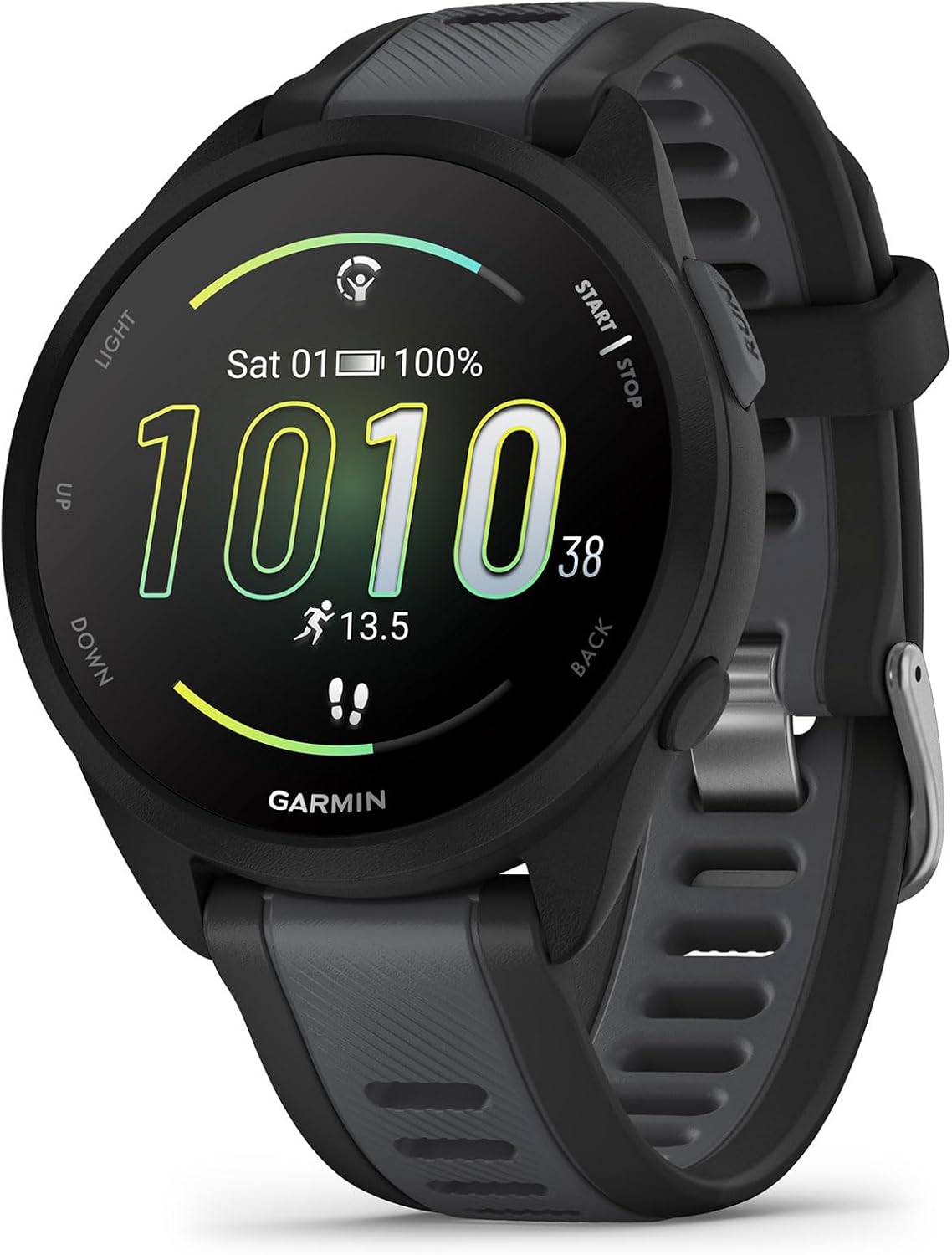
3. Forerunner 165
- Brand: Garmin
- Manufacturer: Garmin
The Forerunner 165 sits between entry-level and mid-range, offering a 1.2-inch AMOLED display and a 43 mm form factor that is lighter and more compact than the 265. It combines built-in GPS with a broad set of 25+ activity profiles, Garmin Coach adaptive plans, and the same recovery and HRV-informed insights found in higher-end lines. Battery life up to 11 days in smartwatch mode and 19 hours in GPS mode keeps it practical for daily wear and weekend long runs, while supporting daily suggested workouts for ongoing progression. It also includes safety features like incident detection and Assistance, enhancing peace of mind for outdoor workouts.
In daily use, the 165 prioritizes accessibility and guided training without overwhelming new users with customization complexity. The AMOLED panel improves readability and color but still preserves efficiency through a mix of button and touch navigation. Recovery and training effect metrics help users understand adaptation, while Garmin Pay and notifications provide modern convenience. The main trade-off is that its battery and screen tech aren’t as advanced as the latest premium models, and the 30 MB to 4 GB memory footprint is modest for more data-heavy apps or offline music storage.
Pros
- Compact 43 mm design with AMOLED display
- Garmin Coach and adaptive training plans
- Solid battery life for a mid-range device
- Extensive activity profiles and safety features
- Balanced mix of touchscreen and physical controls
Cons
- AMOLED screen may consume more power than non-AMOLED rivals
- Limited memory for apps/media compared with higher-end models
- Not the latest-gen sensors in flagship devices
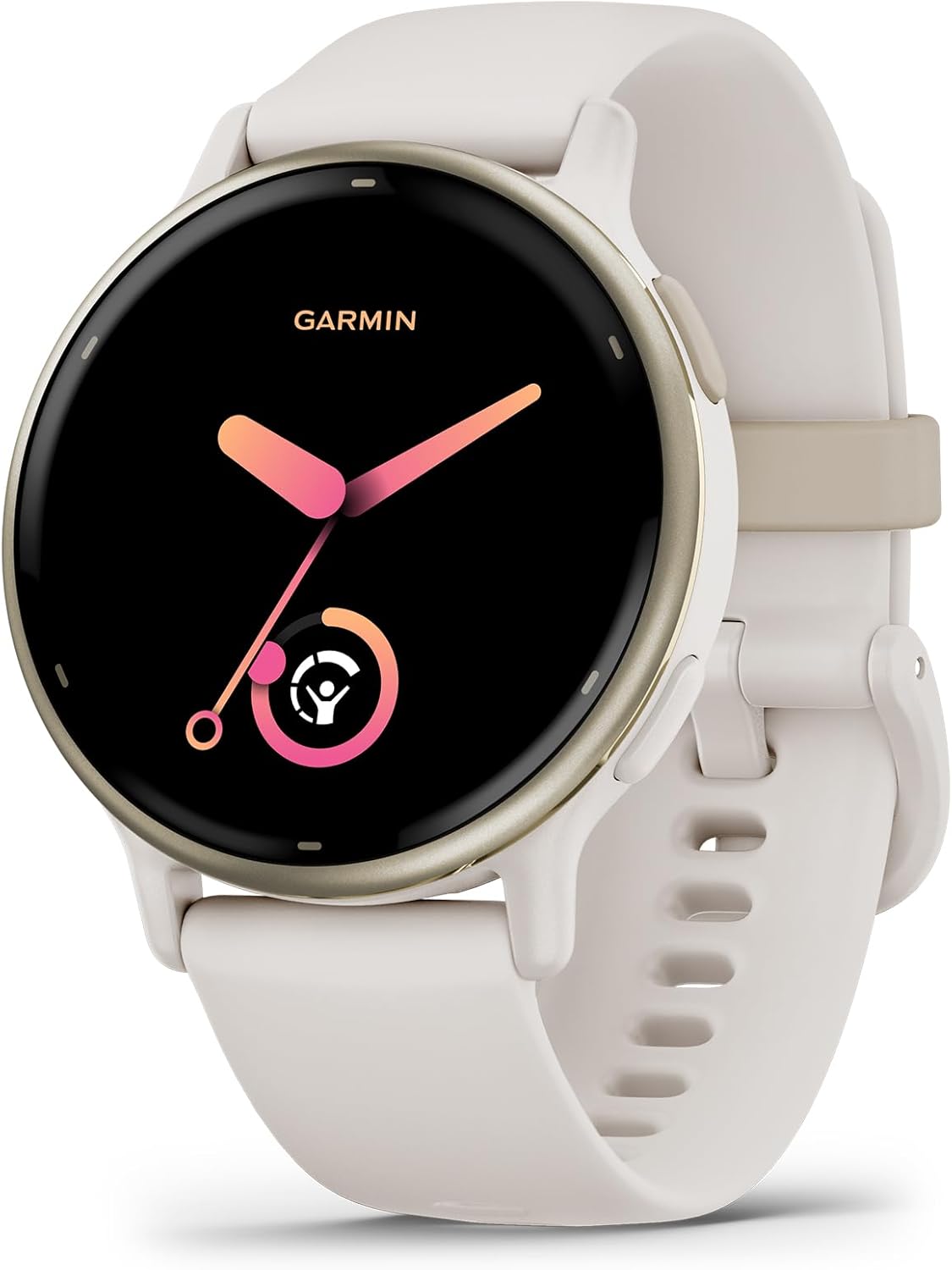
4. vívoactive 5
- Brand: Garmin
- Manufacturer: Garmin
The vívoactive 5 targets a broad lifestyle audience with a vibrant AMOLED display and extensive health monitoring features, including Body Battery energy monitoring, sleep scoring, stress tracking, and health insights across sleep and HRV. It ships with 30+ built-in sports apps and supports Garmin Coach adaptive training, making it versatile for cardio, yoga, strength, and even golf. With music storage on-device and Garmin Pay, it blends smart conveniences with fitness tracking, all while delivering up to 11 days of battery in smartwatch mode. This model emphasizes wellness analytics in addition to sport performance.
In practice, the vívoactive 5 is appealing for users who want a stylish, capable smartwatch that doubles as a wellness hub. The AMOLED display shines in daily use and during workouts, and Body Battery insight helps plan activity around energy levels. However, its battery life, while good, is not the longest in Garmin’s lineup, and the 4 GB memory is modest for offline music libraries. The watch offers strong health features but trails behind the Forerunner line on race-focused training analytics and pacing tools.
Pros
- Bright AMOLED display and stylish design
- Extensive health monitoring including Body Battery
- Music storage and Garmin Pay onboard
- Automatic nap detection and sleep coaching
- Wide range of built-in sports apps
Cons
- Long-term battery slightly less than dedicated GPS runners
- Health metrics are estimations, not medical-grade
- Less specialized running analytics than Forerunner models
5. Instinct® 3 50mm
- Brand: Garmin
- Manufacturer: Garmin
The Instinct 3 50mm is Garmin’s rugged specialist, built to endure demanding outdoor adventures with a solar-charged display, a metal-reinforced bezel, and an integrated LED flashlight. The 50 mm case prioritizes durability and legibility in harsh environments, with multi-band GPS and SatIQ technology for reliable positioning and extended battery life in solar charging scenarios. Its 3-axis compass, barometric altimeter, and MIL‑STD-810 thermal/shock resistance reinforce its outdoor credibility. It also supports Garmin Pay and smart notifications, making it a practical everyday companion for adventure seekers who need a tough, reliable device.
In real-world use, the Instinct 3 shines for serious outdoors enthusiasts, including hikers, climbers, and field workers who require dependable navigation and durable build. The solar charging lens can significantly extend smartwatch life in sunny environments, and the built-in flashlight adds practical utility at night. The trade-offs include a smaller 1.1-inch display that prioritizes outdoor readability over modern aesthetics, and a heavier chassis (58 grams) that may feel bulkier on smaller wrists. For those who value rugged reliability and battery independence, the Instinct 3 is hard to beat.
Pros
- Solar-charged display for extended uptime
- Rugged MIL-STD-810 rating and water resistance
- Built-in flashlight for visibility in low light
- Multi-band GPS with SatIQ for accurate positioning
- Strong outdoor and navigation features
Cons
- Smaller display with limited color richness
- Heavier and bulkier than typical wearables
- Premium price for a rugged, feature-focused model
Frequently Asked Questions
We’ve compiled answers to the most common questions about garmin watchess to help you make an informed decision.
Conclusion
.
.
Final thoughts here.