Here’s an overview of the Best Lenses For that we’ll explore today:
Lenses are the heartbeat of a camera system, and for Sony full-frame E-mount shooters, choosing the right glass can define image quality, portability, and creative flexibility. This comparison examines five Sony lenses that span a budget-to-premium spectrum, offering a mix of prime and zoom options, constant and variable apertures, and a range of focal lengths to cover everyday storytelling to longer reach. Our methodology combines objective spec analysis with real-world usability considerations: aperture performance, optical stabilization, focusing speed and accuracy, sharpness and aberration control, build quality, weight, and value for money. Where possible, we reference known attributes like the FE 50mm F1.8’s compact form and bright aperture, the 24-70mm f/4’s versatile zoom range and OSS, and the mid-range zooms’ balancing of cost and performance. The products covered, in order of the list you provided, are shown below to aid direct comparison.

1. Sony – FE 50mm F1.8 Standard Lens (SEL50F18F/2)
- Brand: Sony
- Manufacturer: Sony
Overview: The SEL50F18F/2 is Sony’s approachable prime for full-frame E-mount, offering a bright f/1.8 aperture in a compact, lightweight package. Its 50mm focal length is a classic everyday portrait and general-use option, with a 7-blade circular aperture that cultivates smooth defocus. The lens benefits from a double-gauss design to suppress field curvature and distortion, and an aspherical element to curb spherical aberration and coma, contributing to consistent image quality across the frame. With a measured weight around 6.6 ounces and small footprint, it’s built for travel and street work where portability matters, yet remains robust enough for daily use. Pros: compact form factor, bright f/1.8 aperture, effective aberration control, lightweight, good bokeh for its class. Cons: not weather-sealed, maximum aperture advantage gradually diminishes at close focus, slightly less edge-to-edge performance compared to higher-end primes.
Performance-wise, the lens is optimized for pleasing out-of-focus backgrounds in shallow depth-of-field scenes and low-light situations. The combination of a bright aperture and Sony’s optical design yields pleasing micro-contrast and color rendition, making it a strong general-purpose lens for portraits, couple shoots, and everyday street photography. Autofocus on newer bodies benefits from the lens’s compact design, though edge performance and corner sharpness can soften wide open, improving as you stop down to f/2.8–f/4. Its small size makes it an excellent travel companion, and the lens’ balance on smaller bodies minimizes fatigue during long shoots. For video, the smooth bokeh and light weight are advantageous, but the lack of sealing means you’ll want to protect it in inclement weather.
Pros
- Bright f/1.8 performance for low light and shallow depth of field
- Extremely compact and lightweight
- Effective aberration control with aspherical element
- Good color rendition and micro-contrast
- Budget-friendly entry into full-frame primes
Cons
- No weather sealing, limited ruggedness
- Edge performance softer wide open
- No built-in image stabilization (OSS)
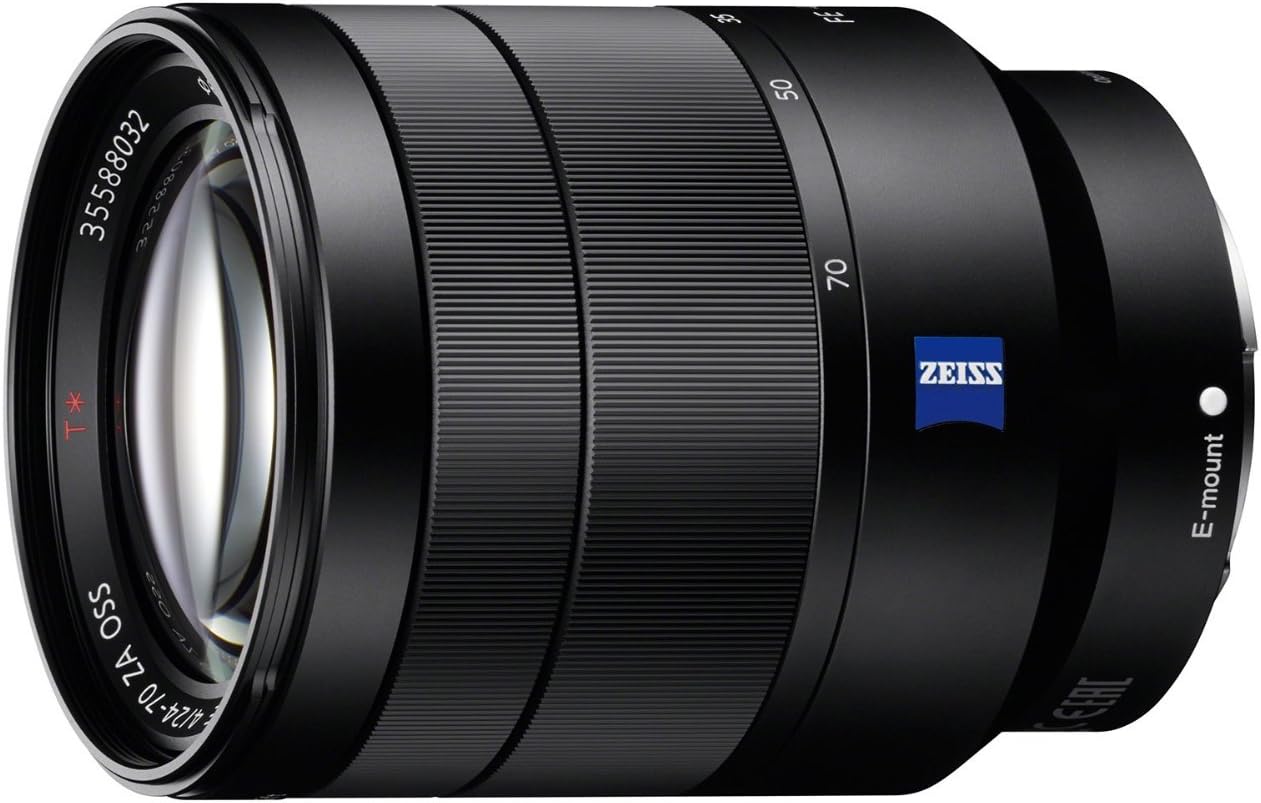
2. Sony 24-70mm f/4 Vario-Tessar T FE OSS Interchangeable Full Frame Zoom Lens
- Brand: Sony
- Manufacturer: Sony
Overview: The SEL2470Z is a versatile standard zoom that covers wide to short-tele ranges (24–70mm) with a constant f/4 aperture and Optical SteadyShot (OSS). It uses Zeiss T anti-reflective coatings to minimize flare and maintains relatively compact dimensions for a 24–70 zoom. Weighing about 15 ounces, it’s a portable workhorse for events, travel, and everyday shooting where flexibility matters more than extreme low-light performance. Pros: flexible focal range, constant aperture for video and consistency, built-in OSS, compact for a zoom of this range, Zeiss coating helps contrast. Cons: f/4 is modest in low light, not the sharpest in the 24–70 class, some users note distortion at certain focal lengths near 24mm, and higher-priced relative to consumer kit zooms.
Performance-wise, the lens delivers solid everyday imaging with decent edge-to-edge sharpness at mid-range apertures and reliable stabilization for handheld filming. Because the maximum aperture is f/4, lighting conditions may necessitate higher ISO or slower shutter speeds in dim venues, though OSS helps mitigate shake for stills and video. The 24–70mm range is ideal for event photographers, documentary shooters, and hobbyists who want one lens to cover most scenarios from environmental portraits to landscape squints. Build quality remains strong, but the design prioritizes portability over extreme optical resolution, meaning you’ll notice crisper results from higher-end primes in narrower focal ranges.
Pros
- Versatile 24–70mm range with constant f/4
- Built-in Optical SteadyShot (OSS)
- Relatively compact for a full-frame zoom
- Zeiss T anti-reflective coating reduces flare
- Good balance of performance and portability
Cons
- F/4 can be limiting in low light without stabilization
- Not the sharpest compared to premium zooms
- Weight is noticeable for travel kits
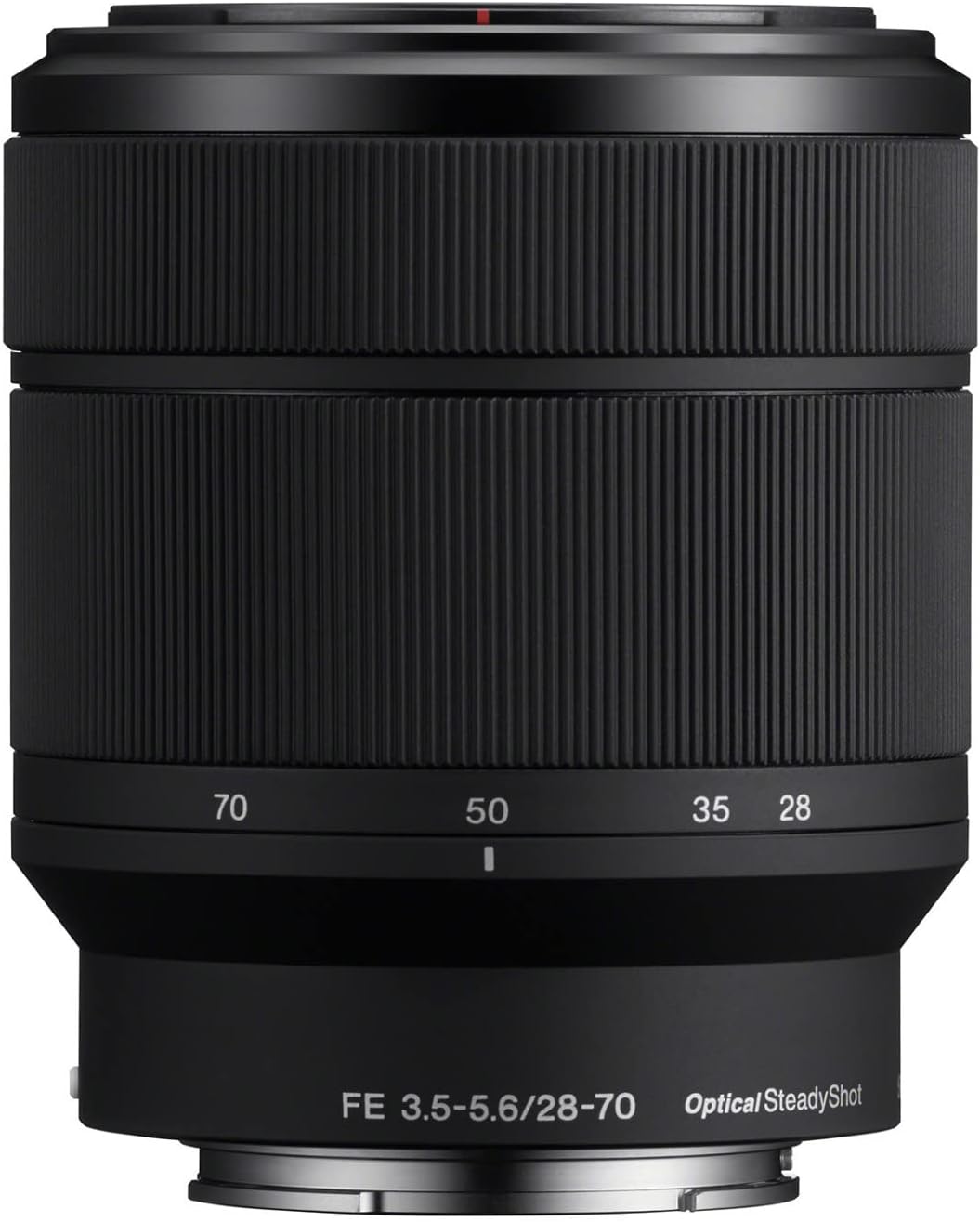
3. Sony 28-70mm F3.5-5.6 FE OSS Interchangeable Standard Zoom Lens
- Brand: Sony
- Manufacturer: Sony
Overview: The SEL2870 is a mid-range, affordable full-frame zoom that aims for lightness and portability. With optical stabilization and a variable aperture of f/3.5–5.6, it targets casual shooters and beginners who want a practical zoom for everyday scenes. Its three spherical elements and one ED element help control aberrations for a pleasing general-purpose lens, while the built-in OSS supports handheld shooting at slower shutter speeds. Pros: very affordable for full-frame, compact and light, OSS helps handheld use, decent standard zoom for day-to-day shooting, simple operation. Cons: slower maximum aperture than f/4 and faster pro zooms, price-to-performance balance is lower than mid-range competitors, at longer ends, sharpness can dip and distortions remain visible at the wide end.
Performance-wise, the lens serves well for beginners or hobbyists who want a budget-friendly option that still covers 28–70mm. Real-world use benefits from the OSS for street photography, travel, and casual video; however, f/3.5–5.6 means you’ll either need more light or higher ISO in dim environments. The lens is easy to handle and travel-friendly, and while sharpness is acceptable for many uses, it won’t compete with higher-end Sony zooms or prime lenses in terms of micro-contrast and edge resolution. Color and contrast remain pleasing for everyday scenes, making it a sensible starter zoom.
Pros
- Very affordable for full-frame add-on
- Built-in OSS for handheld shots
- Lightweight and compact
- Simple to use with broad focal range
- Good for travel and casual photography
Cons
- Variable aperture limits low-light flexibility
- Edge sharpness not on par with premium zooms
- Limited future-proofing for demanding work
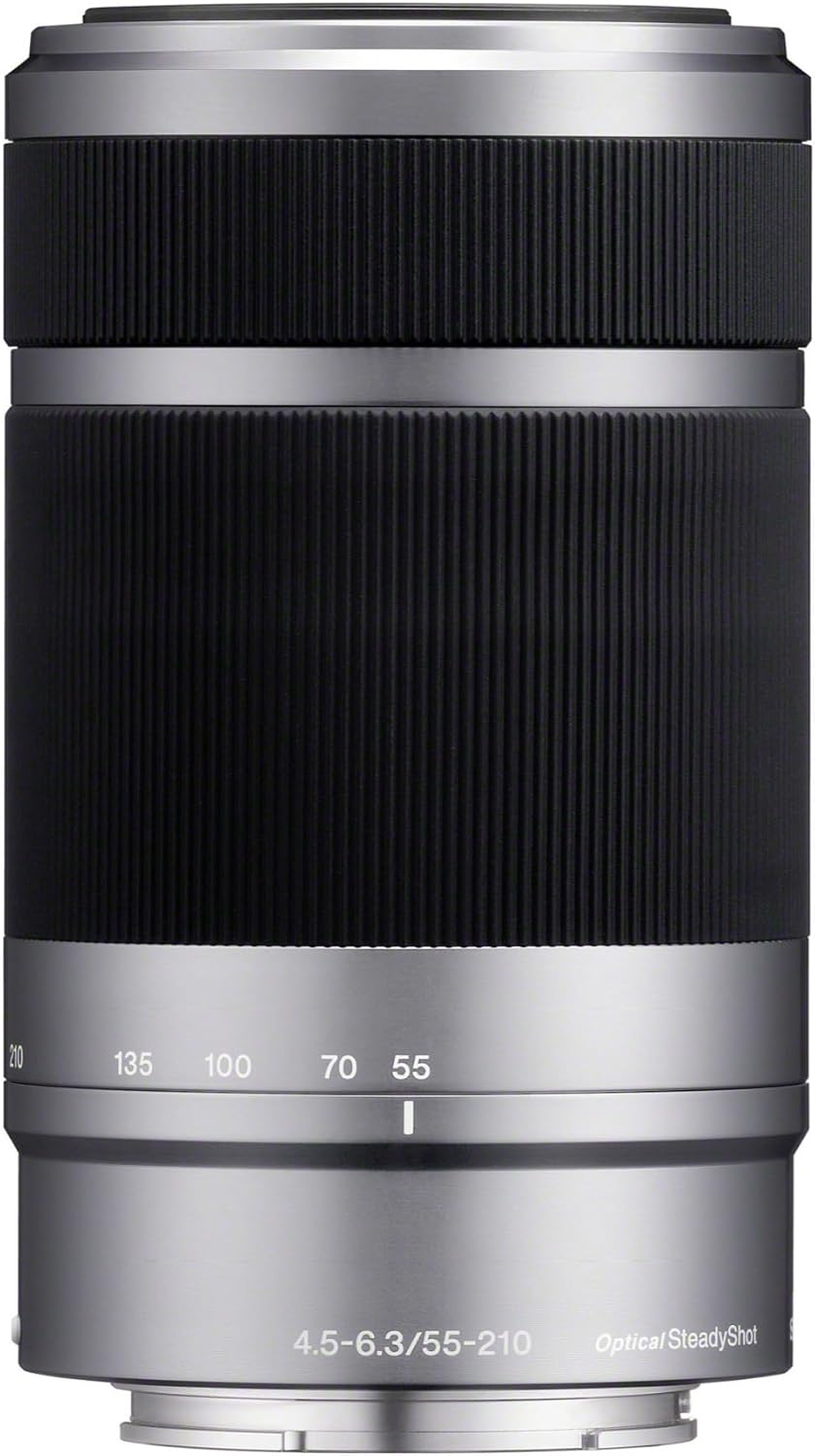
4. Sony E 55-210mm F4.5-6.3 OSS Lens for Sony E-Mount Cameras (Silver) – International Version
- Brand: Sony
- Manufacturer: Sony
Overview: The SEL55210 is a telephoto zoom designed mainly for APS-C bodies but also adaptable on full-frame via crop. It features a 55–210mm focal range with OSS and a modest open aperture of f/4.5–6.3, making it a lightweight option for reach at a relatively low cost. The lens sits in Sony’s budget telephoto category, offering a practical solution for sports, wildlife, and travel where distance needs to be covered without adding significantly to the kit. Pros: long reach in a compact form, built-in OSS helps with handheld telephoto shoots, affordable for telephoto coverage, good for beginners. Cons: slower aperture restricts dusk or indoor use, heavier distortion at longer focal lengths, not ideal for full-frame users who shoot wide scenes.
Performance-wise, the focal length is attractive for capturing distant subjects, with OSS helping to stabilize shots at moderate shutter speeds. The trade-off is the aperture range; in dim lighting or when shooting fast action, ISO climbs and noise becomes more visible. For travel and casual wildlife, the lens offers an approachable balance of reach and portability, though it lacks the optical performance of higher-end telephotos and may introduce some color fringing at maximum reach. The weight is manageable, and the balance on crop-sensor bodies is generally favorable.
Pros
- Long reach in a compact telephoto zoom
- Integrated OSS aids stabilization
- Affordable telephoto option
- Lightweight for extended shoots
- Useful for travel and wildlife on APS-C
Cons
- Slow aperture at telephoto end
- Edge performance and distortion can be noticeable
- Not ideal for full-frame users seeking wide-angle flexibility

5. Sony SEL16F28 16mm f/2.8 Wide-Angle Lens for NEX Series Cameras
- Brand: Sony
- Manufacturer: Sony
Overview: The SEL16F28 is a compact wide-angle prime designed for Sony’s smaller-format bodies and APS-C ecosystems (with 35mm-equivalent around 24mm). It’s not a zoom, but a dedicated wide option for landscapes, architecture, and environmental portraits. Its 16mm focal length coupled with f/2.8 offers broad field of view with efficient light gathering for its class, and its slim profile makes it a natural ultra-wide for street and travel. Pros: extremely small and light, wide field of view, fast enough for low-light landscapes, good for architectural shots, inexpensive entry into wide-angle glass. Cons: not compatible with full-frame sensors without crop, fixed focal length limits versatility, prone to coma at edges if not stopped down.
Performance-wise, the lens excels in landscapes and interior photography where depth and perspective are key. The wide-angle exaggeration of space can be dramatic, and the fast f/2.8 helps with shutter speed and ISO control in dim light, though you’ll still want to stop down to improve edge sharpness. Chromatic aberration is typically manageable with Sony’s lens design, and the small size makes it appealing for travel kits. The optical performance is most admired at mid-to-wide angles, with some softening towards the extreme edges at wide open.
Pros
- Very compact and lightweight
- Wide 16mm focal length for dramatic perspectives
- Fast f/2.8 aperture for low light
- Budget-friendly option in the ultra-wide category
- Good for travel and street photography
Cons
- Not a full-frame compatible option without crop
- Not a zoom; fixed focal length limits versatility
- Edge sharpness and coma may require stopping down
Frequently Asked Questions
We’ve compiled answers to the most common questions about lenses fors to help you make an informed decision.
Conclusion
Final thoughts: For users prioritizing image quality and a premium feature set, the 24-70mm f/4 Vario-Tessar T FE OSS (SEL2470Z/T) offers the most versatility, while the 50mm f/1.8 (SEL50F18F/2) remains the strongest single-value option for budget-conscious shooters who still demand stellar low-light performance and pleasing bokeh.
The remaining lenses fill niche roles: budget zooms for beginners (28-70mm), reach for wildlife and sports on APS-C (55-210mm), and ultra-wide perspectives for landscapes (16mm f/2.8).
Choose based on your typical shooting scenarios, tolerance for weight, and whether you value constant aperture, stabilization, or ultra-wide field of view..