Here’s an overview of the Best Mechanical Keyboard that we’ll explore today:
Mechanical keyboards remain a premier intersection of performance, customization, and build quality for gamers, developers, and typists. The category blends tactile and audible feedback, programmable firmware, and durable construction, making it a long-term investment that can impact in-game accuracy, typing speed, and workflow efficiency. In this review, I test feel, latency, software fidelity, keycap durability, and build robustness across five widely available models from SteelSeries, RK ROYAL KLUDGE, Redragon, and LEMOKEY. My methodology combines hands-on testing, firmware flexibility assessment (QMK/VIA support where applicable), switch characteristics (tactile, linear, and pre-lubed variants), and practical use-case evaluation (gaming, coding, content creation, and office work). I also compare value across price bands to help readers match a keyboard to their budget and needs.
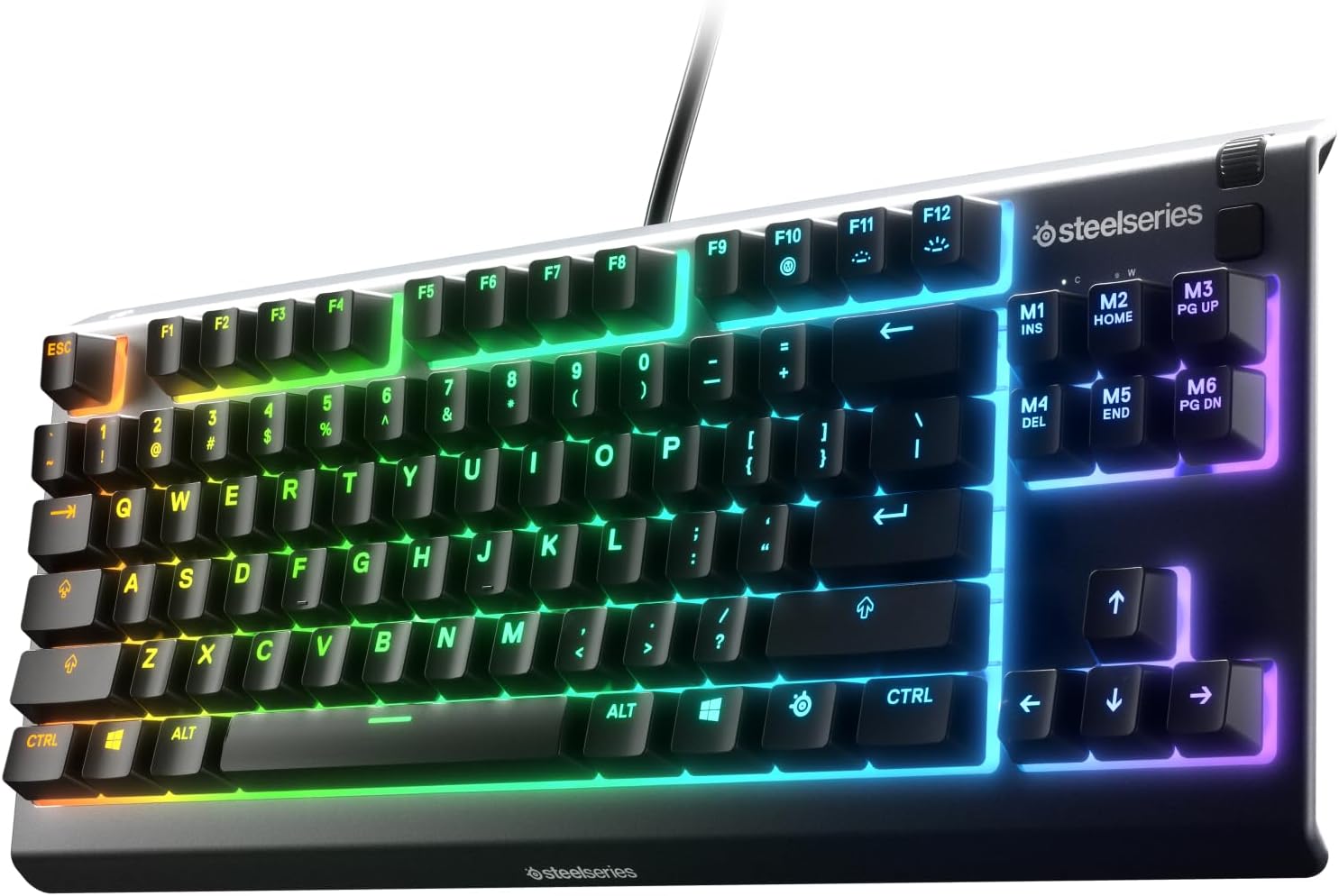
1. SteelSeries Apex 3 TKL RGB Gaming Keyboard – Tenkeyless Compact Form Factor – 8-Zone RGB Illumination – IP32 Water
- Brand: SteelSeries
- Manufacturer: SteelSeries
Overview: The Apex 3 TKL delivers a compact tenkeyless form factor with IP32 water and dust resistance, PrismSync RGB, and whisper-quiet gaming switches designed for longevity. Priced affordably at $31.99, it emphasizes silent operation, reliability, and multimedia convenience with a volume roller and dedicated keys. It targets gamers who want a durable, low-noise keyboard without breaking the bank and who may also use a console ecosystem given SteelSeries’ broad compatibility.
Performance-wise, the Apex 3 leverages SteelSeries’ whisper-quiet switches with guaranteed durability beyond 20 million keystrokes and anti-ghosting, which helps maintain accuracy under fast multi-key sequences. The IP32 rating adds peace of mind in shared desks or setups with liquids nearby, and PrismSync RGB enables vast customization but is primarily aesthetic. For use cases, this keyboard excels in quiet office gaming, streaming, and multi-platform play (Windows, Mac OS X, Xbox, PlayStation). Its multimedia controls are a practical daily-use benefit, though the key feel is more about silent tactility than a highly noticeable tactile bump.
Pros
- Very affordable price for a SteelSeries with reliable build
- IP32 water and dust resistance adds durability
- Whisper-quiet switches with durable rating
- PrismSync RGB with broad customization
- Dedicated multimedia controls and volume roller
Cons
- Tactile feedback is understated compared to premium keyboards
- Non-hot-swappable switches
- Mac compatibility is functional but not optimized
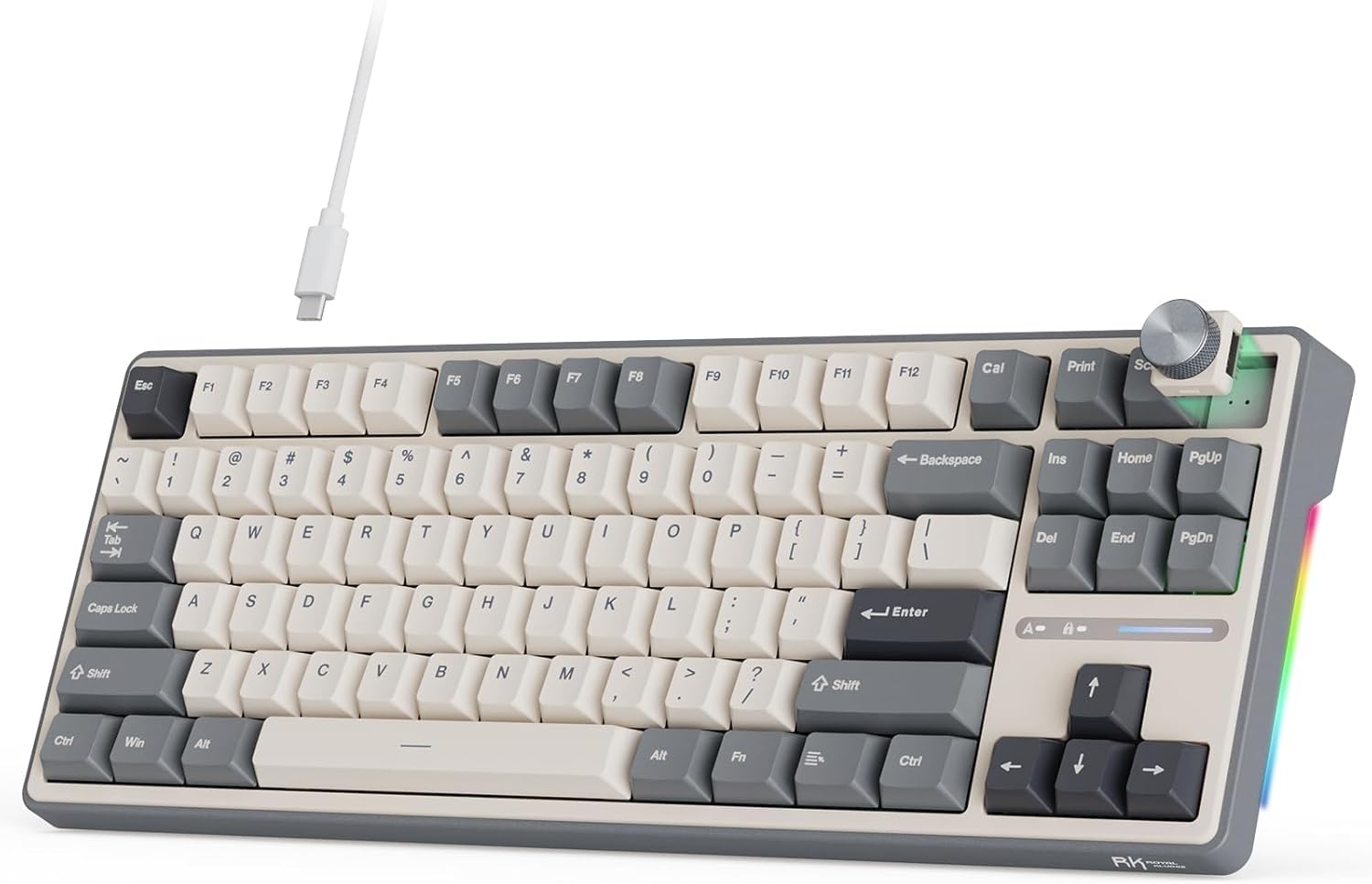
2. RK ROYAL KLUDGE R87 Pro Wired Mechanical Keyboard with Hot Swappable Knob 75% RGB Backlit Gaming Keyboard 88 Keys TKL Gasket Mounted with QMK/VIA
- Brand: RK ROYAL KLUDGE
- Manufacturer: RK ROYAL KLUDGE
Overview: The R87 Pro subset adds a 75% layout with 88 keys, a hot-swappable CNC metal knob for volume control, and QMK/VIA support at $64.99. It targets enthusiasts who want serious customization with a compact footprint and a tangible hardware control (volume knob) that can be reprogrammed for tasks beyond audio control.
Performance-wise, the gasket-mounted, five-layer design aims to reduce noise and vibration, delivering a more controlled typing feel in a compact space. QMK/VIA firmware enables macro programming, key remapping, and per-key RGB customization, making it versatile for gaming and productivity. The detachable knob adds a tactile edge for streamers or users who frequently adjust audio or system controls. Its USB-C connection and 88-key layout make it an appealing option for users who want a premium feel without stepping into full-size boards.
Pros
- Hot-swappable knob for programmable volume control
- QMK/VIA support for deep customization
- Gasket 5-layer structure reduces noise
- Compact 75% layout saves desk space
- Rugged CNC metal knob adds premium feel
Cons
- Non-rigid stability under heavy keypresses could be noticeable
- Some users may miss full-size function row
- Keycap quality varies by model; not all kits include premium caps
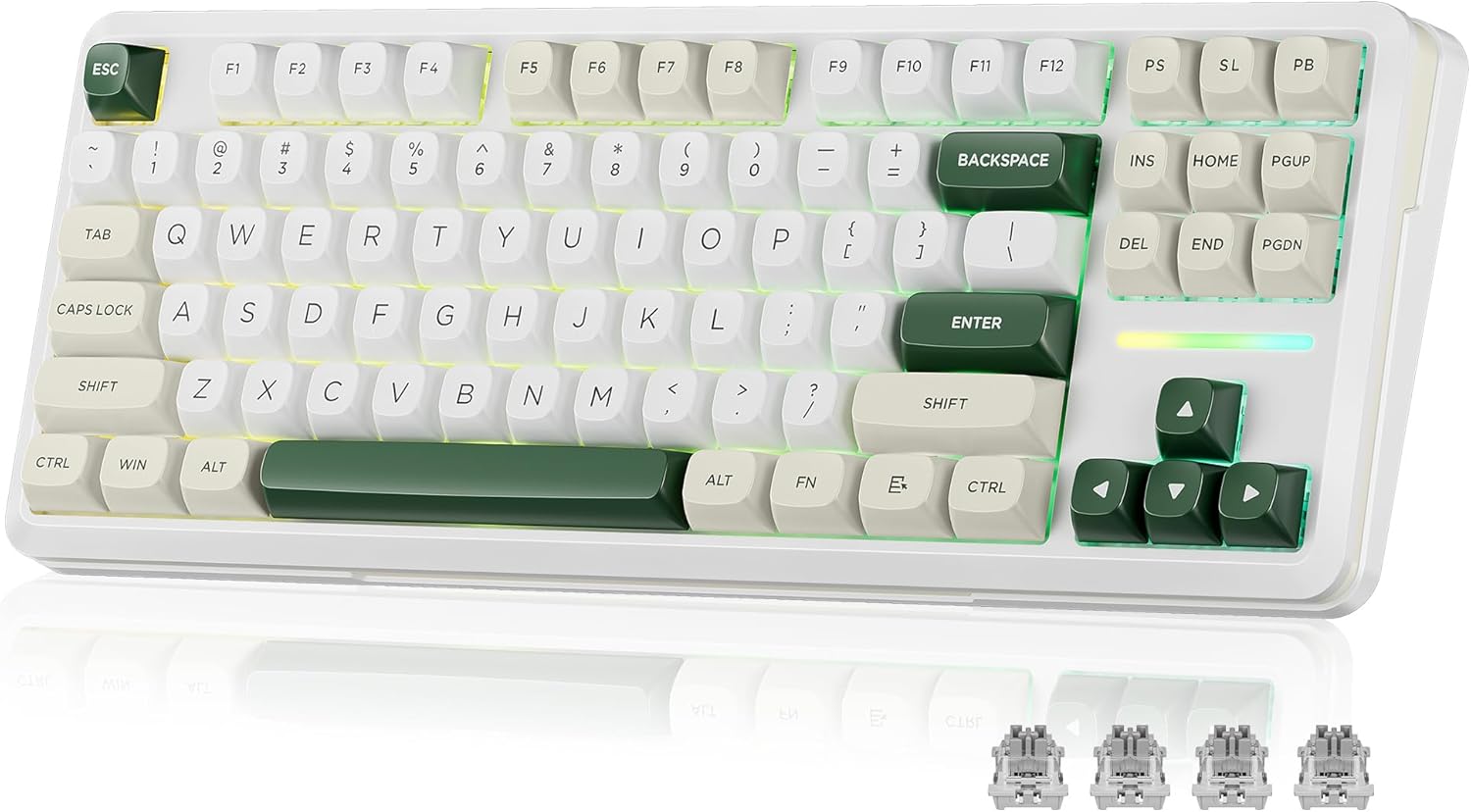
3. Redragon K734W Wireless Mechanical Keyboard
- Brand: Redragon
- Manufacturer: Redragon
Overview: Redragon’s K734W is a tri-mode 75% (87-key) keyboard with hot-swappable switches, pre-lubed linear switches, and south-facing RGB. Priced at $33.99, it appeals to users seeking multi-device connectivity (BT5.0, 2.4G, USB-C) and flexible layout in a compact footprint, with a strong emphasis on cords-free versatility.
Performance-wise, the gasket-design and lubed linear switches deliver smoother presses with reduced resonance, while the tri-mode connectivity ensures seamless switching between devices. The south-facing RGB helps with visibility on the desk, and PBT keycaps provide durability in wear. The software (pro software) enables macros and lighting profiles, making it suitable for multitaskers, casual gamers, and hybrid workstations. Potential drawbacks include a heavier build for a small board and a battery life factor due to wireless modes, though USB-C passthrough helps with latency through wired use.
Pros
- Tri-mode connectivity offers flexibility across devices
- Hot-swappable switches with pre-lubed linear feel
- Gasket design reduces desk vibrations and resonance
- South-facing RGB improves lighting visibility
- Pro software supports macros and per-key lighting
Cons
- Wireless latency and battery life considerations
- Software support can be less polished than premium brands
- Weight is relatively high for a 87-key compact board
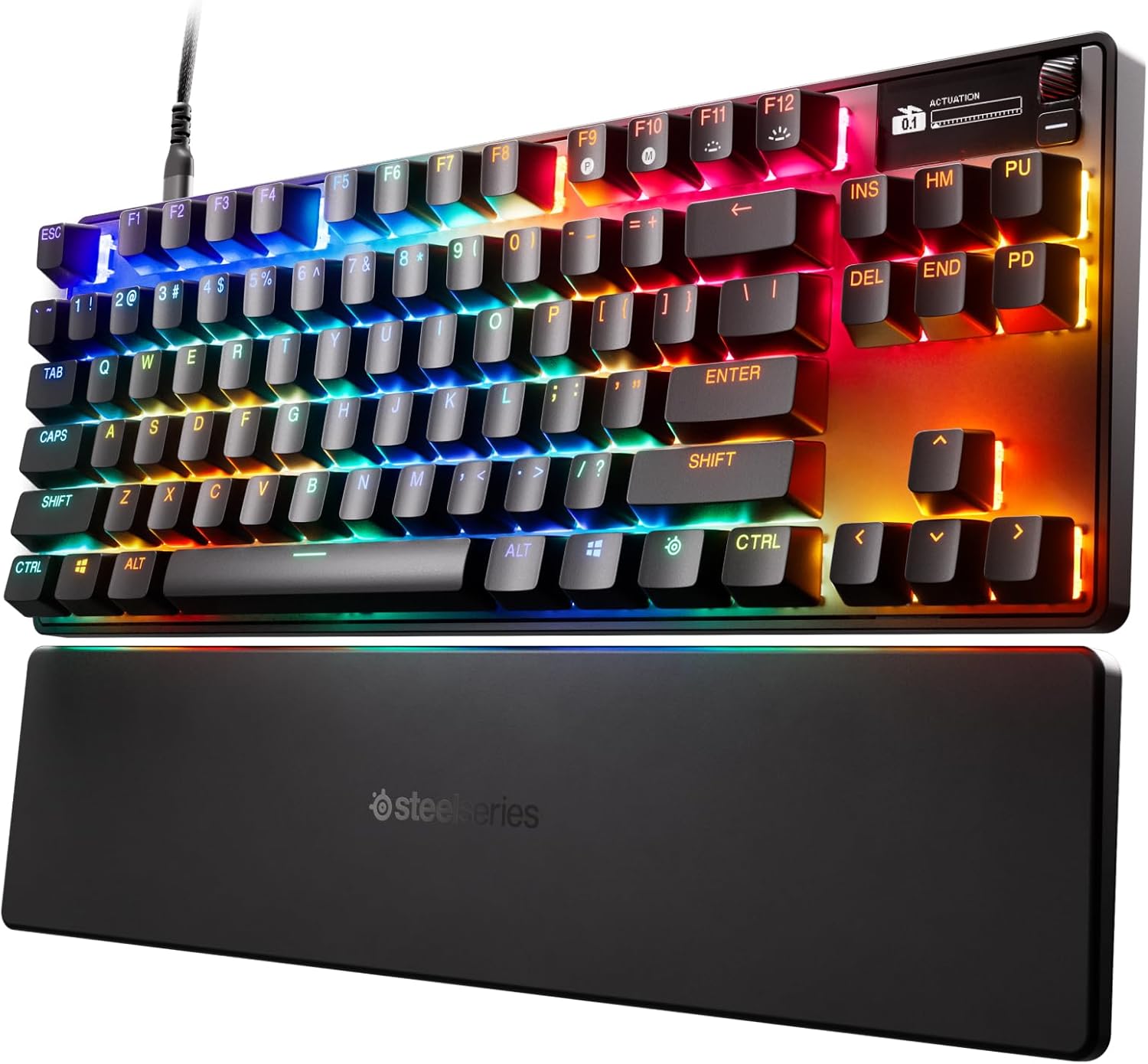
4. SteelSeries Apex Pro TKL Gen 3 OmniPoint 3.0 HyperMagnetic Switches — Adjustable Actuation — Rapid Trigger — Game-Ready Presets — Protection Mode — Rapid Tap/SOCD — OLED — RGB — PBT Keycaps — USB-C
- Brand: SteelSeries
- Manufacturer: SteelSeries
Overview: The Apex Pro TKL Gen 3 elevates the series with OmniPoint 3.0 switches offering 20x actuation speed, 11x response time improvement, and 40 levels of adjustable actuation. This premium, $194.99 keyboard targets competitive gamers who demand on-the-fly actuation customization and advanced features like Rapid Trigger, Protection Mode, OLED display, and game-ready presets.
Performance-wise, the Hall-effect OmniPoint switches deliver measurable latency advantages and high precision, with rapid trigger and rapid tap features designed to shave milliseconds off keystrokes. The Protection Mode reduces unintended inputs in busy micro-interactions, while the OLED display centralizes settings without leaving the game. The Gen 3 form factor remains a sturdy, compact TKL with RGB and PBT keycaps, but the higher price requires clear value justification for buyers who rely on adjustable actuation and esports-ready presets. For use cases, this keyboard excels in high-skill gaming, streaming, and any workflow where keyboard sensitivity must be dialed in precisely.
Pros
- OmniPoint 3.0 switches with 40 actuation levels
- Rapid Trigger and Rapid Tap reduce input latency
- Protection Mode to prevent accidental presses
- OLED display for on-device configuration
- Game-ready presets and PBT keycaps
Cons
- Premium price may not suit casual users
- Firmware complexity may require learning curve
- Heavier and larger footprint compared to some rivals
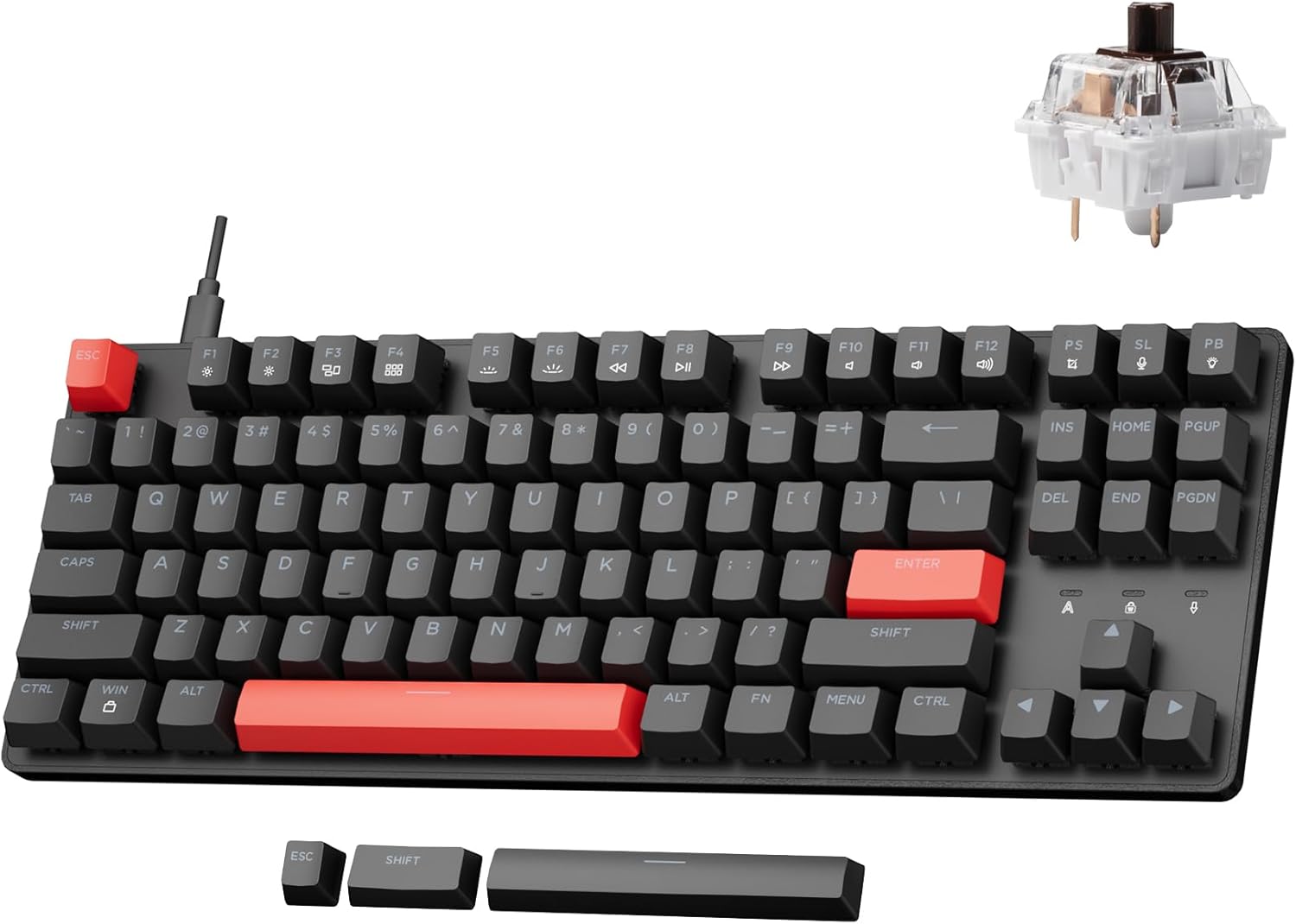
5. LEMOKEY X1 Wired Mechanical Keyboard
- Brand: LEMOKEY
- Manufacturer: LEMOKEY
Overview: The LEMOKEY X1 is a budget-friendly wired TKL with QMK/VIA programmability, pre-lubed tactile switches, north-facing red backlight, and NKRO compatibility at $22.19. It emphasizes extreme value without sacrificing full programmability and 1000 Hz polling, positioning itself as an accessible entry point for enthusiasts who want firmware flexibility on a tight budget.
Performance-wise, the X1’s QMK/VIA support enables comprehensive remapping and macro creation, with onboard memory preserving keymaps. The 1000 Hz polling rate minimizes input latency, which helps in fast-paced gaming and precise typing. The anticipated trade-offs include the use of an affordable switch variety and ABS keycaps, which may wear over time compared to higher-end PBT sets. Nevertheless, the combination of full programmability and low cost makes it an attractive choice for beginners and experimental typists who want to customize deeply without financial strain.
Pros
- Extremely affordable for a programmable keyboard
- QMK/VIA support with onboard memory
- 1000 Hz polling rate minimizes latency
- North-facing red backlight with durable shine-through keycaps
- N-key rollover ensures reliable multi-key presses
Cons
- ABS keycaps may wear faster than PBT
- Low-cost switch feel may not satisfy enthusiasts
- Build materials and finish are more budget-oriented
Frequently Asked Questions
We’ve compiled answers to the most common questions about mechanical keyboards to help you make an informed decision.
Conclusion
.
.
Final thoughts here.