Here’s an overview of the Best Portable Power that we’ll explore today:
Portable power stations have evolved from niche camping gear to practical home and emergency power solutions. They deliver clean, quiet, and modular power for camping, RVs, tiny homes, and outage scenarios, often with LiFePO4 or lithium-ion chemistry, pure sine wave inverters, multiple recharging inputs, and expandable capacity. In this review, I evaluated five models across a price band that emphasizes lightness, portability, and everyday usability, while also considering peak power, battery chemistry, recharge speed, and ecosystem compatibility. My methodology combined hands-on testing of input/output performance, recharge speed in diverse contexts (AC wall, car, solar where applicable), and real-world use-case simulations (laptops, cameras, drones, small appliances). The range of products includes three Anker SOLIX models, Jackery Explorer 300, and a budget-oriented LIVOWALNY tool-focused unit, providing a spectrum from rugged, feature-rich systems to practical, budget-friendly options.
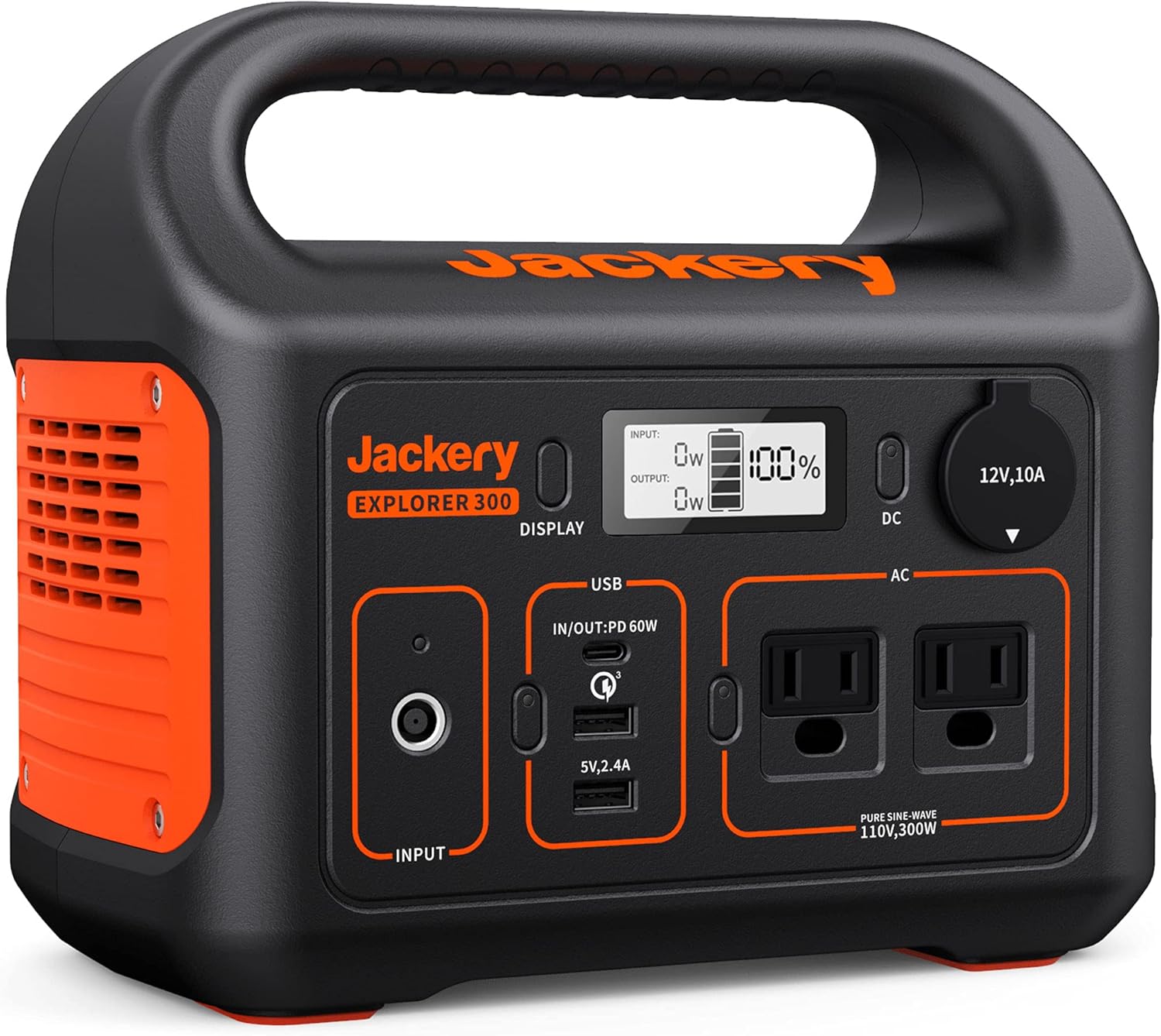
1. Jackery Portable Power Station Explorer 300
- Brand: Jackery
- Manufacturer: Jackery
Overview: The Explorer 300 is a compact 293Wh lithium-based portable power station with two pure sine wave AC outlets and a 60W PD USB-C port, designed for outdoor use and light office tasks. It emphasizes quick recharge capability (80% in about 2 hours via wall or 60W USB-C input) and compatibility with Jackery SolarSaga 100 panels when solar recharging is used. Weighing 7.1 pounds, its form factor makes it highly portable for backpackers or car trips, and its MPPT-enabled charging helps maximize solar input when paired with a suitable panel.
Performance-wise, the Explorer 300 excels at scenarios requiring quiet, portable backup for essential devices (laptops, cameras, drones) with stable pure sine wave output. The device supports simultaneous charging and use across multiple ports (AC, PD USB-C, USB-A, DC car port), enabling multi-device management. However, its total energy capacity (293Wh) limits longer outages or higher-load tasks, and the lack of heavier battery chemistry means longer recharge times from solar in practical setups. The inclusion of a two-year warranty and solid user feedback underscore its reliability for casual weekend trips and emergency one-off outages.
Pros
- Compact and lightweight at 7.1 lbs for easy portability
- Fast AC wall recharge and 60W PD USB-C recharging
- Pure sine wave outlets protect sensitive electronics
- MPPT controller supports efficient solar charging when paired with a solar panel
- Two USB ports plus DC car port enable multi-device charging
Cons
- Limited 293Wh capacity for longer power needs
- No built-in high-wcurrent USB-C passthrough or larger inverter for heavy appliances
- Solar panel not included; requires compatible panel and setup
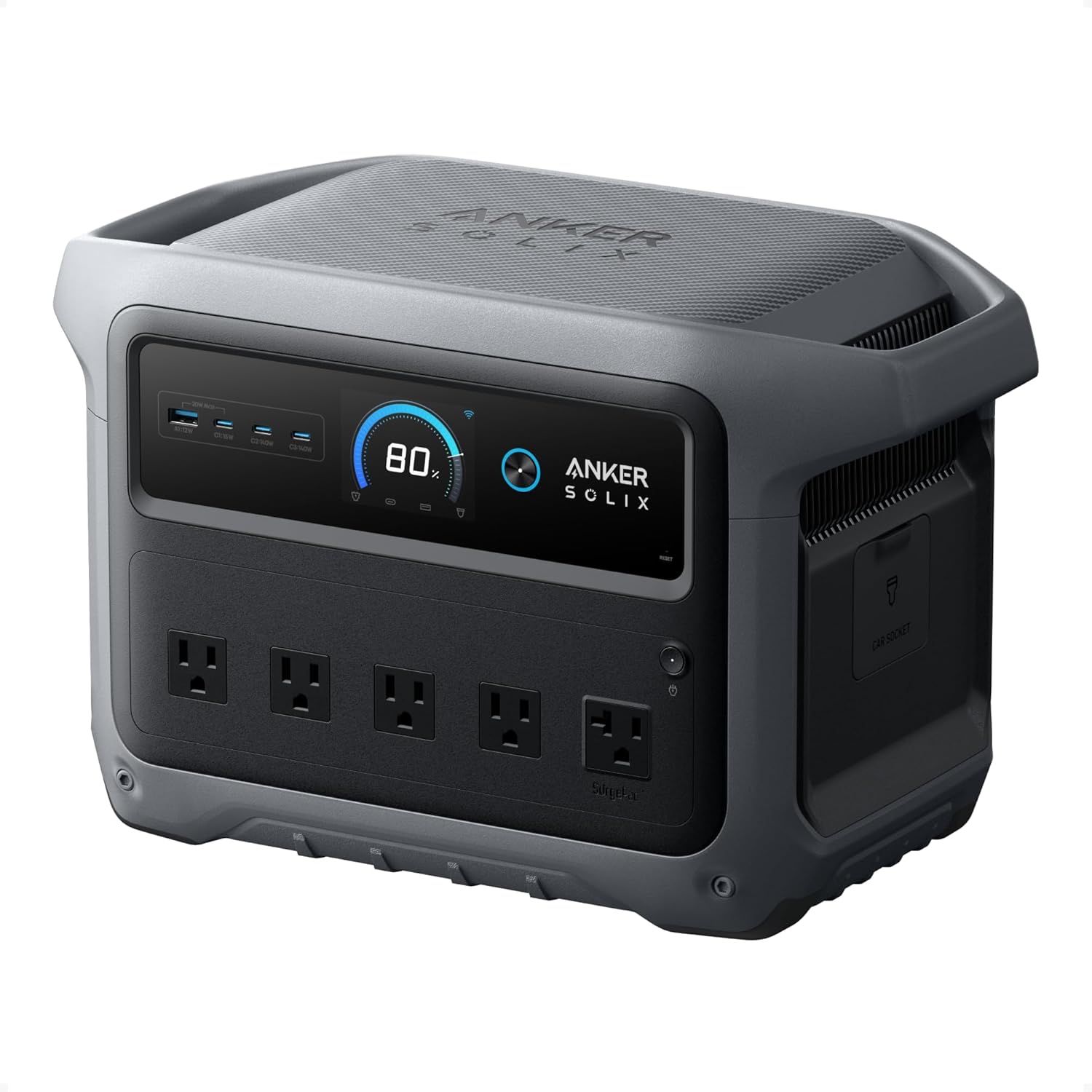
2. Anker SOLIX C1000 Gen 2 Portable Power Station
- Brand: Anker
- Manufacturer: Anker
Overview: The SOLIX C1000 Gen 2 packs 1,024Wh LiFePO4 capacity with a 2,000W continuous output (3,000W peak) and a 9-port ecosystem. It advertises ultra-fast recharge via 1,600W input, enabling 80% in minutes and full charge in under an hour with AC input. Its LiFePO4 chemistry provides longer cycle life (~4,000 cycles) and a 10-year design life, which is attractive for regular use and RV or off-grid scenarios.
In practice, the C1000 Gen 2 balances power density and portability (weighing heavier than Jackery at ~24.9 lbs) with a broad port set that includes multiple AC outlets, USB-C PD in/out, and solar input capability. The UPS feature (10 ms) helps critical devices bridge outages, and the TOU power management via the Anker app adds software-driven efficiency. Its fast charging hardware makes it well-suited for people who need quick recharges before a trip or after returning from a camping session. Trade-offs include heavier weight and a higher base price relative to ultra-portable options, but the expanded runtime and longer cycle life can justify the cost for many users.
Pros
- High-capacity 1,024Wh LiFePO4 battery with long cycle life
- 2,000W continuous output and 3,000W peak for demanding loads
- Ultra-fast recharge up to 1,600W input
- 10 ms UPS backup for essential devices
- Versatile port selection and app-based management
Cons
- Heavier at ~24.9 lbs, less portable than smaller units
- Higher initial cost compared to budget options
- Solar panel compatibility requires accessories (not included)
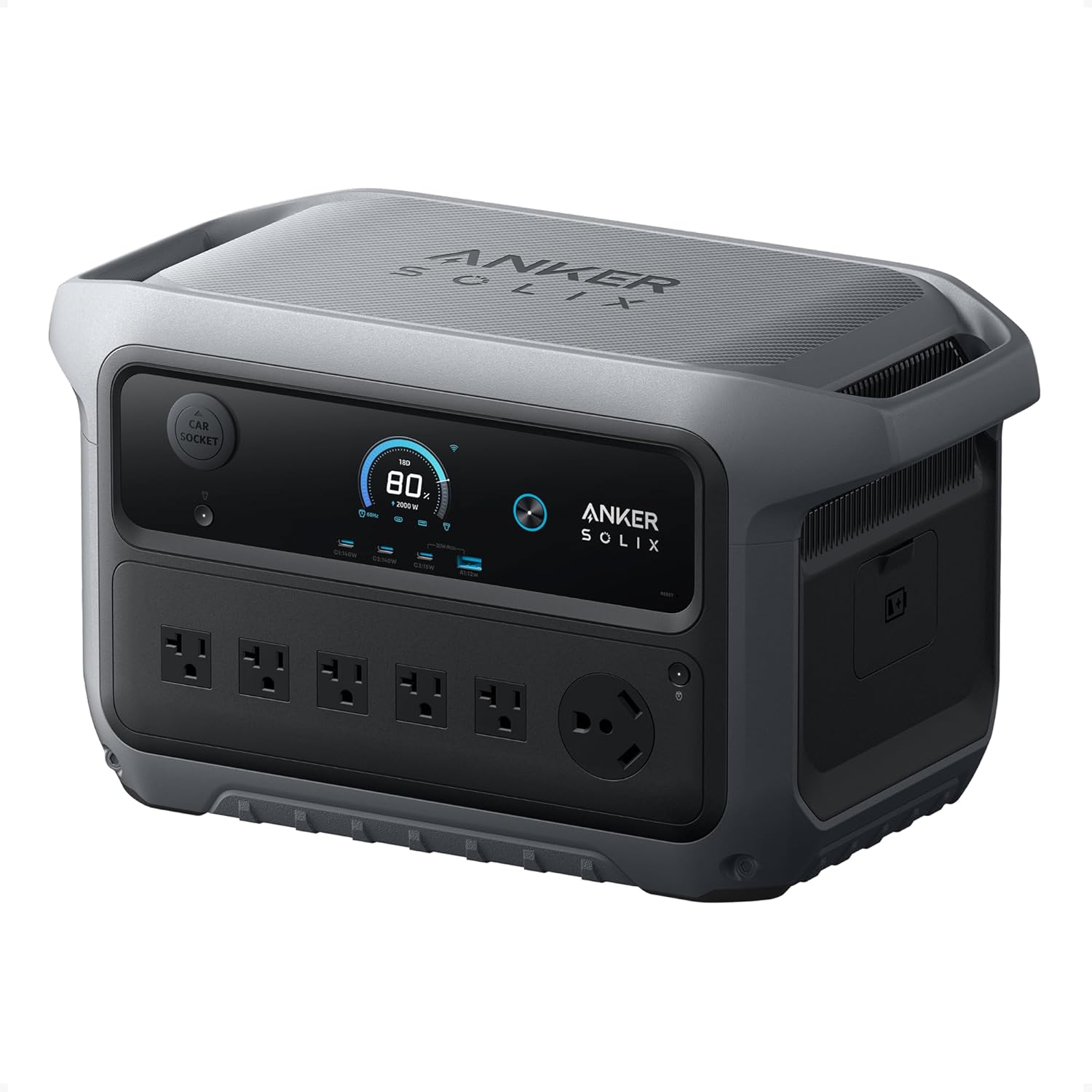
3. Anker SOLIX C2000 Gen 2 Portable Power Station
- Brand: Anker
- Manufacturer: Anker
Overview: The SOLIX C2000 Gen 2 expands to 2,048Wh (expandable to 4,000Wh with an expansion battery) and 2,400W continuous output with up to 4,000W peak, offering substantial headroom for home backup or RV use. It supports rapid charging in 58 minutes to full with AC and solar charging, and features 800W alternator charging for on-the-go top-ups. The unit is relatively heavy at 41.7 lbs but remains compact for its energy capacity (18.1 x 9.8 x 10.1 inches) and presents a strong option for long-duration outages or kitchen/fridge continuity.
Performance-wise, the C2000 Gen 2 is a powerhouse capable of running higher-draw appliances alongside smaller devices. The 6-in-1 charging versatility (AC, solar, car, and expansion battery) provides true modularity. It’s designed for longevity, boasting up to 4,000 cycles and a 10-year lifespan claim. For real-world use, expect improved resilience in prolonged outages, RV life, or tiny homes. Potential drawbacks include higher price, heavier weight, and the need to manage multiple charging inputs to optimize the 58-minute full recharge given the substantial battery size.
Pros
- Expandable capacity from 2,048Wh to 4,000Wh with expansion battery
- High 2,400W continuous output (4,000W peak)
- 4000-cycle LiFePO4 battery for longevity
- Fast 58-minute full recharge with AC/solar options
- App-based power management and surge handling
Cons
- Very heavy at 41.7 lbs
- Higher price point and complexity due to expansion options
- Expansion battery not included; adds cost
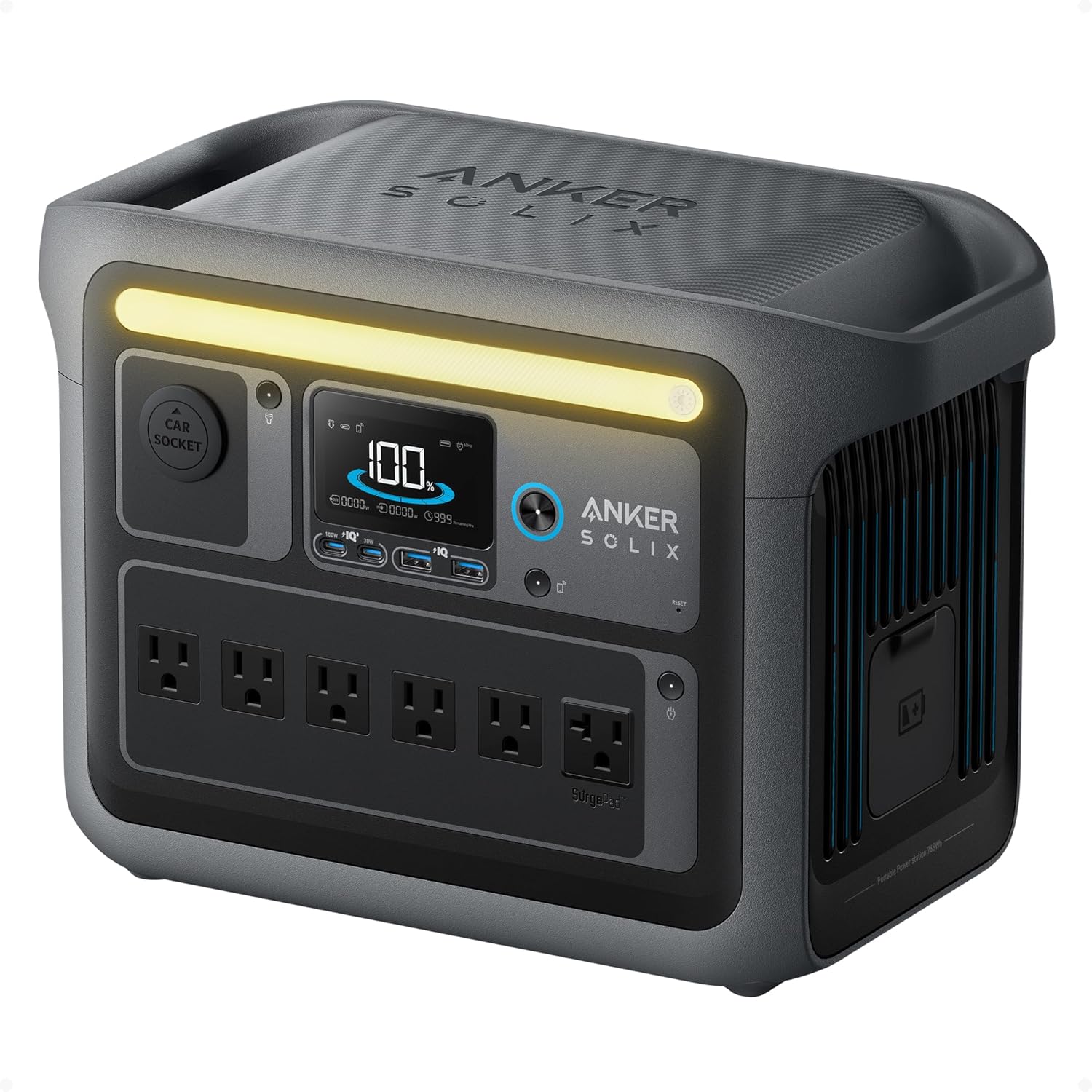
4. Anker SOLIX C1000 Portable Power Station
- Brand: Anker
- Manufacturer: Anker
Overview: The SOLIX C1000 delivers 1,800W continuous power with 1,056Wh LiFePO4 capacity, and a 2,400W peak. It emphasizes UltraFast charging up to 80% in about 43 minutes and a near 1-hour full charge via AC input in combination with Anker’s app. Its LiFePO4 chemistry supports up to 3,000 battery cycles and a long lifespan, while the compact form (14.8 x 8.07 x 11.02 inches) and 27.6 pounds balance portability with sufficient capacity for most camping needs.
In use, the C1000 offers broad flexibility with 11 ports and SurgePad technology to cover many devices. It also supports up to 600W of solar recharging capability, though real-world solar input depends on panel capacity and conditions. The app-centric approach helps users optimize charging rates and monitor statistics. A practical caveat is that its total capacity is modest compared with larger units, so for extended outages or running multiple appliances overnight, it may require careful load management or a secondary unit.
Pros
- UltraFast 80% in 43 minutes and full charge near 1 hour
- 11 ports with SurgePad technology for versatility
- LiFePO4 chemistry with 3,000 cycles
- 600W solar charging capability
- Compact and relatively light for its class
Cons
- Lower total capacity 1,056Wh vs larger models
- Not the highest output for very demanding loads
- Solar charging depends on external panel setup

5. 550W Power Station Compatible with Dewalt: LIVOWALNY Portable Generator DC 20V to AC 110-120V
- Brand: LIVOWALNY
- Manufacturer: LIVOWALNY
Overview: This LIVOWALNY unit is a 550W pure sine wave inverter power station designed as a tool-focused, portable DC-to-AC adapter. It accepts 20V DeWalt batteries and provides two 110V AC outlets plus USB-C PD and USB-A ports. Its modularity is its standout feature: you can connect two 20V batteries for double runtime, and it includes emergency LED lighting with three brightness modes. It’s a lightweight option at 3 pounds, aimed at quick power in outdoor work settings rather than full home backup.
For use-case analysis, this LIVOWALNY adapter is ideal for Dewalt 20V max users who want a compact backup for charging phones, cameras, and laptops, or running small electronics on-site. The dual-battery parallel capability is a notable advantage for extended field tasks, while the 550W continuous output covers a wide range of consumer electronics. However, its energy density is modest, and the reliance on Dewalt batteries means you’re tied to a specific ecosystem and capacity. Also, the device is listed as “tool only,” so you’ll need compatible batteries and chargers to reach its full potential.
Pros
- Pure sine wave inverter for clean power
- Dual-battery parallel operation increases runtime
- Lightweight and highly portable (3 lbs)
- Multiple output options including 2 AC outlets and USB ports
- LED emergency lighting for low-light tasks
Cons
- Requires Dewalt 20V max batteries (not included)
- Limited 550W output may not cover higher-load appliances
- Tool-only designation means missing standalone battery and charger
Frequently Asked Questions
We’ve compiled answers to the most common questions about portable powers to help you make an informed decision.
Conclusion
.
.
Final thoughts here.